Ukraine's Frontline Innovation: Drone vs Drone Combat in Sumy
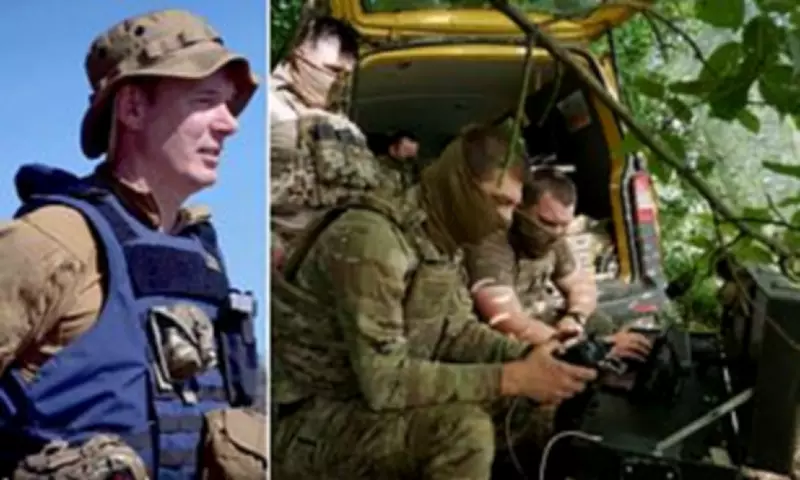
In a groundbreaking development on the Ukrainian front lines, veteran war correspondent Richard Pendlebury has documented a new era of warfare during his embed with soldiers in Sumy. His report for the Daily Mail's Crossfire YouTube series reveals how drone-on-drone combat is becoming a pivotal strategy in the conflict with Russia.
The Rise of Drone Dominance in Modern Warfare
Since the outbreak of the Russia-Ukraine war, drones equipped with explosives have been responsible for up to 80% of all wartime casualties, highlighting their devastating impact. Russia has leveraged this by purchasing inexpensive drones from Iran, deploying hundreds in single-night assaults to overwhelm Ukrainian air defences. While American-made missiles like the Patriot interceptor can effectively counter these threats, they are scarce due to former President Trump's restrictions on military aid and exorbitantly priced at up to $4 million per unit.
Ukraine's Cost-Effective Countermeasure: Kamikaze Drones
In response, Ukraine has pioneered a novel approach by developing a new generation of 'kamikaze' drones specifically designed to hunt and destroy enemy drones. This innovative tactic marks Ukraine as the first modern army to adopt such a system, offering a more affordable alternative to traditional missile defences. The strategy has garnered significant interest from global powers, including the United States and Israel, particularly as Iran retaliates with Shahed drone attacks following Operation Epic Fury.

Inside the Technology: How Drone Interceptors Work
Pendlebury's investigation with Ukraine's Kraken special operations unit provides a detailed look at how these drone interceptors operate. One standout model, the Techno Taras, is a fully Ukrainian-made interceptor built to target Russian reconnaissance drones. Constructed from lightweight polystyrene, it is launched via compressed air and can fly for up to an hour, reaching altitudes of 6000 meters and speeds of 160 kilometers per hour. Unlike ramming tactics, it uses 600 grams of explosives in its nose, remotely detonated by an operator, and can be recovered for reuse if no target is found.
Global Implications and Future of Warfare
As Iranian drones continue to threaten US bases in the Persian Gulf, Ukraine's expertise has led to the deployment of drone interceptor teams to Jordan at Washington's request. Pendlebury emphasizes that drones now dominate the battlefield in ways previously unimaginable, suggesting that this adaptation of kamikaze drones could define the future of modern combat. His firsthand account from Sumy underscores the effectiveness of these interceptors, even under relentless Russian artillery fire.
To witness this revolutionary warfare in action, viewers are encouraged to subscribe to the Daily Mail's Crossfire YouTube channel for full coverage.