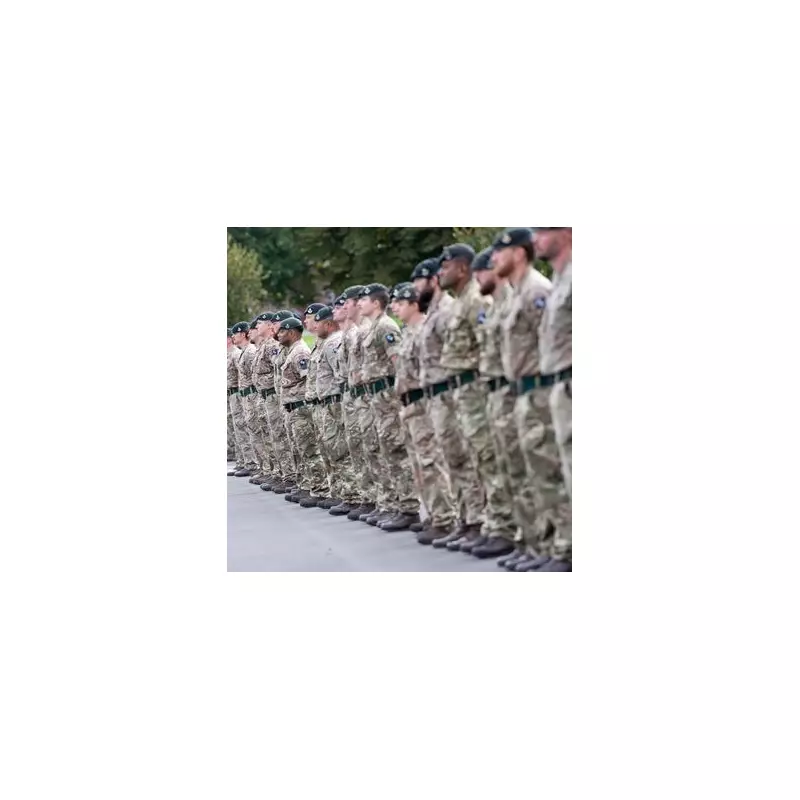
Amid heightened global tensions, a stark warning has emerged about who would bear the brunt of any future military draft in the United Kingdom. According to a prominent historian, unemployed graduates would likely become the primary target for conscription if the nation were forced to reintroduce mandatory service during a major conflict like a Third World War.
Why Conscription is Back on the Agenda
The spectre of conscription is being discussed in serious terms due to a perfect storm of international crises. Ongoing war in Ukraine, instability in Iran, China's posture towards Taiwan, and geopolitical shifts under a potential new US presidency have combined to push fears of a wider war to fever pitch. While nations like Finland and Estonia have long prepared their populations for such an eventuality, Western Europe is seen as playing catch-up.
Experts argue that Britain is particularly vulnerable. Assessments suggest the UK's military capability is at its weakest point in over 70 years, raising urgent questions about battle readiness. In this context, conscription – the mandatory enlistment of civilians into the armed services – is viewed as a potential government recourse should a major war erupt.

The 'Target' Group and Those Likely Spared
Historian and author David Swift has presented a specific vision of how a modern British draft might function. He contends that any conscription programme would primarily focus on unemployed graduates. This approach, he suggests, would be politically popular, particularly with the 'Blue Labour' thinkers influencing Prime Minister Keir Starmer's circle.
Conversely, Swift argues that workers in critical defence and industrial sectors would likely be exempt from frontline service. The urgent need to rebuild the UK's defence industrial base could even see people conscripted directly into these vital occupations instead of the military. "I would expect that people in these important occupations would be exempt," Swift explained, highlighting the shift from a purely military-focused draft to one supporting the wider war economy.
A Military 'Denuded of Power'
Swift is not alone in his grave assessment. Retired Army major and military historian Robert Lyman offered a blistering critique of the UK's current preparedness. He stated that Britain's armed forces are at their weakest since the Napoleonic wars, over two centuries ago.
"Our armed forces have never been so denuded of power since the Napoleonic wars," Lyman said. "It's really hard to describe how poorly-prepared we are - we have an Army that is probably smaller than it was during the Napoleonic wars." He dismissed over-reliance on technology like cyber capabilities and drones as "palpable nonsense" for winning a major war, emphasising that victory ultimately requires mass in infantry, armour, and artillery.
The UK has only implemented nationwide conscription twice in the last 126 years: first between 1916 and 1920 during the First World War, and again from 1939 until 1960 following the outbreak of the Second World War. The prospect of its return underscores the profound concerns among experts about the nation's ability to defend itself in an increasingly volatile world.