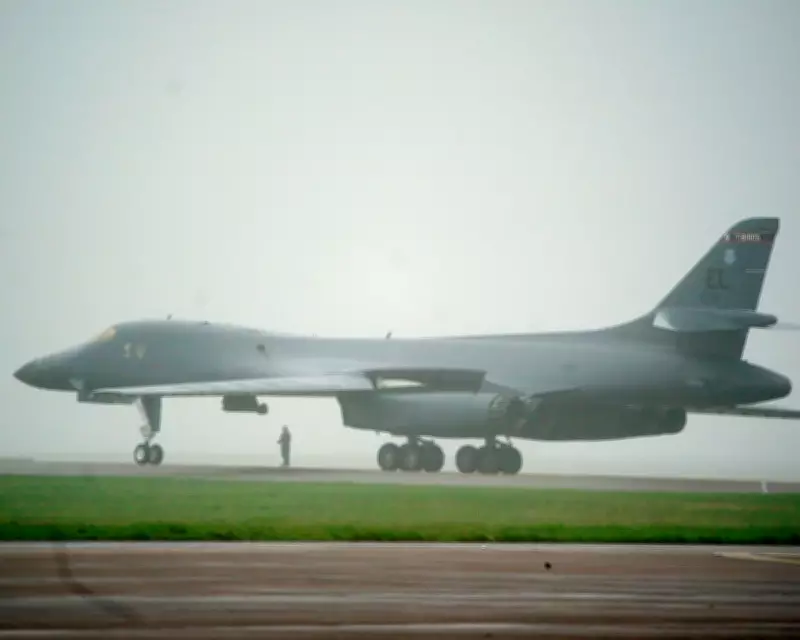
US B-1 Lancer Bomber Touches Down at RAF Fairford as Iran Strike Warnings Intensify
A United States Air Force Rockwell B-1 Lancer bomber, a formidable aircraft measuring 146 feet in length and capable of carrying up to 24 cruise missiles, arrived at RAF Fairford in Gloucestershire on Friday evening. This deployment occurs in the wake of stark warnings from Washington that military strikes against Iran are poised to escalate significantly.
Strategic Deployment and Political Backing
Prime Minister Keir Starmer has authorised the use of UK bases, including RAF Fairford and Diego Garcia in the Indian Ocean, for defensive US operations targeting Iranian missile sites. This decision was made amidst a rapidly unfolding Middle East crisis, with US Defence Secretary Pete Hegseth cautioning on Thursday that strikes are "about to surge dramatically," involving increased fighter squadrons, defensive capabilities, and bomber missions.
Armed Forces Chief Richard Knighton indicated that US missions from the Gloucestershire base are anticipated to commence within the coming days. However, Starmer has defended his stance, blocking initial offensive strikes by the US and Israel over the weekend and asserting that his judgment remains firm, despite criticism from former US President Donald Trump, who disparaged Starmer as "not Winston Churchill."

Internal and International Reactions
Reports from the Spectator, later echoed by various media outlets, suggest that Starmer faced opposition within his cabinet during a top-secret national security meeting last Friday. Key ministers, including Ed Miliband, Rachel Reeves, Yvette Cooper, and Shabana Mahmood, allegedly resisted the proposal to permit defensive strikes from RAF bases. Starmer has countered these claims, insisting that all ministers on the National Security Council supported the UK's position.
Internationally, the situation remains volatile. On Friday, Donald Trump demanded Iran's unconditional surrender, while Israeli warplanes conducted bombings in Tehran and Beirut. Iran retaliated with further strikes against Israel and Gulf nations. Starmer held discussions with Saudi Arabia's Crown Prince Mohammed bin Salman, affirming the UK's readiness to assist in defence if necessary.
Regional Security Concerns and Criticisms
The UK's response has drawn scrutiny from Gulf states and Cyprus, where a drone recently struck RAF Akrotiri undetected. Critics argue that more robust protection for regional allies and British citizens is needed. Meanwhile, HMS Dragon, a Type 45 destroyer, is not expected to deploy to the eastern Mediterranean until next week, as it undergoes preparations for extended sea operations, contrasting with quicker mobilisations by France and Greece.
Tory leader Kemi Badenoch is set to criticise the UK's handling of the conflict in a forthcoming speech, alleging that allies feel they can no longer rely on British support. Her previous remarks about UK military jets "just hanging around" sparked controversy, though former shadow foreign secretary Andrew Mitchell defended her, citing delays in ministerial support for allies.
Evacuation Efforts and Ongoing Developments
Amid the escalating tensions, a second government charter flight carrying British citizens from Oman landed at Gatwick Airport on Saturday, adding to approximately 6,500 Britons who have returned from the United Arab Emirates since the conflict began. These efforts highlight the ongoing challenges in evacuating individuals from war-affected zones.
As the crisis deepens, the arrival of the B-1 Lancer at RAF Fairford underscores the heightened military preparedness and complex diplomatic manoeuvres shaping the UK's role in the Middle East. With strikes predicted to intensify, the international community watches closely for further developments in this volatile situation.