US Bombers Arrive at British Bases for Defensive Operations Against Iran
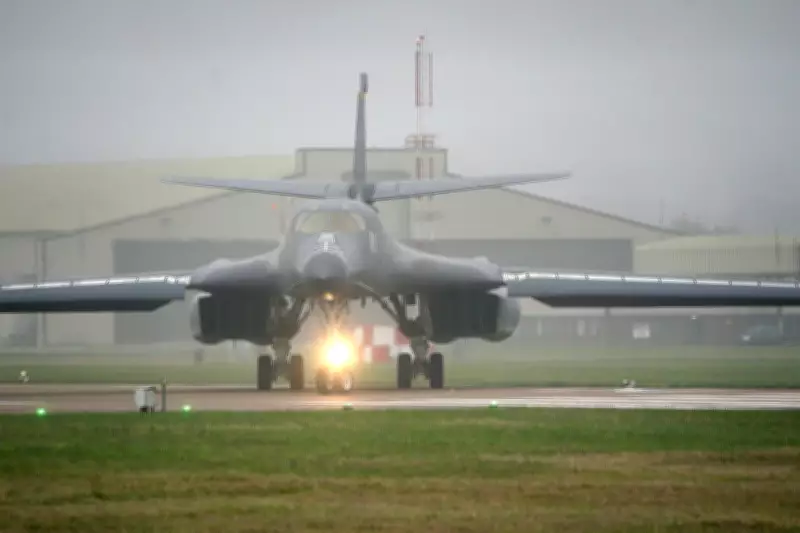
The United States has initiated the use of British military bases for what the Ministry of Defence describes as "specific defensive operations" aimed at preventing Iran from launching missiles into the region. This strategic move follows the arrival of American B-1 Lancer bombers at RAF Fairford in Gloucestershire, marking a significant escalation in the ongoing Middle East conflict.
Bomber Deployments and Operational Details
The first 146-foot B-1 Lancer touched down at RAF Fairford on Friday evening, with three additional bombers arriving on Saturday morning. These deployments coincide with a stark warning from former US President Donald Trump, who declared on Truth Social that "Iran will be hit very hard!" The Ministry of Defence clarified that the US is utilising UK bases to conduct defensive actions designed to mitigate the risk of Iranian missile attacks, which could endanger British lives in the area.
In support of these operations, a Merlin helicopter has been dispatched to the region to enhance aerial surveillance capabilities. Meanwhile, RAF Typhoon and F-35 jets continue to execute air missions over Jordan, Qatar, and Cyprus, underscoring the UK's active involvement in regional security efforts.

Political and Military Responses
Prime Minister Sir Keir Starmer has authorised defensive US actions against Iranian missile sites from UK bases, emphasising a cautious approach to avoid unlawful engagements. Sir Keir defended this decision, stating that the government must maintain a "cool head" in the face of escalating tensions. However, Tory leader Kemi Badenoch criticised the UK's response, accusing the Prime Minister of being "too scared to make foreign interventions" and asserting that Britain is entrenched in the conflict regardless of political preferences.
Deputy Prime Minister David Lammy has suggested that RAF jets could legally strike Iranian missile sites if they are used to attack British interests in the Middle East. Adding to this, Air Chief Marshal Sir Richard Knighton, Chief of the Defence Staff, indicated that the UK might participate in more proactive strikes in the future, noting that "campaigns and conflicts evolve over time."
Evacuation Efforts and Regional Developments
As military operations intensify, evacuation efforts for British citizens trapped in the war zone are ongoing. A second Government charter flight from Oman landed at Gatwick Airport in the early hours of Saturday, with a third scheduled to depart Muscat on Sunday. The Foreign Office is also exploring options to charter a flight from Dubai to repatriate individuals from the Middle East. These arrivals contribute to the over 9,000 Britons who have returned from the United Arab Emirates since the conflict began.
In a related development, Emirates temporarily suspended all flights to and from Dubai on Saturday morning following reports of blasts in the city, though services resumed approximately 30 minutes later. This incident highlights the volatile security situation affecting civilian travel and infrastructure.
International Diplomacy and Defence Coordination
Prime Minister Starmer affirmed the UK's readiness to assist in defending Saudi Arabia during a call with its de facto leader, Mohammed bin Salman, on Friday. This commitment comes amid criticism from allies regarding Britain's response to the crisis, particularly concerning the defence of Cyprus, where a UK base was recently struck by a drone.
The deployment of air defence destroyer HMS Dragon to the eastern Mediterranean has been delayed until next week, as the vessel is being equipped for extended sea operations rather than a rushed, short-term mission. In contrast, France and Greece have already mobilised military assets to protect the island, raising questions about the UK's operational tempo.
US Defence Secretary Pete Hegseth has warned that strikes are "about to surge dramatically," with plans for increased fighter squadrons, defensive capabilities, and bomber missions. Iranian President Masoud Pezeshkian, meanwhile, apologised to neighbouring nations for Tehran's attacks but rejected US demands for an unconditional surrender, further complicating diplomatic resolutions.

As the conflict evolves, the UK's role remains under scrutiny, with ongoing debates about the legality and scope of military interventions. The arrival of US bombers at RAF Fairford symbolises a pivotal moment in allied defence strategies, balancing defensive operations with the imperative to safeguard regional stability and British interests.