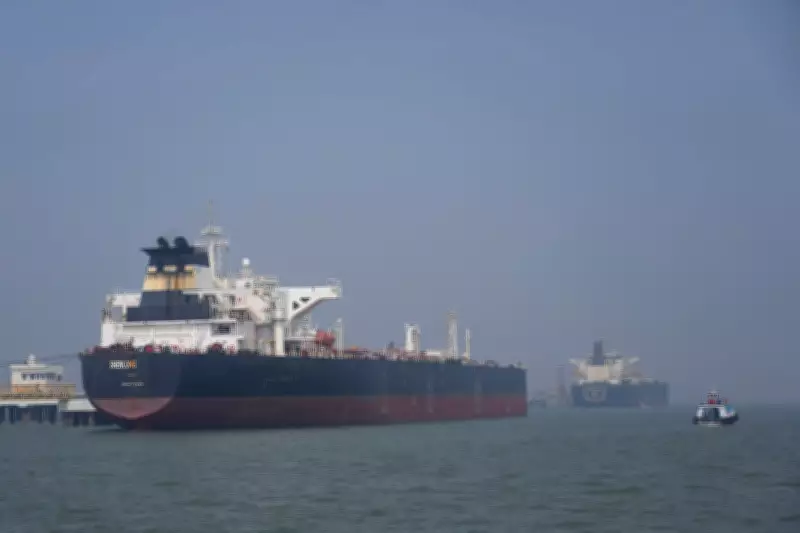
The United States military has conducted a significant strike on Iranian coastal installations situated near the strategically vital Strait of Hormuz, employing powerful "bunker buster" bombs in the operation. This decisive action was justified by the Pentagon as a necessary response to an imminent risk posed to international maritime traffic from Iranian anti-ship missile systems deployed in the region.
Global Oil Trade in Jeopardy
The Strait of Hormuz, a narrow chokepoint through which approximately one-fifth of the world's seaborne oil passes, has been largely sealed off as a result of the escalating hostilities. This closure has precipitated a dramatic 45 percent surge in global crude oil prices since the latter part of February, igniting profound concerns among economists and policymakers about a potential resurgence of worldwide inflationary pressures.
Political Reactions and Regional Retaliation
Former US President Donald Trump publicly censured allied nations for their perceived hesitation in offering military support to help secure the critical waterway. He characterised their cautious stance as a "very foolish mistake" that undermines collective security efforts. In retaliation for American and Israeli operations, Iran has launched an extensive campaign of missile and drone assaults targeting neighbouring Gulf states.

These Iranian counterstrikes have reportedly included more than 2,000 separate attacks directed at US diplomatic outposts, military installations, and crucial oil infrastructure across the region, significantly heightening the conflict's intensity and geographic scope.
Warnings of a Deepening Crisis
The ongoing military confrontation has triggered grave alerts from major international bodies. The International Energy Agency has issued a stark warning, suggesting the current situation could precipitate the most severe oil supply crisis witnessed since the tumultuous oil shocks of the 1970s. Concurrently, global airline associations have voiced serious apprehensions regarding substantially increased operational costs and severely disrupted flight routes, a direct consequence of the closure of airspace over the conflict zone.
The combined impact on energy markets and global logistics underscores the far-reaching economic and security ramifications of the standoff at the Strait of Hormuz, with no immediate resolution in sight.