US Defence Secretary's 'Staggeringly' Wrong Torpedo Claim Debunked
US Defence Secretary Pete Hegseth has made a factually incorrect statement this week, claiming that a recent US Navy submarine attack marked the first sinking of an enemy ship by a torpedo since World War Two. This assertion has been roundly debunked by military historians, who point to multiple documented cases in modern history.
The Incorrect Claim
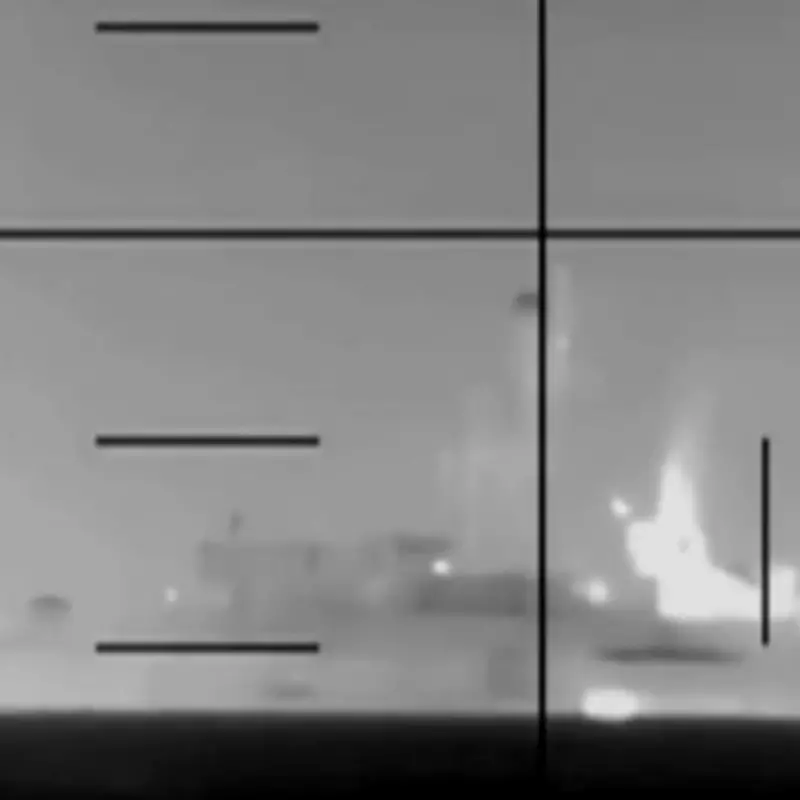
On Tuesday night, Hegseth announced that an American submarine had sunk an Iranian warship in the Indian Ocean, describing it as "the first sinking of an enemy ship by a torpedo since World War Two". He added that the Iranian navy "rests at the bottom of the Persian Gulf" and was "ineffective, decimated, destroyed…pick your adjective, it is no more". He further stated, "Instead it was sunk by a torpedo, a quiet death - the first sinking of an enemy ship by a torpedo since World War II."
Historical Evidence Contradicts the Statement
However, this claim is not accurate. The most notable counterexample is the sinking of Argentina's General Belgrano by a British nuclear-powered submarine, HMS Conqueror, during the Falklands War in 1982. Tigerfish torpedoes were used in that attack, resulting in the loss of 323 lives. Professor Anthony Glees, director of the Centre for Security and Intelligence Studies at the University of Buckingham, highlighted this and other cases in an exclusive interview.

Professor Glees said, "The most famous or notorious, depending on your point of view, was the sinking of the General Belgrano on 2 May 1982 by our nuclear powered sub, HMS Conqueror. 323 people lost their lives." He expressed astonishment at Hegseth's ignorance, stating, "I found it staggering that the US Secretary for War, Pete Hegseth, appears not to know the first thing about this pivotal event."
Additional Torpedo Attacks in Modern History
Beyond the Falklands incident, Professor Glees cited at least two other instances:
- In 1982, an Israeli submarine torpedoed and sank a Lebanese vessel carrying refugees, killing 25 people.
- On December 9, 1971, the Pakistani submarine PNS Hangor torpedoed and sank the Indian frigate INS Khukri during the Indo-Pakistani War.
These examples clearly demonstrate that torpedo attacks have occurred multiple times since World War Two, contradicting Hegseth's assertion.
Criticism of Hegseth's Remarks
Professor Glees also criticised Hegseth's tone, particularly his description of the attack as a "quiet death" that took 148 Iranian mariners. He said, "I'd expect him to show a bit more respect for those who were killed. He said 'a quiet death' took 148 Iranian mariners to the bottom of the Indian Ocean. I doubt if those who went down were quiet about it."
He added, "In all my work researching warfare, I've never come across a single member of our armed forces revelling in the deaths of our adversaries, quite the reverse. All regretted the loss of the lives of fellow combatants. Hegseth's bloodlust is vile, and does US forces no credit."
This incident raises questions about the accuracy of statements from high-level US defence officials and their awareness of military history. The debunking of Hegseth's claim underscores the importance of factual precision in matters of international security and warfare.