US Military Deploys Over 10,000 Troops to Enforce Iran Naval Blockade
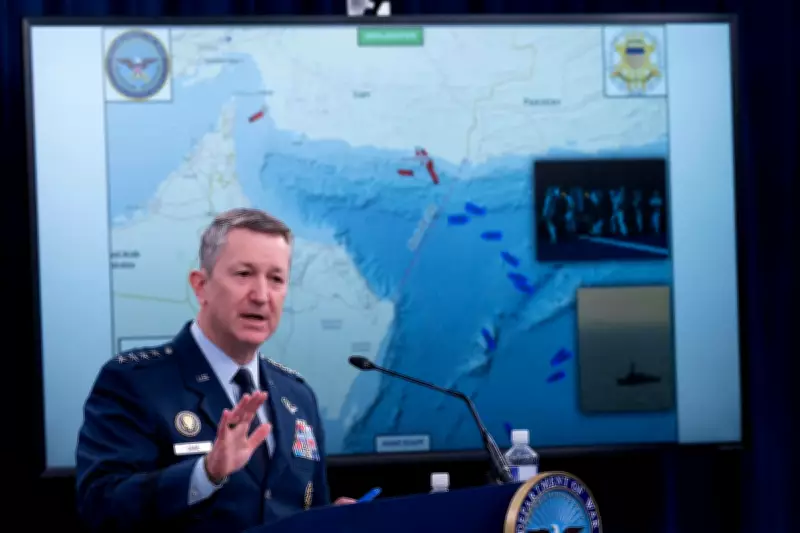
More than 10,000 American troops are currently engaged in enforcing a comprehensive naval blockade targeting Iranian ports, according to statements from U.S. military officials on Thursday. While no vessels have been boarded thus far, the operation has already compelled thirteen ships to reverse course rather than confront the imposing naval presence.
Military Warns of Escalation and Potential Use of Force
General Dan Caine, Chairman of the Joint Chiefs of Staff, emphasized during a Pentagon briefing that the U.S. Navy is issuing clear warnings to Iran-linked ships. "Any ship that would cross the blockade would result in our sailors executing pre-planned tactics designed to bring the force to that ship — if need be, board the ship and take her over," Caine stated. He further indicated that the military is prepared to fire warning shots or escalate to other forms of force if vessels attempt to outrun the blockade.
The blockade is being enforced within Iran's territorial seas and adjacent international waters, specifically avoiding the strategically vital Strait of Hormuz. This crucial waterway remains open for energy shipments, though shipping data firms report that some Iran-linked or sanctioned vessels exiting the Persian Gulf have appeared to halt movements, disable radio transponders, or return toward Iran's coast.

Naval Assets and Global Coordination in Blockade Effort
Defense Secretary Pete Hegseth revealed that "less than 10% of America's naval power" is currently dedicated to the blockade operation. This includes a contingent of 16 warships deployed in the Middle East, comprising 11 destroyers, three amphibious assault ships, an aircraft carrier, and a littoral combat ship. These vessels are supported by refueling ships and extensive surveillance, reconnaissance, and intelligence operations to monitor maritime traffic.
General Caine highlighted that restricting Iran's sea access is a coordinated global effort. U.S. military assets in other regions, including the Pacific, are poised to pursue vessels illegally transporting Iranian oil or attempting to provide material support to Tehran, underscoring the operation's international scope.
Challenges and Analogies in Crowded Maritime Environment
Describing the operational challenges, Caine likened the congested area around the blockade to a crowded parking lot, with U.S. destroyers navigating like high-powered sports cars. "It is like driving a sports car through a supermarket parking lot on a payday weekend, with thousands of kids in that parking lot, as you attempt to maneuver through there to get to that ship that would attempt to run that blockade," he explained, illustrating the complexity of intercepting vessels amidst dense maritime traffic.
The blockade, initiated earlier this week, represents a significant military posture aimed at curtailing Iran's maritime activities. With no ships boarded so far, the focus remains on deterrence and enforcement through visible naval presence and clear warnings, as the situation continues to evolve in the strategically sensitive Persian Gulf region.