US Military Eliminates Iranian Minelayers in Strategic Strait of Hormuz Operation
American forces have conducted a significant military operation, destroying 16 Iranian minelaying vessels positioned close to the vital Strait of Hormuz, a major sea passage essential for global oil exports. The action follows explicit warnings from the White House that Iran would face unprecedented consequences if it attempted to mine the strategic waterway.
Operation Epic Fury and Presidential Warnings
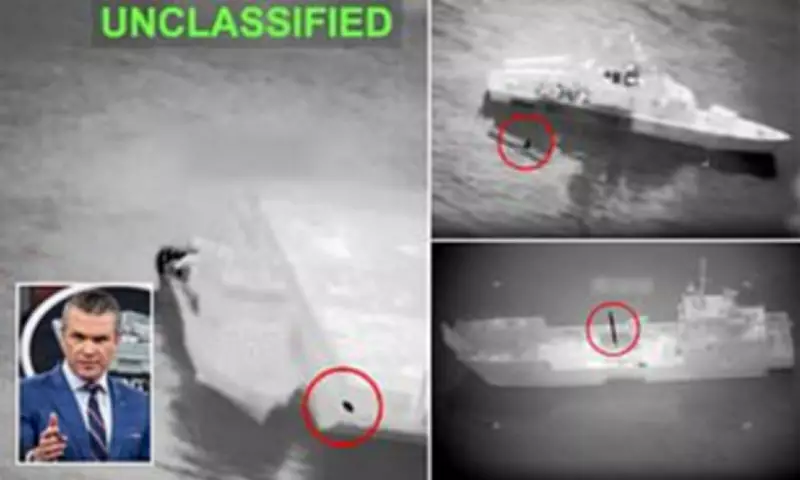
The United States Central Command publicly announced the strikes on social media platform X, stating that US forces eliminated multiple Iranian naval vessels, including 16 minelayers, near the Strait of Hormuz on March 10. Accompanying the announcement was declassified video footage depicting some of the precise strikes, showcasing projectiles slamming into the unmanned Iranian boats and reducing them to debris in blasts of fire and smoke.
This military action was directly preceded by stern communications from President Donald Trump, who utilized his Truth Social account to issue a stark ultimatum to Tehran. "If for any reason mines were placed, and they are not removed forthwith, the Military consequences to Iran will be at a level never seen before," Trump declared. He emphasized that while he had no confirmed reports of Iran actually deploying explosive mines, any such activity would demand immediate removal.

Geopolitical and Economic Stakes at the Narrow Passage
The Strait of Hormuz represents an absolutely critical chokepoint for global energy markets. It is the sole sea passage connecting the Persian Gulf to the Gulf of Oman and, by extension, to open oceans. An astonishing one-fifth of the world's entire oil supply transits through this narrow corridor, which measures a mere 21 miles wide at its most constricted point.
The primary concern driving the US military response is the potential for naval mines to render the strait impassable for oil tankers. Such a blockade could trigger a dramatic spike in global oil and natural gas prices, with severe repercussions for the world economy. President Trump has been notably sensitive to energy price fluctuations as a domestic political issue, often anchoring his economic message to American voters on the promise of maintaining low gasoline costs.
Broader Regional Tensions and International Response
The destruction of the Iranian vessels occurs against a backdrop of escalating regional hostilities. In related developments, US military personnel stationed at bases in Abu Dhabi and Bahrain have reportedly been targeted in recent attacks launched by Iran. According to Iranian media reports, missiles were fired toward American troops at Al-Dhafra airbase and Juffair, following warnings from US Defense Secretary Pete Hegseth about an impending "most intense day of strikes." Air raid sirens were also activated in major cities like Dubai and Tel Aviv.
Internationally, the heightened tensions have prompted a coordinated response. French President Emmanuel Macron announced that leaders of the G7 nations will convene for a video conference to specifically discuss the economic ramifications of the ongoing conflict in the Middle East, with a particular focus on the precarious energy situation.
President Trump has reiterated his unwavering stance on keeping the Strait of Hormuz open, stating he is "not afraid" to employ military force to ensure the free flow of commerce. In a follow-up social media post after the operation, he confirmed the US military had "completely destroyed" the inactive Iranian mine-laying vessels and ominously added that there would be "more to follow," signaling a continued readiness to act in defense of this crucial global shipping lane.