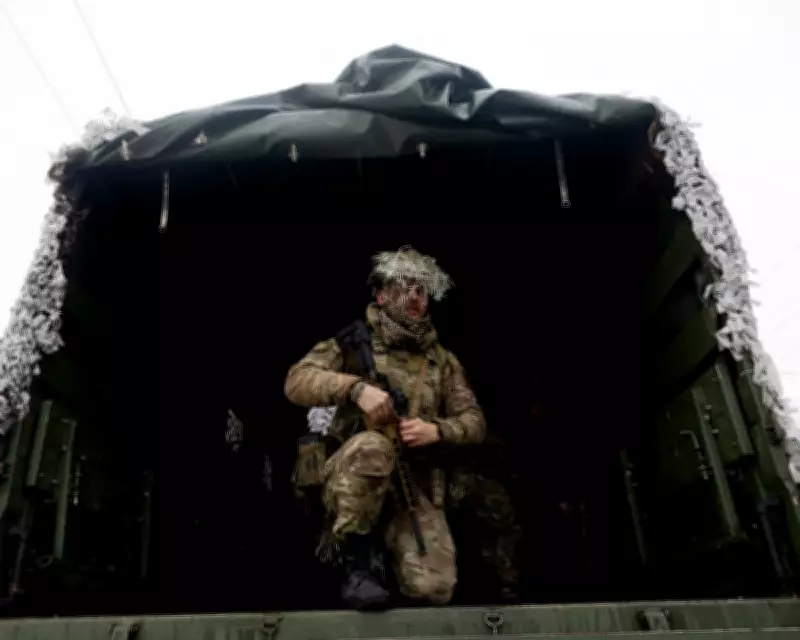
According to a report from the Financial Times, Ukrainian, European, and American officials have been discussing a detailed contingency plan for a coordinated military response should Russia persistently breach any future ceasefire agreement. Sources briefed on the discussions indicate that Kyiv has aligned with its Western allies on a multi-stage strategy designed to deter and respond to violations.
Phased Response to Ceasefire Breaches
The proposed plan outlines a clear escalation path in the event of Russian non-compliance. Initially, a ceasefire violation would trigger a response within 24 hours, beginning with a formal diplomatic warning and immediate action by the Ukrainian army to halt the breach. This initial phase aims to de-escalate conflicts swiftly and reinforce the terms of any peace agreement.
Coalition of the Willing
If fighting continues despite these measures, the strategy moves to a second phase involving intervention by the 'coalition of the willing'. This group comprises over 20 of Ukraine's allies who have committed to providing security guarantees once a ceasefire is established with Russia. The coalition's involvement represents a significant step-up in international support, though Russia has maintained its maximalist demands throughout negotiations.

Coordinated Military Action
The most severe escalation would occur if a ceasefire violation develops into a broader attack. According to officials familiar with the plan, three days after the initial breach, this would trigger a coordinated military response by a Western-backed force, potentially involving the US military. This phase underscores the seriousness with which Western nations view potential Russian aggression post-ceasefire.
Diplomatic Context and Recent Developments
American, European, and Ukrainian officials reportedly discussed these proposals on multiple occasions during December and January. British Prime Minister Keir Starmer, who has been instrumental in the 'coalition of the willing' initiative, stated last month after talks in Paris that the UK and France would deploy troops to Ukraine "in the event of a peace deal" with Russia.
Meanwhile, diplomatic efforts continue alongside these military preparations. Ukrainian President Volodymyr Zelenskyy announced over the weekend that a second round of talks between Russian, Ukrainian, and US officials on a US-drafted plan to end the war will begin on Wednesday. These negotiations aim to bring Russia's full-scale invasion of Ukraine to a conclusion after nearly four years of conflict.
Ongoing Hostilities Despite Peace Efforts
Despite these diplomatic initiatives, attacks on Ukrainian towns and cities remain unabated. Early this morning, Russian forces targeted Ukraine's capital Kyiv, its second-largest city Kharkiv, and other urban centres. These strikes triggered fires and inflicted further damage on energy infrastructure, with officials reporting at least four injuries across the two largest cities.
The continued violence highlights the challenging context in which these ceasefire and response plans are being developed. As diplomatic channels remain open, the reported military contingency plan represents a significant development in Western strategy, potentially reshaping the dynamics of any future peace agreement and its enforcement mechanisms.