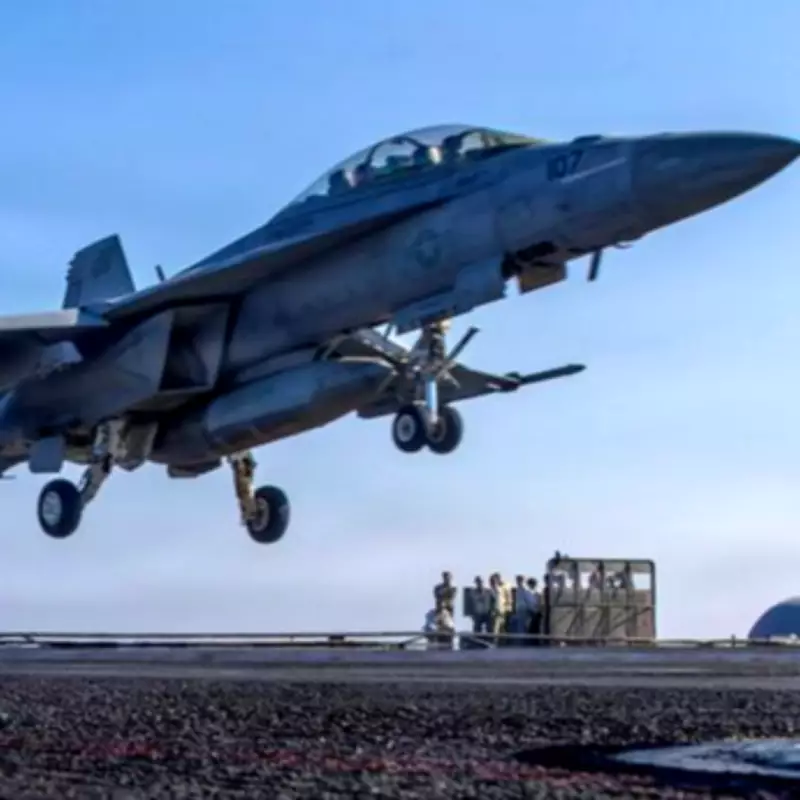
US Deploys F-22 Stealth Jets to Israel Amid Escalating Iran Tensions
American military forces have significantly escalated their war-footing posture against Iran, with a squadron of advanced F-22 Raptor stealth fighters being deployed to Israel. This strategic move comes as Tehran pushes back aggressively against Washington's demands regarding its nuclear program and human rights record.
Iranian Defiance and Nazi Comparison
In a major show of defiance, Iranian officials have branded President Donald Trump's declarations about Iran's nuclear ambitions and the killing of opposition protesters as "big lies." Iranian Foreign Ministry spokesman Esmail Baghaei directly compared Trump to Nazi propagandist Joseph Goebbels ahead of critical Geneva talks scheduled for Thursday.
Baghaei accused the Trump administration of conducting a systematic disinformation campaign against Iran, stating: "'Repeat a lie often enough and it becomes the truth' is a law of propaganda coined by Nazi Joseph Goebbels. This is now systematically used by the US administration and the war profiteers encircling it."

Military Preparations Intensify
The deployment of F-22 stealth fighters from the United Kingdom to Israel represents a significant escalation in military preparedness. These advanced aircraft are positioned to protect Israel from potential Iranian missile responses should the United States launch strikes from its substantial naval armada currently positioned in the Arabian Sea.
Israeli defense forces have placed their fighter bomber squadrons at Hatzerim Ahir Force Base in the Negev Desert on high alert status. Meanwhile, the United States has virtually emptied its naval docks in Bahrain as a precaution against Iranian missile capabilities, with the entire Fifth Fleet now deployed at sea in preparation for potential conflict.
Trump's Warning and Iranian Threats
In his recent State of the Union address, President Trump issued a stark warning about Iran's military capabilities: "They've already developed missiles that can threaten Europe and our bases overseas, and they're working to build missiles that will soon reach the United States of America."
Iran has responded with its own threats, declaring that all US military bases in the Middle East would be considered legitimate targets in the event of conflict. This puts tens of thousands of American service members stationed throughout the region at significant risk.
Intelligence Warnings and Proxy Forces
Intelligence analysis based on increased communications intercepts warns that Iran's proxy forces, particularly Hezbollah, could be planning revenge attacks targeting US bases and embassies throughout the Middle East and Europe if American strikes proceed.
Satellite imagery has revealed that Iran has begun rebuilding its missile production facilities and conducting work at three nuclear sites that were previously attacked by the United States in June. While Iran maintains its nuclear program is peaceful, Western intelligence agencies and the International Atomic Energy Agency assert that Iran had an active nuclear weapons program until 2003.
Nuclear Program Status and Casualty Disputes
Prior to the June attacks, Iran had been enriching uranium to 60% purity levels - just a short technical step away from weapons-grade enrichment of 90%. The status of Iran's nuclear program following those strikes remains uncertain, with Trump claiming American attacks "obliterated" the program.
Significant discrepancies exist regarding casualty figures from recent protests in Iran. While President Trump cited a death toll of 32,000 in his speech, the US-based Human Rights Activist News Agency has documented approximately 7,000 fatalities, and Iran's government has officially acknowledged only 3,117 deaths.
Diplomatic Efforts and Military Readiness
Iranian and American officials are scheduled to meet in Geneva on Thursday for their third round of talks mediated by Oman. Iranian Foreign Minister Abbas Araghchi and his delegation have departed Tehran for these critical negotiations, where they will meet with American representatives including envoy Steve Witkoff.

Mohammad Bagher Qalibaf, Iran's parliament speaker, presented Tehran's position clearly: "If you choose the table of diplomacy - a diplomacy in which the dignity of the Iranian nation and mutual interests are respected - we will also be at that table. But if you decide to repeat past experiences through deception, lies, flawed analysis and false information, and launch an attack in the midst of negotiations, you will undoubtedly taste the firm blow of the Iranian nation."
Regional Security Implications
Israeli intelligence sources indicate that US military forces are now fully positioned and prepared for potential strikes against Iran, with the decision resting entirely with Washington. One source suggested: "It is possible the US could launch fairly intense strikes against Iran for a week or more."
Additional intelligence warnings indicate that Yemeni Houthi rebels are preparing attacks on Western shipping in the Red Sea, and there are unusual indications of possible al-Qaeda involvement in revenge targeting should conflict erupt. Two American aircraft carriers with accompanying destroyer groups are now positioned in the Middle East, prepared to sustain several days of intensive strikes.
Further F-22 squadrons have been deployed to Jordan, and all US military bases throughout the region remain on high alert status. Hundreds of American citizens have already evacuated Lebanon as tensions continue to mount, while protests within Iran itself persist despite government crackdowns.