US Military Investigators Suspect American Forces Behind Deadly Iran School Bombing
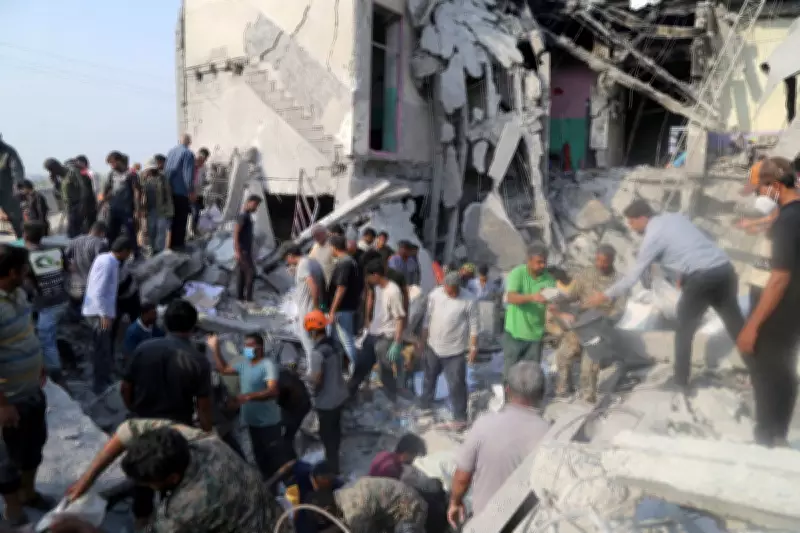
Military investigators within the United States reportedly believe American forces were likely responsible for a devastating strike on an Iranian girls' school that killed at least 150 students, according to emerging evidence from satellite imagery and eyewitness accounts. The incident, which occurred in the city of Minab, represents what human rights officials describe as the deadliest single event for civilian casualties since coordinated US-Israeli attacks on Iran began.
Evidence Points to Precision Military Strike
Analysis of satellite photographs, video footage, and social media content appears to demonstrate that the Shajarah Tayyiba elementary school for girls was hit by a precision military strike, potentially multiple times. The school's location falls within what Pentagon documents identify as a "US/Israeli strikes" zone, with Department of Defense maps showing two Iranian air defense targets surrounding the area.
Neither American nor Israeli authorities have publicly claimed responsibility for the attack, which Iranian officials report has claimed over 175 lives, though this figure remains unconfirmed by independent sources. Reuters, citing two US officials, reported that military investigators have not finalized their inquiry but believe evidence increasingly indicates US responsibility.

White House Denies Targeting Civilians
When questioned about potential US involvement in the school bombing, White House press secretary Karoline Leavitt told reporters, "not that we know of." She emphasized that "The United States of America does not target civilians, unlike the rogue Iranian regime that targets civilians, that kills children ... and uses propaganda quite effectively."
Defense Secretary Pete Hegseth confirmed the Pentagon is investigating the incident, stating, "We, of course, never target civilian targets, but we're taking a look and investigating that." Hegseth had previously declared there would be "no stupid rules of engagement" and "no politically correct wars" as US and Israeli operations in Iran continue.
AI and Human Error Under Scrutiny
Military analysts are examining whether the Pentagon's AI-driven targeting systems or human oversight failures contributed to the tragic strike. The attack occurred during Operation Epic Fury, which relies on the Maven Smart System developed by data mining company Palantir and incorporates Anthropic's AI tool Claude.
Defense analyst Nathan Ruser of the Australian Strategic Policy Institute noted, "There's been plenty of speculation here that AI inputs in the targeting process were responsible for the school being targeted. This is possible, but a human analyst determining aimpoints could have absolutely made the mistake of adding this school to the target list."
Historical Satellite Imagery Reveals Complications
Satellite analysis shows the school building was once part of an adjoining Islamic Revolutionary Guard Corps compound but was separated by a wall constructed between 2013 and 2016. A nearby clinic was similarly walled off between 2022 and 2024. Middlebury College professor Jeffrey Lewis, a satellite imagery specialist, suggested American military planners may have failed to update target databases to reflect these changes.
"There are thousands of targets across Iran, and so there will be teams in the United States and Israel that are responsible for tracking those targets and updating them," Lewis told NPR. "It's possible that the target didn't get updated."
Timing and Aftermath of the Attack
The strike occurred at approximately 10:45 a.m. local time on Saturday, February 28, which marks the beginning of the Iranian workweek when teachers and students would have been inside the school. Verified footage shows four plumes of black smoke emerging from the area, with impact points visible on at least six IRGC buildings and the school itself.

First responders reported the school was hit by two separate strikes, with a second explosion allegedly killing survivors who had taken shelter. A medic with the Red Crescent recounted, "When the first bomb hit the school, one of the teachers and the principal moved a group of students to the prayer hall to protect them. The principal called the parents and told them to come and pick up their children. But the second bomb hit that area as well. Only a small number of those who had taken shelter survived."
International Condemnation and Calls for Investigation
UNESCO issued a statement declaring that "the killing of pupils in a place dedicated to learning constitutes a grave violation of the protection afforded to schools under international humanitarian law." UN High Commissioner for Human Rights Volker Türk expressed "significant concerns about the respect for international and military law" during the US-Israeli campaign.
"When it comes to a school, obviously it is a civilian institution that should never be attacked," Türk stated, calling for "prompt, transparent and impartial investigations" to establish accountability and provide redress for victims.
The Pentagon has referred media inquiries to US Central Command, whose spokesperson Captain Timothy Hawkins told Reuters, "It would be inappropriate to comment given the incident is under investigation." Aerial footage from three days after the strikes showed neatly lined rows of at least 100 marked or freshly dug graves near the devastated school site.