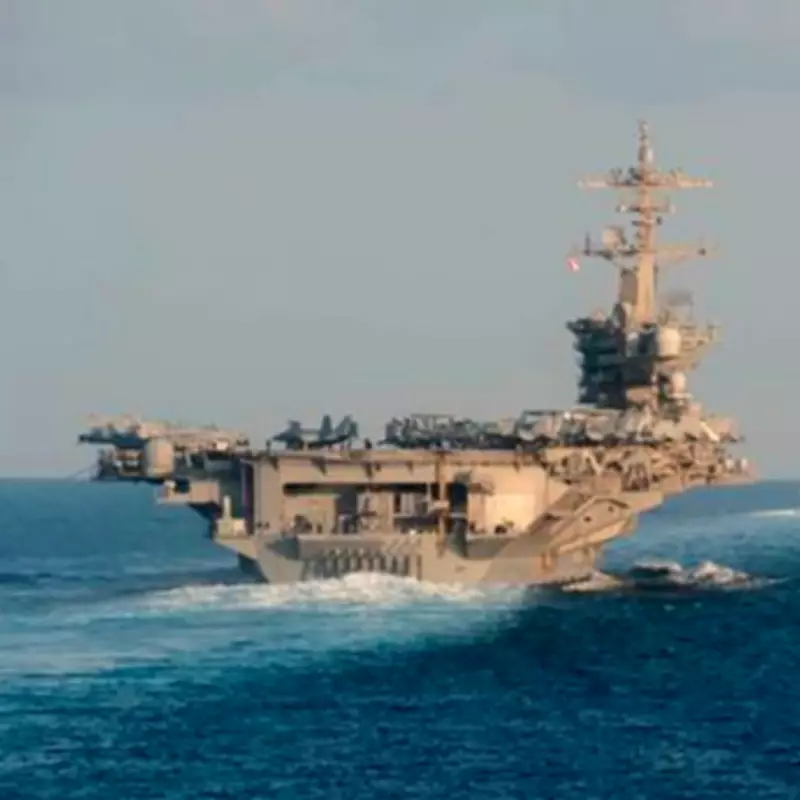
Heightened military tensions between the United States and Iran have sparked significant concerns about a potential major conflict erupting in the Middle East. This follows the shooting down of an Iranian Shahed-139 attack drone as it approached the USS Abraham Lincoln carrier strike force, positioned approximately 500 miles off the Iranian coast in the Arabian Sea.
Carrier Fleet on High Alert Amid Escalating Threats
The USS Abraham Lincoln, a formidable nuclear-powered aircraft carrier, is currently operating on high alert status. Intelligence assessments indicate that rogue elements within Tehran's Islamic Revolutionary Guard Corps (IRGC) are actively considering follow-up attacks targeting the US naval presence. The carrier strike force, bristling with advanced weaponry including F-35C and Super Hornet fighter jets, is escorted by six destroyers, forming a powerful defensive and offensive formation.
Additional US military assets have been rapidly deployed to the region, including squadrons of F-15 fighters and stealth bombers moved into strategic positions. This substantial buildup underscores the seriousness with which Washington views the potential threat from Iranian forces.

Diplomatic Deadlock and Military Planning
Behind-the-scenes de-escalation talks have reportedly reached an impasse, with US President Donald Trump demanding comprehensive military attack plans from Pentagon officials. These plans reportedly range from quick, decisive strikes designed to remain below the threshold of full-scale war to more devastating waves of missile attacks targeting Iranian nuclear and military infrastructure.
According to security sources, President Trump has been advised that any military action against Iran would inevitably risk triggering a long-term conflict, rather than achieving a limited objective. Meanwhile, Iran's regime faces internal pressures from ongoing sporadic demonstrations and appears increasingly vulnerable, with security officials reportedly seeking diplomatic off-ramps to avoid confrontation.
Iran's Nuclear Programme at Centre of Dispute
The core disagreement revolves around Iran's nuclear ambitions and ballistic missile programme. Washington has presented Tehran with a three-point position demanding:
- No uranium enrichment on Iranian soil
- Removal of all existing enriched uranium stockpiles
- Significant restrictions on Iran's ballistic missile development programme
Intelligence analysts suggest Tehran will not accept these demands, particularly regarding its ballistic missile programme which it considers non-negotiable. The US position has reportedly hardened from earlier concerns about protecting Iranian protesters to insisting on complete abandonment of Iran's nuclear and advanced weapons programmes.
Regional Escalation Risks and Deterrent Postures
Security assessments warn that any conflict between the US and Iran risks spreading throughout the wider Middle East region. Ali Shamkhani, a senior adviser to Iran's Supreme Leader Ayatollah Ali Khamenei, has publicly stated that any US attack on Iran, regardless of scale, would inevitably escalate into a major crisis.
Iran has explicitly warned that it would respond to American aggression by striking Israeli targets and attacking US assets in the Persian Gulf and Azerbaijan. This deterrent language is designed to emphasise the inevitability, breadth, and unpredictability of Iranian retaliation should military coercion be attempted.
One security assessment notes: "Such language is designed to deter U.S. action by emphasising inevitability, breadth, and unpredictability, while signalling that Iran will not tolerate military coercion without response. This deterrent posture underscores Tehran's strategic belief that it must project readiness to impose costs on adversaries to safeguard its interests."
Israeli Factor and Limited Diplomatic Flexibility
Sources indicate that even if the United States refrains from opening fire on Iran, Israel may independently choose to conduct strikes against Iranian targets rather than pursue de-escalation. The Israelis have particularly pushed for limitations on Iran's ballistic missile programme, which Tehran shows no willingness to abandon.

A security source familiar with the negotiations expressed pessimism about diplomatic prospects, stating: "There is so little wriggle room that I am pessimistic about the chances of success, unless one side makes a concession. I do not see Iran doing that. And there are some in the Iranian leadership who think a measured conflict, not a major, extended war, is necessary and appetite for a deal with the US generally low."
Broader Implications and Humanitarian Concerns
The standoff occurs against a backdrop of internal repression within Iran, where the regime continues its crackdown on protesters. Iranian football players have reportedly been targeted by gunmen in Tehran, with athletes becoming symbols of a generation falling victim to the regime's brutality.
Research indicates that these individuals face imminent risk of execution, highlighting the domestic pressures complicating Iran's international posture. The intersection of internal vulnerability and external military confrontation creates a volatile situation with potentially catastrophic regional consequences.
Failure to reach agreement between Washington and Tehran could entrench hostility, incentivise proxy escalation through groups like Hezbollah, and perpetuate a cycle of managed instability extending well beyond immediate theatres of confrontation. Conversely, successful diplomacy could potentially reduce nuclear risks and proxy-enabled instability, though verification and enforcement challenges would persist alongside residual regional tensions.