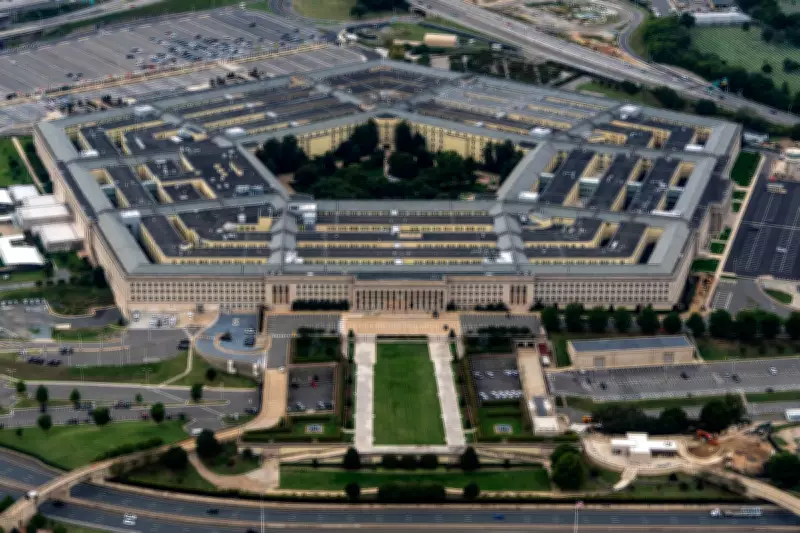
The United States military has conducted a significant maritime interdiction operation, boarding a sanctioned oil tanker in the Indian Ocean following an extensive pursuit that originated in the Caribbean Sea. According to a statement released by the Pentagon on Monday, this action underscores ongoing efforts to enforce international sanctions and disrupt illicit oil smuggling networks.
Tracking the Aquila II
The targeted vessel, identified as the Aquila II, is a Panamanian-flagged tanker under US sanctions for its involvement in shipping illicit Russian oil. Owned by a company with a listed address in Hong Kong, the tanker has frequently operated with its radio transponder deactivated over the past year, a tactic known as "running dark" commonly used by smugglers to conceal their locations.
Ship tracking data and analysis from experts like Samir Madani, co-founder of TankerTrackers.com, reveal that the Aquila II was among at least 16 tankers that departed the Venezuelan coast last month. This exodus followed the US military's capture of then-President Nicolás Maduro in a surprise raid on January 3. Madani's organization utilized satellite imagery and surface-level photographs to meticulously document the vessel's movements.

Defiance of US Quarantine Measures
In a social media post, the Pentagon stated that the military "conducted a right-of-visit, maritime interdiction" on the Aquila II. The post emphasized that the tanker was "operating in defiance of President Trump’s established quarantine of sanctioned vessels in the Caribbean." It added succinctly, "It ran, and we followed."
Notably, the US did not announce the seizure of the ship, a step it has taken with at least seven other sanctioned oil tankers linked to Venezuela in the past. Data transmitted from the Aquila II on Monday indicated it was not currently carrying a cargo of crude oil, though its activities remain under scrutiny.
Broader Strategic Objectives
Since the ouster of Maduro, the Trump administration has aggressively moved to control the production, refining, and global distribution of Venezuela's oil products. Officials within President Donald Trump's Republican administration have explicitly framed the seizure of tankers as a strategy to generate revenue. This approach aims to rebuild Venezuela's devastated oil industry and restore its economy under new leadership.
Furthermore, the operation aligns with broader US efforts to restrict oil flows to Cuba, which faces stringent US economic sanctions and depends heavily on oil shipments from allies such as Mexico, Russia, and Venezuela. Trump has asserted that no more Venezuelan oil will reach Cuba, claiming the Cuban government is on the brink of collapse.
In a recent escalation, Trump signed an executive order imposing tariffs on goods from countries that sell or provide oil to Cuba. This measure primarily targets Mexico, which has served as a critical oil lifeline for Cuba, intensifying economic pressure on the island nation.
Military and Diplomatic Implications
US Southern Command, which oversees operations in Latin America, declined to provide additional details beyond the Pentagon's initial statement. The interdiction highlights the US military's expanding role in enforcing sanctions and combating maritime smuggling, particularly in strategic regions like the Indian Ocean and Caribbean.
The incident also raises questions about the global shadow fleet of falsely flagged tankers, which Venezuela relies on to smuggle crude into international supply chains amidst US sanctions. As geopolitical tensions persist, such operations are likely to continue shaping US foreign policy and economic strategies in the Western Hemisphere and beyond.