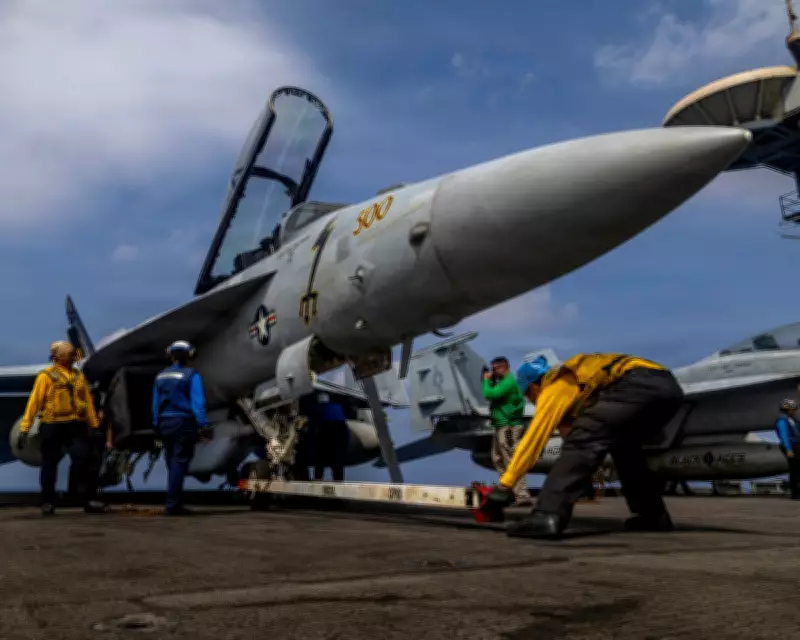
US Military Buildup in Middle East Intensifies but to What End?
The United States has markedly escalated its military deployment across the Middle East, a move that underscores a deepening commitment to regional security yet leaves many analysts pondering the ultimate strategic objectives behind this expansion.
Escalation of Forces and Equipment
Recent reports confirm a substantial influx of US troops, advanced weaponry, and naval assets into key areas such as the Persian Gulf and the Red Sea. This buildup includes the deployment of additional aircraft carriers, missile defense systems, and specialized units aimed at countering threats from state and non-state actors.
The scale of this military reinforcement is unprecedented in recent years, signaling a robust response to escalating tensions, including conflicts in Gaza, Yemen, and broader Iranian influence. However, the lack of a clear, publicly articulated endgame has sparked debate among policymakers and international observers.

Strategic Ambiguity and Regional Implications
While the immediate rationale appears focused on deterring aggression and protecting allies, the long-term vision remains opaque. Critics argue that without defined exit strategies or diplomatic frameworks, this buildup risks entangling the US in prolonged conflicts and exacerbating regional instability.
Experts note that the move could be a dual-purpose strategy: to project power in a volatile region while preparing for potential escalations with adversaries. Yet, this ambiguity fuels concerns about mission creep and the financial and human costs of sustained military engagement.
Global and Domestic Reactions
The intensification has drawn mixed reactions globally. Allies in the Middle East, such as Saudi Arabia and Israel, have largely welcomed the bolstered presence as a deterrent against common threats. In contrast, nations like Iran and Russia have condemned it as provocative, warning of heightened risks of miscalculation and conflict.
Domestically, the buildup has reignited debates over US foreign policy priorities, with some lawmakers calling for greater transparency and congressional oversight. Public opinion remains divided, reflecting broader uncertainties about America's role in the region post-conflicts in Afghanistan and Iraq.
Looking Ahead: Uncertain Outcomes
As the US military footprint grows, key questions persist:
- What are the specific benchmarks for success or de-escalation?
- How does this align with broader diplomatic efforts, such as nuclear negotiations or peace initiatives?
- What impact will it have on regional alliances and economic stability, particularly in oil markets?
Without clearer answers, the intensified buildup may achieve short-term security gains but could complicate long-term stability, leaving the ultimate end—whether deterrence, regime change, or another goal—shrouded in uncertainty.