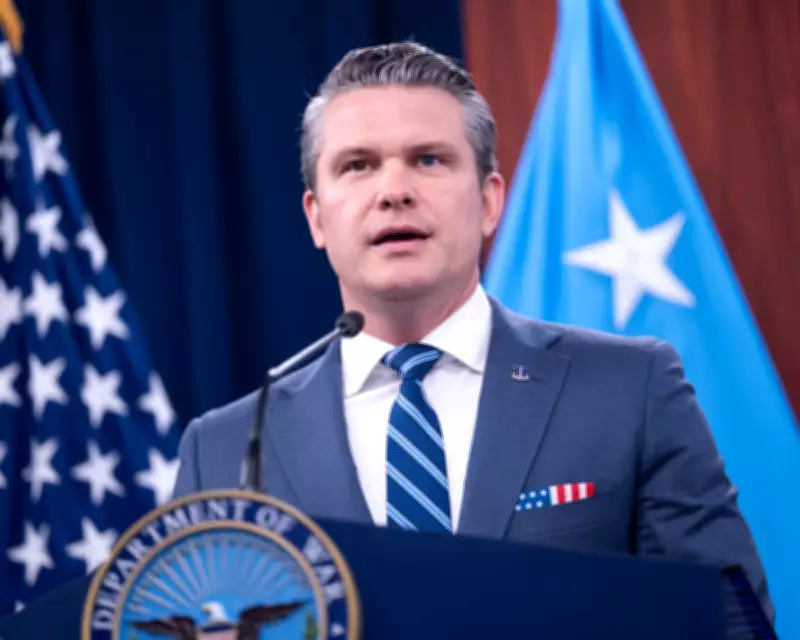
In a significant policy shift, the United States military will no longer require its service members to receive an annual flu vaccination, as announced by Defense Secretary Pete Hegseth during a press briefing at the Pentagon on 16 April 2026 in Washington DC. This decision marks a departure from a mandate that has been in place for over eight decades, originally established to protect military readiness from influenza outbreaks.
Hegseth Criticizes Mandate as Overly Broad and Irrational
In a video statement shared on social media, Hegseth described the flu vaccine requirement as "overly broad" and "not rational." He emphasized that the move aims to discard what he termed "absurd overreaching mandates" that could potentially weaken the military's war-fighting capabilities. The policy change applies broadly to active duty personnel, reserve components, and civilian employees within the Department of Defense, according to an official Pentagon memorandum released on Tuesday.
Historical Context and Military Vaccine Development
The US army pioneered the first flu vaccine during the early stages of the Second World War, driven by concerns over a repeat of the devastating 1918 influenza pandemic and its impact on military operations. Soldiers at the University of Michigan served as large-scale test subjects for this program, leading to the vaccine's initial licensing for military use in 1945, followed by civilian availability. For more than 80 years, annual flu shots have been mandatory for service members, with exemptions allowed for severe allergies, pregnancy, or sincere religious beliefs.

Impact of Vaccine Denialism and Recent Policy Changes
Vaccine skepticism during the coronavirus pandemic significantly affected the military, with approximately 8,000 service members being separated from service between 2021 and 2022 for refusing the Covid-19 vaccine. Many others chose to leave voluntarily upon the conclusion of their enlistments. In response, the Pentagon rescinded the Covid-19 vaccine mandate in September, and former President Donald Trump signed an executive order last year to reinstate service members who were discharged under that mandate. This order allows separated personnel to return to service without penalties to their status, rank, or pay, provided they attest that their departure was voluntary rather than due to vaccine refusal.
Personal Choice and Military Readiness
Hegseth underscored the importance of personal autonomy in his announcement, stating, "If you, an American Warrior entrusted to defend this nation, believe that the flu vaccine is in your best interest, then you are free to take it. You should. But we will not force you, because your body, your faith and your convictions are not negotiable." This stance reflects a broader trend towards individual choice in health decisions within the military, while balancing concerns over public health and operational effectiveness.
The policy revision raises questions about future health protocols and the potential implications for military preparedness during flu seasons. As the US military adapts to this new approach, ongoing monitoring and evaluation will be crucial to ensure that service members' health and national security interests are adequately protected.