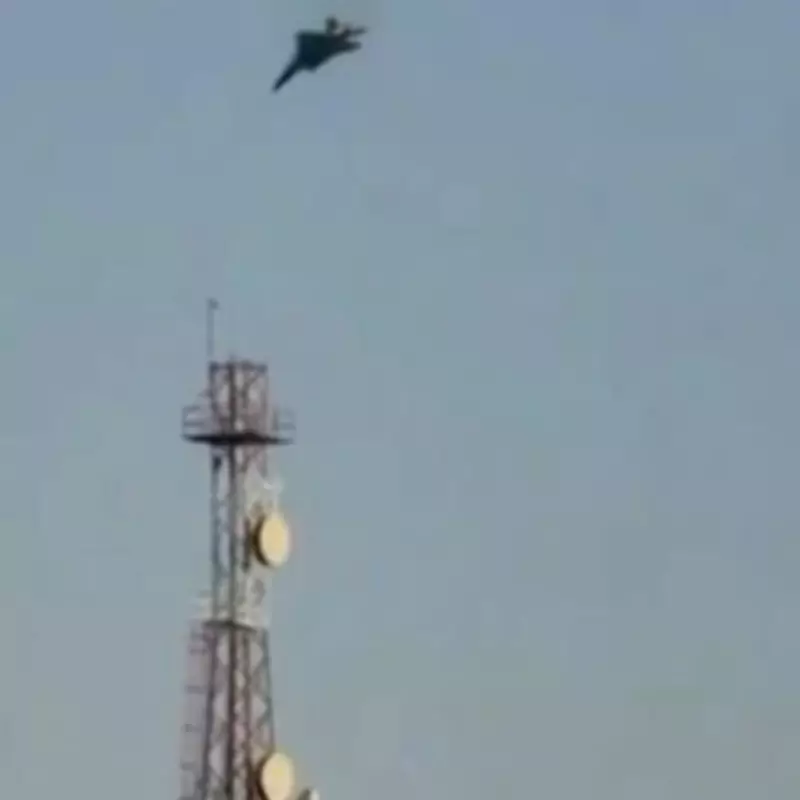
Multiple United States military jets have crashed in Kuwait during a period of escalating regional conflict, with all crew members successfully ejecting and surviving the incidents. Kuwait's Ministry of Defence confirmed the crashes occurred this morning, stating that search-and-rescue operations were immediately launched by relevant authorities.
Emergency Response and Crew Safety
Kuwaiti defence ministry spokesman Colonel Saud Al-Atwan detailed that all crew members were safely extracted from the crash sites and transported to medical facilities for evaluation. "The crews were being removed from the crash locations and taken to hospital for assessment, where they received necessary medical care," Al-Atwan stated. He described their conditions as stable following treatment.
Authorities have initiated a comprehensive investigation into the circumstances surrounding the multiple aircraft crashes. Al-Atwan emphasized that Kuwait is collaborating directly with US officials to determine the precise cause of these incidents, which represent a significant development in an already volatile regional situation.

Embassy Security Measures Implemented
The aircraft crashes coincided with heightened security alerts from the US embassy in Kuwait. Embassy officials issued urgent guidance instructing American citizens to shelter in place and avoid approaching diplomatic facilities. "Do not come to the embassy," the warning explicitly stated. "Take cover in your residence on the lowest available floor and away from windows. Do not go outside."
Visual reports from the area indicated smoke rising from the vicinity of the US embassy compound at approximately 6am GMT. The embassy confirmed that its staff members were following the same shelter-in-place protocols being advised to American citizens throughout Kuwait.
Regional Conflict Context
These developments occur against a backdrop of intensifying military conflict across the Middle East. Over the past forty-eight hours, explosions have been reported in major Gulf cities including Dubai, Abu Dhabi, and Doha as Iran retaliates against what it describes as "massive" ongoing assaults by the United States and Israel.
Tehran has explicitly vowed to target US military assets throughout the region, making the Kuwait crashes particularly significant within this broader strategic context. The current phase of hostilities began on Saturday morning when Israel and the United States initiated coordinated attacks against Iranian leadership and military infrastructure.
Expanding Military Operations
In a related development, the Israeli military announced this morning that it has commenced an "offensive campaign" against Hezbollah forces in Lebanon, with operations expected to continue for several days. Lebanese health authorities reported that Israeli strikes on Beirut and southern Lebanon have resulted in thirty-one fatalities and one hundred forty-nine injuries.
According to the Iranian Red Crescent Society, attacks by US and Israeli forces across more than one hundred thirty Iranian cities have led to five hundred fifty-five casualties. These figures underscore the expanding scope and severity of the regional conflict.
International Response and Travel Disruptions
The United Kingdom Foreign Office has confirmed it is working "immensely hard" to assist British nationals throughout the Gulf region. Foreign Secretary Yvette Cooper revealed that approximately one hundred two thousand out of an estimated three hundred thousand British citizens in the area have registered their presence with authorities.
Several airspaces in the region have been closed as security precautions, significantly disrupting travel. Secretary Cooper confirmed her team is exploring "every possible option" regarding evacuation and travel arrangements for affected British nationals caught in the escalating crisis.