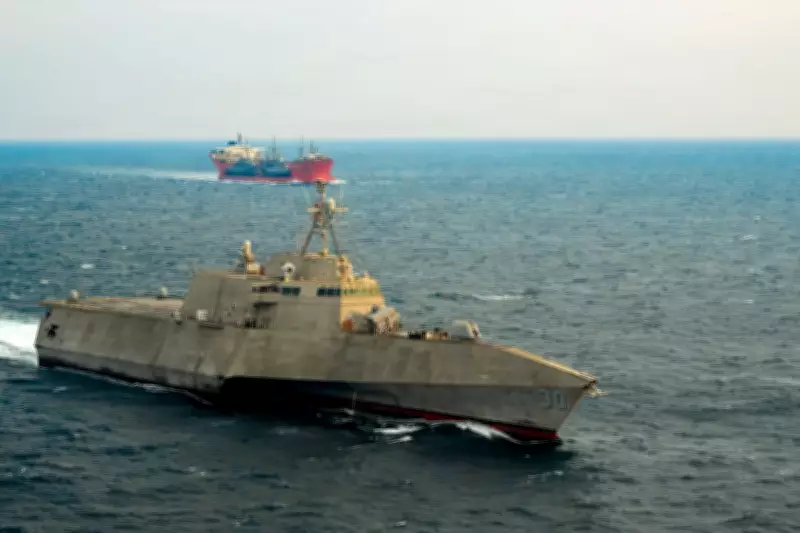
US Navy to Escort Tankers Through Hormuz Strait Despite Iranian Threats
The United States Navy, potentially supported by an international coalition, will escort oil tankers through the strategically vital Strait of Hormuz, according to US Treasury Secretary Scott Bessent. This decisive move comes in direct response to escalating threats from Iran, which have triggered a sharp surge in global oil prices, now exceeding $100 per barrel.
Escort Plan Amidst Rising Tensions
In an interview with Sky News, Secretary Bessent outlined the US position, stating, "My belief is that, as soon as it is militarily possible, the US Navy, perhaps with an international coalition, will be escorting vessels through." He further noted that current maritime traffic suggests Iran has not yet mined the strait, citing observations of Iranian and Chinese-flagged tankers navigating the passage.
However, this assessment contrasts with reports from the US Institute for the Study of War, which estimated on Wednesday that approximately ten mines had been deployed in the area, complicating the blockade. The Strait of Hormuz is a critical global chokepoint, facilitating the transit of roughly one-fifth of the world's oil supply.

Iran's Stance and Economic Impact
Iran's Islamic Revolutionary Guard Corps navy recently asserted "complete control" over the strait, aiming to instigate economic disruption. In a statement reported by the Mehr news agency, Iranian Foreign Ministry spokesperson Esmaeil Baghaei indicated that conditions have permanently shifted since February 28, emphasising the heightened importance of the strait's security.
Despite Iran's claims that it will permit coordinated passage, the situation remains volatile. Commercial vessels in the region are increasingly declaring affiliations with China to mitigate attack risks, as reported by the Associated Press. This tactic underscores the pervasive fear among shipping operators.
Oil Market Turbulence
The geopolitical strife has directly fuelled market instability. Oil prices continued their upward trajectory on Thursday, with Brent crude climbing an additional 4% to nearly $96 per barrel. This rise persisted despite a coordinated global effort to release a record 400 million barrels from emergency reserves, orchestrated by the International Energy Agency (IEA).
The IEA's intervention, involving 32 nations including the UK, represents the largest stockpile release in its five-decade history, aiming to stabilise markets by deploying about a third of its 1.2 billion barrel reserve. Nevertheless, market pressures intensified following attacks on three more cargo vessels in the Gulf, as Iran escalates its campaign to disrupt oil shipments.
The US Navy has prepared assets such as the Littoral Combat Ship USS Canberra for potential mine-clearing operations in the strait, highlighting the military readiness to ensure navigational freedom. As tensions mount, the international community watches closely, with the escort plan poised to be a critical test of resolve in safeguarding global energy routes.