US Would Require Over a Million Troops to Control Iran, Experts Warn
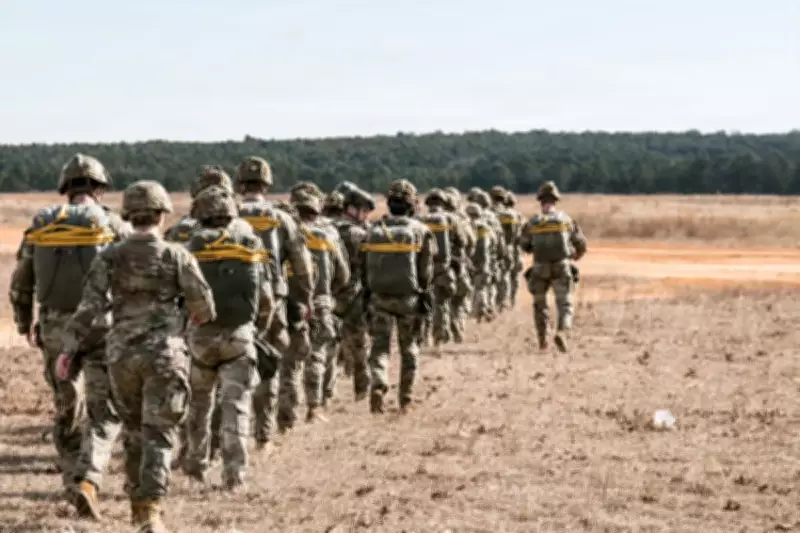
Past military engagements have demonstrated that America's current threats to deploy a few thousand ground troops to Iran represent an empty and perilous fantasy, according to analysis by World Affairs Editor Sam Kiley. Former President Donald Trump is reportedly considering sending an additional 10,000 soldiers to the Middle East to join existing forces, but experts contend this number is laughably inadequate for any meaningful operation against Iran.
Historical Precedents from Iraq and Afghanistan
During the 2007-2008 surge in Iraq ordered by President George W. Bush, approximately 185,000 American and allied troops were deployed to quell an insurgency that had grown since the 2003 invasion. This force was supplemented by 450,000-550,000 Iraqi government troops working alongside allies. Even with nearly three-quarters of a million soldiers, stability remained elusive, as demonstrated when the Islamic State captured much of northern Iraq in 2014 and established a terror-sponsoring state.
The situation in Afghanistan provides another sobering comparison. At the peak of operations in Helmand province between 2009 and 2011, about 35,000 troops from multiple nations were unable to secure a region 28 times smaller than Iran. This included 25,000 US Marines who surged into the province when British-led operations with approximately 10,000 troops proved insufficient.

Current Deployment Plans and Their Limitations
The United States is reportedly considering sending an extra 20,000 troops to augment the 50,000 soldiers, sailors, and air personnel already stationed at multiple bases around the Gulf. These forces are currently engaged in bombing operations in Iraq and countering Iranian missile and drone attacks. However, this total of less than 100,000 troops would be tasked with military operations against a nation of 90 million people with territory comparable to Western Europe.
Specialized Marine Expeditionary Units (MEUs) like the 31st MEU based around the USS Tripoli and the 11th MEU around the USS Boxer could potentially execute targeted operations. Each MEU comprises about 2,500 personnel and represents highly trained amphibious assault forces with integrated air support. These units might theoretically succeed in capturing specific objectives like Kharg Island, the heart of Iran's oil export system, or securing the 21-mile Straits of Hormuz against land-based threats.
Significant Operational Challenges and Risks
However, such operations would face severe challenges. Kharg Island lies over 300 miles north of the Straits of Hormuz, leaving any occupying force dangerously exposed to Iranian air attacks. Coastal operations would inevitably draw troops deeper into Iranian territory where the Islamic Revolutionary Guard Corps (IRGC) could apply tactics perfected in Iraq and Lebanon against what they term the "Great Satan."
Modern warfare technologies present additional threats. First-person drones perfected by Russia in Ukraine and likely supplied to Iran could swarm American positions, transmitting real-time kill footage that would echo the traumatic war imagery Trump previously promised Americans would never witness again in unnecessary Middle Eastern conflicts.
Expert Assessments of Required Force Levels
Lieutenant General Sir Nick Borton, a combat veteran of Iraq and Afghanistan who served as Director of Overseas Operations for the UK Ministry of Defence, estimates that the US and any allies would need "many hundreds of thousands" of troops for a ground attack on Iran. Some former NATO generals have suggested the requirement would exceed one million personnel.
"Ukraine is less than half the size and population of Iran," Sir Nick noted. "Russia invaded with 250,000 troops, failed, and now has 800,000 there without achieving victory. One can conclude that a successful large-scale operation in Iran would require substantially more than that."

While tactical operations to seize specific targets like Kharg Island might require fewer troops, Sir Nick questioned how long such positions could be held without broader strategic clarity. He warned that without clear purpose, any operation would be "doomed." Currently, the US lacks defined objectives beyond Israel's focus on regime change, while Iran maintains approximately 600,000 ground forces across the IRGC, regular army, and Basij militia, all eager to draw America into what they view as "Iraq 2.0 - the Nightmare" scenario.
For the Trump administration, sending additional troops to the Iranian conflict may represent exciting activity in the Oval Office, but military experts argue it risks being both pointless and potentially delivering more American casualties to Iranian forces.