US Deploys Thousands More Troops to Middle East Amid Ongoing Iran Talks
The Trump administration is significantly bolstering American military presence in the Middle East, with thousands of additional troops and major naval assets being deployed to the region. This move comes as administration officials insist that progress is being made in talks with Iran, while simultaneously threatening to escalate military actions if a diplomatic agreement is not reached in the near future.
Major Naval and Ground Forces Mobilised
According to multiple U.S. officials speaking on condition of anonymity due to the sensitivity of military plans, the aircraft carrier USS George H.W. Bush deployed on Tuesday and is scheduled to proceed to the Middle East accompanied by three destroyers. This carrier strike group comprises more than 6,000 sailors, representing a substantial increase in naval power projection capabilities.
Simultaneously, thousands of soldiers from the elite 82nd Airborne Division have begun arriving in the region. While most of these troops are part of a pre-planned rotation, approximately 1,500 paratroopers represent an additional surge force authorised by the Trump administration just last week. The 82nd Airborne is specially trained for parachute operations into hostile or contested territories to secure critical infrastructure such as airfields and key terrain.

Administration Maintains Strategic Ambiguity
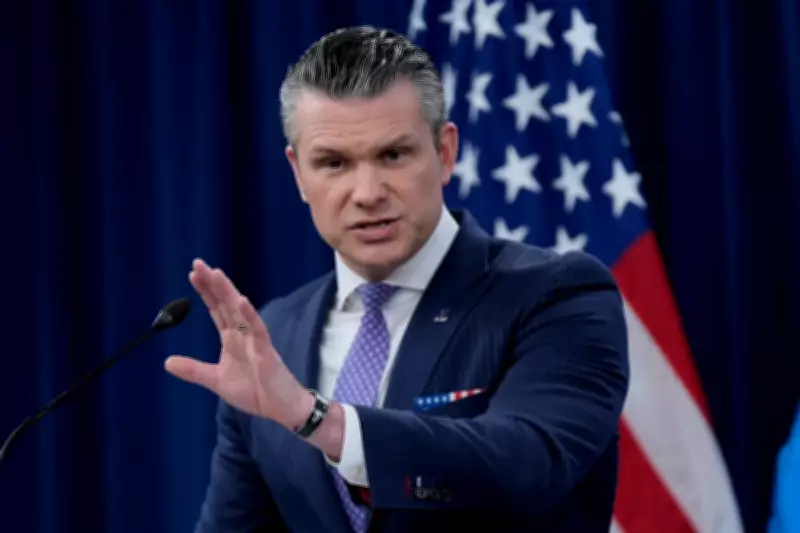
Defense Secretary Pete Hegseth and other administration officials have deliberately avoided clarifying whether U.S. ground forces might be deployed directly against Iran. "You cannot fight and win a war if you disclose to your adversary what you are willing or unwilling to do, including the potential for boots on the ground," Hegseth told reporters on Tuesday.
He elaborated that "our adversary currently believes there are at least fifteen different ways we could approach them with ground forces. And the reality is, there are." However, Hegseth emphasised that the primary objective remains reaching a diplomatic settlement with Iran, stating that "we prefer not to undertake more military action than absolutely necessary."
Additional Marine Deployments and Naval Challenges
The troop surge includes a U.S. Navy vessel carrying approximately 2,500 Marines that has recently arrived in the Middle East, with an additional 2,500 Marines being deployed from California. These forces join tens of thousands of service members already stationed throughout the region.
The deployment occurs as existing military assets face operational strains. The world's largest aircraft carrier, USS Gerald R. Ford, experienced a laundry room fire on March 12th that forced it to return from the Red Sea to the Mediterranean for repairs at a naval base in Crete. The fire damaged seven berthing compartments, likely displacing hundreds of sailors and damaging personal belongings. Despite this setback, Navy leaders anticipate the Ford will set records for deployment length.
Record-Breaking Naval Deployments Expected
Admiral Daryl Caudle, the Navy's top officer, stated during a Center for Strategic and International Studies discussion that "you will witness a record-breaking deployment by the Ford." He projected the aircraft carrier would likely complete eleven months of deployed operations, potentially returning to Norfolk, Virginia around the end of May.
The Ford was previously in the Mediterranean before being redirected to the Caribbean in January to participate in military operations that resulted in the ousting of Venezuela's leader, Nicolás Maduro, before being deployed to support operations related to Iran. "For those unfamiliar with naval operations, this represents an extraordinary deployment duration," Caudle remarked.
The USS Abraham Lincoln aircraft carrier also arrived in the region in January, further strengthening American naval presence. These substantial military movements underscore the Trump administration's dual approach of pursuing diplomacy while demonstrating significant military readiness as negotiations with Iran continue.