Exclusive: US Special Operations Aircraft Deployed from UK Bases as Marine Corps Reinforcements Head to Middle East
American military commanders have initiated a significant deployment of covert entry special forces ground operation warplanes from United Kingdom airbases to the Middle East, according to exclusive intelligence. This movement coincides with the dispatch of thousands of United States Marines to the region, dramatically escalating tensions in the ongoing conflict with Iran's regime.
Marine Corps Expeditionary Force Mobilisation
The deployment has intensified suspicions that the United States is actively considering a boots-on-the-ground operation targeting the Iranian government. Reports indicate an expeditionary force comprising approximately 2,300 Marines is being transported aboard three new warships destined for the war-torn region.
These reinforcements will join thousands of Marines already positioned near the Iranian front line, bringing the total American presence to around 5,000 personnel. Intelligence sources suggest a potential strategic objective could involve seizing Iran's Kharg Island, located sixteen miles off the mainland coast.

Such an operation would aim to disrupt Iran's control over the Strait of Hormuz, a critical global trade route for oil and gas transportation. The Mirror can exclusively confirm that United States special forces warplanes have now been deployed to support these operations.
Special Operations Aircraft Movements from UK Soil
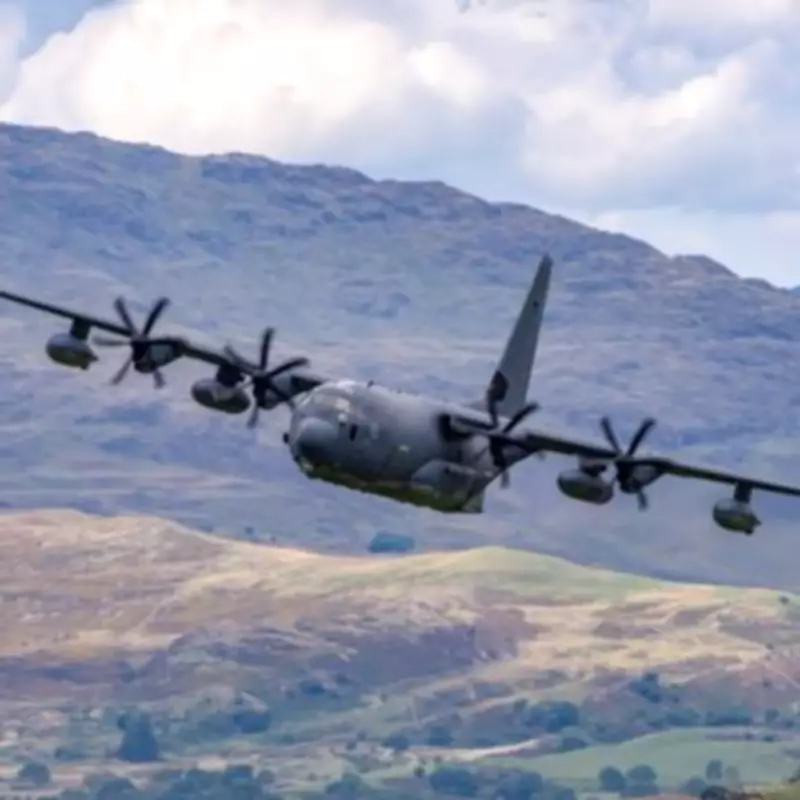
Nine MC-130J Commando II aircraft recently landed at RAF Mildenhall in Suffolk, with four subsequently taking off for Middle Eastern destinations. This development represents a further step toward deeper United Kingdom entanglement in the conflict, occurring mere days after British troops faced hostile fire at their base in Erbil, northern Iraq.
An intelligence analysis obtained by the Mirror warns that the movement of these warplanes from British territory could become politically sensitive. The document highlights that Mildenhall's strategic significance stems from hosting the sole United States Air Force Special Operations Command presence in Europe.
The analysis states: "Operations supported from this location have the potential to place the United Kingdom in an enabling role within wider contingency operations directed at Iran." It is believed these aircraft could be utilised for multiple purposes:
- Reconnaissance of Iranian coastal infrastructure
- Assisting with targeting maritime threats associated with the Islamic Revolutionary Guard Corps
- Supporting partner forces throughout the region
- Preparing the operational environment for potential escalation
Deniable Operations and Retaliation Risks
The intelligence assessment further explains: "These missions are particularly sensitive because they are often conducted in a deniable manner, allowing governments to avoid formal acknowledgement of their involvement while still enabling strategic outcomes. The implication for the United Kingdom is that Iranian authorities may perceive British territory as indirectly facilitating hostile activity."
"Even if operations are conducted primarily by United States forces, the use of a United Kingdom base could lead Tehran to view Britain as part of the operational infrastructure supporting actions against Iran. Such perceptions increase the likelihood that Iran may respond through asymmetric retaliation targeting British interests."
Advanced Aircraft Capabilities and Regional Dynamics
The MC-130J Commando II aircraft is based upon the traditional 'go anywhere' C-130 transport plane extensively used by both UK and US forces during previous Iraq operations. This variant retains the ability to land on desert airstrips while carrying troops and weaponry, but features enhanced capabilities including greater speed, superior flight performance, and improved fuel efficiency.

This deployment follows earlier reports that United States officials had discussed embedding special forces within large Kurdish troop formations for operations inside Iranian territory. In the weeks preceding the current conflict, the Islamic Revolutionary Guard Corps reportedly deployed substantial troop numbers toward the northern Iraqi border to secure the frontier region.
One significant challenge facing American planners is the lack of unification among Kurdish groups within Iran, raising doubts about their capability to effectively challenge the Iranian regime. Intelligence assessments indicate the regime increasingly relies on the shadowy IRGC as a decentralised force specialising in unconventional warfare tactics designed to avoid direct confrontation.
Iran's Asymmetric Warfare Strategy
One assessment notes that the IRGC's "...operational philosophy emphasises indirect confrontation, allowing Iran to challenge stronger adversaries without exposing itself to the risks of large-scale conventional warfare."
"Within the Strait of Hormuz, the IRGC naval forces represent the most immediate maritime threat to commercial shipping. Their use of swarm tactics, small missile boats, drones and naval mines allows them to threaten large vessels and naval task groups with relatively limited resources."
"However, the influence of the IRGC extends far beyond maritime operations. The organisation is responsible for coordinating many of Iran's external proxy relationships, including groups operating in Lebanon, Gaza and other parts of the Middle East. Through these networks Iran is able to project power across a wide geographic area while maintaining a degree of operational deniability."