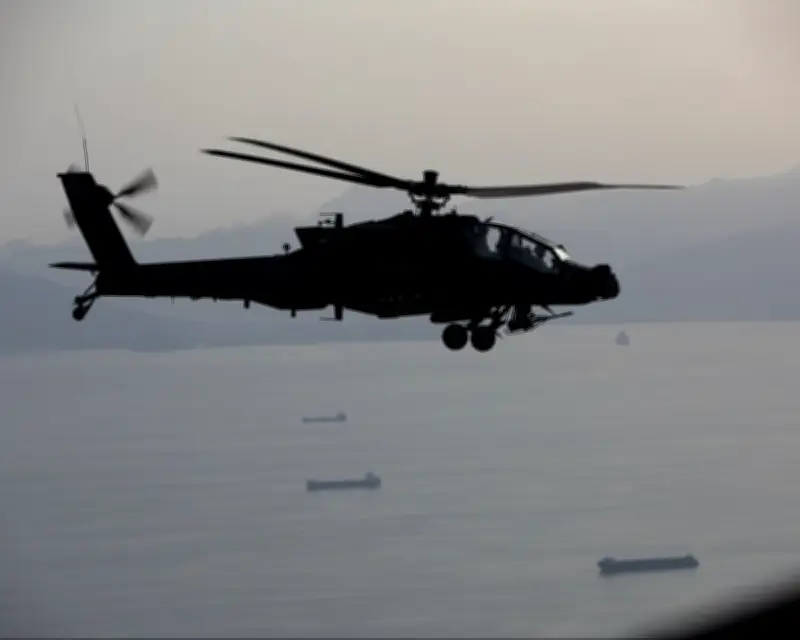
US Strikes Iran After Apache Downing
The United States has launched military strikes against Iran after President Donald Trump accused Tehran of downing a US Army helicopter near the Strait of Hormuz, jeopardizing a fragile ceasefire agreed upon in April. US Central Command confirmed that Trump ordered the strikes to begin at 10pm UK time on Tuesday in response to the loss of an AH-64 Apache gunship off the coast of Oman. According to US media citing White House officials, Centcom is targeting radar and air defense installations along the strategic waterway.
Trump Blames Iran
In a post on his Truth Social platform, Trump declared Iran responsible for the crash and stated that Washington could not allow such an act to go unpunished. A US official speaking anonymously to the Associated Press revealed that the helicopter went down after colliding with an Iranian drone, though it remains unclear whether the collision was intentional. Official statements indicate the incident is under investigation. Trump earlier claimed on social media that the helicopter had been “shot down.”
Proportional Response
US officials emphasized that the strikes are not intended to escalate into a full-scale war. Centcom described the mission as “a proportional response to unjustified Iranian aggression.” Iranian Foreign Minister Abbas Araghchi responded on social media, warning that Iran “will leave no attack or threat unanswered” and urged the US to “leave our region if you want to be safe.”

Rescue Operation
The two crew members of the downed Apache were rescued in an unprecedented operation using an unmanned drone boat, the US military reported. Trump downplayed the incident in an interview with the Wall Street Journal, calling it “wasn’t a big deal” and noting that the “pilot is fine.”
Regional Tensions
The helicopter crash occurred as the Middle East reeled from fresh exchanges between Iran and Israel on Monday, dealing a major blow to the strained ceasefire. Iranian state television reported that Israeli attacks killed at least two members of Iran’s air defense units. Since the US and Israel began striking Iran on February 28, the conflict has disrupted the global economy, raised energy prices, and increased the cost of essentials like food.
Ceasefire Challenges
Officials have struggled to turn the April ceasefire into a permanent deal, especially as Israel intensifies its military campaign in Lebanon against the Iranian-backed Hezbollah militia. The crash occurred at around 3:30am local time on Tuesday off the coast of Oman during a routine patrol. Centcom spokesperson Capt. Tim Hawkins confirmed that an unmanned boat located the aviators after they spent about two hours in the water, marking the first known drone rescue at sea by the US military.
Military Assets
AH-64 Apache helicopters have been crucial to the US military’s blockade of Iranian crude oil shipments, aimed at pressuring Tehran into negotiations. The UAE has also used these helicopters to shoot down Iranian drones. The rescue drone was a 24-foot Corsair vessel, according to Hawkins.
Diplomatic Signals
Before the strikes, Trump expressed renewed optimism about negotiations with Iran, suggesting a deal could be reached in “two or three days,” though he offered no details. In the two months since the initial ceasefire, Trump has repeatedly predicted a near-term agreement. “We’re very close to having a very, very good, strong, powerful deal,” he said. He warned that bombing could easily destroy Iran’s infrastructure but would close the Strait of Hormuz for months and cause heavy casualties. Vice-President JD Vance, in an interview hours before the strikes, suggested the war could conclude in a week or a few months. Iran’s chief negotiator, Mohammad Bagher Ghalibaf, stated, “We prefer the language of diplomacy, but we speak other languages far more fluently.”