

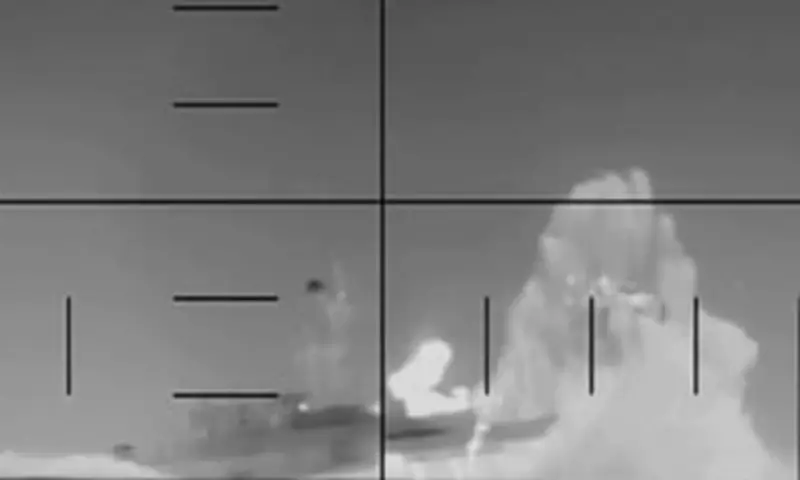
US Submarine Captain Issued Dual Warnings Before Sinking Iranian Frigate
According to emerging reports, the captain of a United States submarine issued two explicit warnings to an Iranian warship before launching torpedoes that sank the vessel off the coast of Sri Lanka. The incident, which occurred in the Indian Ocean approximately 25 miles south of the island nation, has resulted in a significant loss of life and escalating diplomatic tensions.
Casualties and Rescue Operations Following the Attack
Iranian authorities have confirmed that at least 87 sailors perished in the attack, with an additional 78 personnel wounded. The frigate, identified as the IRIS Dena, was carrying a crew of 180 when it was struck by an explosion on Wednesday. Rescue efforts, coordinated by the Sri Lankan navy, managed to save 32 sailors from the ocean, while 87 bodies were recovered. The injured were transported to a hospital in Galle, located 70 miles south of Colombo, where security has been heightened.
Iranian reports indicate that one crew member contacted his father, revealing that the US warnings to abandon ship were disregarded by the Iranian commander. Some sailors managed to escape using lifeboats before the vessel issued a distress call at dawn, prompting the Sri Lankan navy to dispatch vessels and aircraft for the rescue mission.

Diplomatic Fallout and International Response
Iran's Foreign Minister, Abbas Araghchi, has vehemently condemned the attack, labeling it an "atrocity at sea" and warning that the United States will "bitterly regret" its actions. In response, Sri Lankan Foreign Minister Vijitha Herath addressed parliament, confirming that the injured sailors are receiving medical care under Colombo's international treaty obligations. When questioned about potential US pressure regarding the repatriation of Iranian personnel, Herath emphasized that all steps were taken in accordance with international laws.
Further complicating the situation, Sri Lanka provided safe haven to a second Iranian warship, the IRIS Bushehr, evacuating its 219 crew members a day after the Dena was torpedoed. The vessel was diverted to Trincomalee on Sri Lanka's northeast coast after reporting engine problems. Similarly, India permitted a third Iranian ship, the IRIS Lavan, to dock at one of its ports on humanitarian grounds, citing the presence of young cadets among the crew.
US Military Confirmation and Broader Strategic Context
US Secretary of War Pete Hegseth confirmed during a Pentagon briefing that an American submarine was responsible for sinking the Iranian warship in international waters. He described the event as "a quiet death," noting it marks the first torpedo sinking of an enemy ship since World War Two. Hegseth also referenced "Operation Epic Fury," a broader military campaign, stating that the combined efforts with Israeli forces have resulted in "sheer destruction" for Iranian adversaries.
US Central Command further rebuked Iranian leadership for falsely claiming the sinking of an American aircraft carrier, clarifying that the only carrier struck was the Iranian drone carrier Shahid Bagheri. Tehran had reportedly used this vessel to launch drone attacks against US bases and Gulf allies following the death of Ayatollah Ali Khamenei.
Legal and Humanitarian Considerations
Sri Lankan President Anura Kumara Dissanayake affirmed that Colombo will adhere to the Hague Convention, which mandates neutral states to detain combatants until hostilities cease. Senior administration officials are engaged in discussions with the International Committee of the Red Cross regarding the survivors from the torpedoed ship. International humanitarian law applies to these individuals, with provisions for the repatriation of the wounded upon request.
Iranian diplomats in Colombo have formally requested the return of the remains of 84 sailors killed in the attack. Meanwhile, Sri Lankan naval spokesman Buddhika Sampath reiterated that the rescue operation was conducted in line with the nation's maritime obligations within its designated search and rescue area in the Indian Ocean. Both the Sri Lankan navy and air force have declined to release footage of the rescue, citing the involvement of another state's military.

The exact cause of the sinking remains under investigation, with a Sri Lankan military source suggesting a submarine attack led to the explosion. Opposition legislators have raised questions about whether the vessel was targeted as part of ongoing US-Israeli operations against Iran, though the government has not provided an immediate response. As the search for additional survivors continues, prospects for finding more crew members appear dim, according to officials speaking to AFP.





