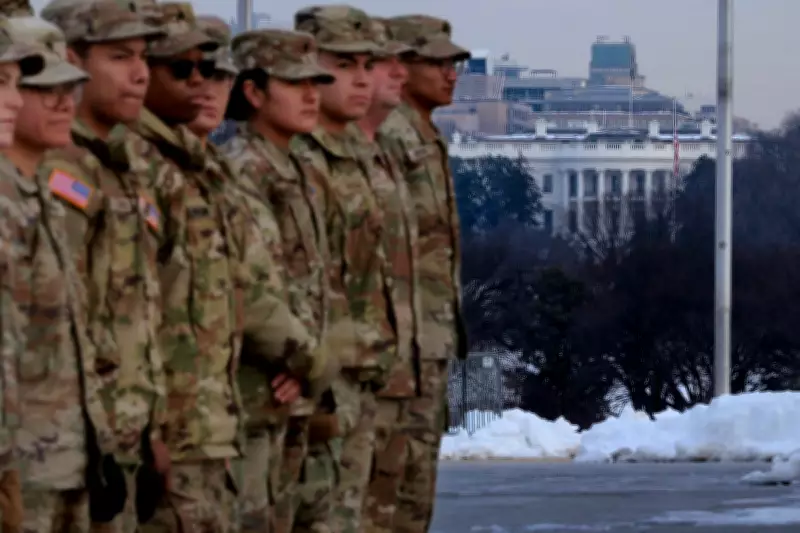
The United States military has officially confirmed that the number of American service members wounded in the ongoing conflict with Iran has now surpassed 200 personnel. This significant milestone was reached as the hostilities entered their third week of intense engagement across the Middle Eastern theatre.
Scope of Injuries Across the Region
According to statements released by the US military's Central Command on Monday, the vast majority of these injuries are classified as minor in nature. In fact, approximately 180 of the wounded troops have already returned to active duty following medical treatment. However, the command also disclosed that ten of the reported injuries are considered serious, requiring more extensive care and recovery periods.
Geographic Distribution of Casualties
These casualties were not concentrated in a single location but were instead sustained across a broad geographic area encompassing seven different countries. The injured US troops were serving in Kuwait, Saudi Arabia, the United Arab Emirates, Jordan, Bahrain, Iraq, and Israel at the time they were wounded. This wide distribution underscores the expansive nature of the conflict's front lines and the multinational deployment of American forces.

Context of Escalating Hostilities
The rising injury toll occurs against a backdrop of increasing violence that has already claimed the lives of 13 US service members. These fatalities began after Iran initiated a series of strikes against American military bases on February 28th, marking the official outbreak of open hostilities between the two nations.
Beyond targeting military installations, Iranian attacks have also struck diplomatic missions, civilian hotels, major airports, and critical energy infrastructure throughout Arab Gulf states. These actions have significantly escalated the conflict's impact on regional stability and international relations.
American Military Response
In response to these provocations, the United States has conducted extensive military operations against Iranian targets. American forces have carried out strikes against more than 7,000 distinct targets within Iran itself, demonstrating the scale and intensity of the US counteroffensive.
Technological Losses in the Conflict
The conflict has also resulted in significant technological losses for American forces. According to a US official speaking on condition of anonymity on Monday, approximately a dozen MQ-9 Reaper drones have been destroyed during the hostilities. These unmanned aerial vehicles represent sophisticated military assets with substantial capabilities.
The General Atomics MQ-9 Reaper, which entered service with the US Air Force sixteen years ago, can loiter at altitudes around 50,000 feet for more than 27 continuous hours. Equipped with advanced cameras, sensors, and radars for intelligence gathering, these drones can also be armed with weapons such as air-to-ground missiles, making them versatile platforms for both surveillance and combat operations.
Intelligence Assessments and Presidential Statements
Recent reports indicate that President Donald Trump received warnings prior to the conflict that attacking Iran could potentially trigger retaliatory strikes against US allies in the Gulf region. This intelligence assessment contrasts with the president's public statements claiming that Tehran's reaction came as a surprise.
According to sources who requested anonymity to discuss sensitive intelligence matters, pre-war assessments did not guarantee Iranian retaliation against Gulf allies but certainly included it among potential outcomes. "It certainly was on the list of potential outcomes," one source clarified regarding the intelligence community's evaluation of possible Iranian responses.
Despite these warnings, President Trump stated twice on Monday that Iran's retaliatory strikes against Qatar, Saudi Arabia, the United Arab Emirates, Bahrain, and Kuwait were unexpected. Speaking first at a Kennedy Center board meeting held at the White House, the president expressed surprise at the scope of Iran's response. "They weren't supposed to go after all these other countries in the Middle East," Trump remarked. "Nobody expected that. We were shocked."

The conflict continues to evolve as both nations sustain casualties and damage, with the injury count for American forces now officially exceeding 200 across seven different countries in the region.