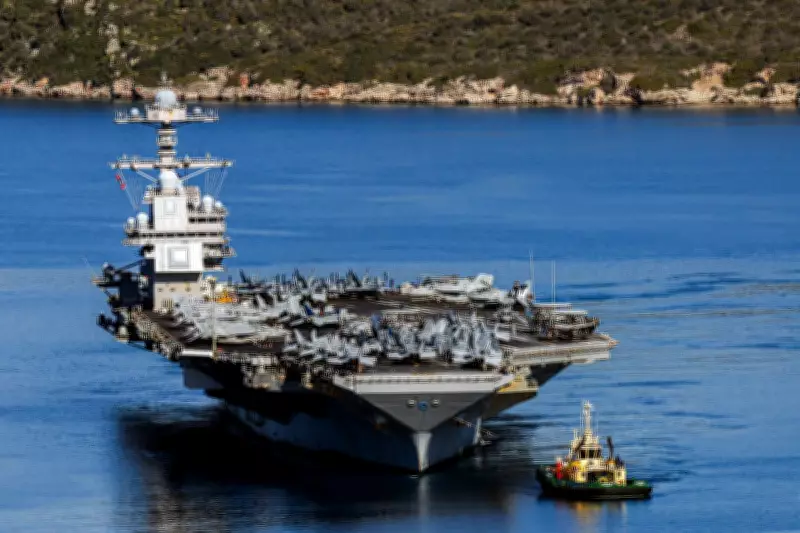
USS Gerald R Ford to Undergo Repairs in Crete Following Deployment Woes
The US Navy aircraft carrier USS Gerald R Ford has departed Souda Bay on the island of Crete on 26 February 2026, heading for repairs after a series of mishaps during its prolonged deployment. The vessel, the world's largest aircraft carrier, has been at sea for nearly nine months, participating in strikes against Iran and previously in operations targeting Venezuela's president Nicolás Maduro.
Fire Damage and Crew Injuries
A significant fire broke out in the ship's main laundry area, resulting in injuries to sailors and the destruction of approximately 100 sleeping berths. Officials, speaking anonymously to Reuters, reported that nearly 200 sailors received treatment for smoke-related injuries, with one service member flown off the ship due to injuries. The Pentagon has not yet commented, but the US military's Central Command noted two sailors were treated for non-life-threatening injuries. The fire took hours to control, though the propulsion plant remained undamaged, and the carrier was declared fully operational.
Persistent Toilet System Problems
In addition to the fire, the carrier has faced ongoing issues with its toilet system, including frequent clogging and long queues for restrooms. A 2020 report from the US Government Accountability Office highlighted that the system requires regular acid flushes costing $400,000 each to clear blockages. The Navy acknowledged these problems last month, stating that clog incidents are addressed promptly by trained personnel with minimal downtime.

Morale and Deployment Concerns
The extended deployment has raised serious questions about crew morale and the warship's readiness. Senator Mark Warner, vice-chair of the Senate Intelligence Committee, criticised the deployment, attributing the strain to President Donald Trump's military decisions. The Navy, in a statement to the Guardian, emphasised the dedication of sailors but noted that maintenance demands have decreased as the deployment progressed.
Strategic Implications and Replacement
The withdrawal of the USS Gerald R Ford for repairs creates a gap in US forces in the region, where its over 75 military aircraft, including F-18 Super Hornets, have been involved in strikes against Iran. The New York Times reported that the carrier will likely be relieved by the USS George HW Bush, which is preparing to deploy to the Middle East. Since operations began against Iran on 28 February, the US has carried out strikes on more than 7,000 targets.
Prior to its Middle East deployment, the carrier was active in the Caribbean, supporting operations against drug-smuggling boats, interdicting sanctioned tankers, and seizing Venezuelan leader Nicolás Maduro. The vessel's sophisticated radar system and air traffic control capabilities have been crucial in these missions, but the recent setbacks underscore the challenges of prolonged naval operations.