

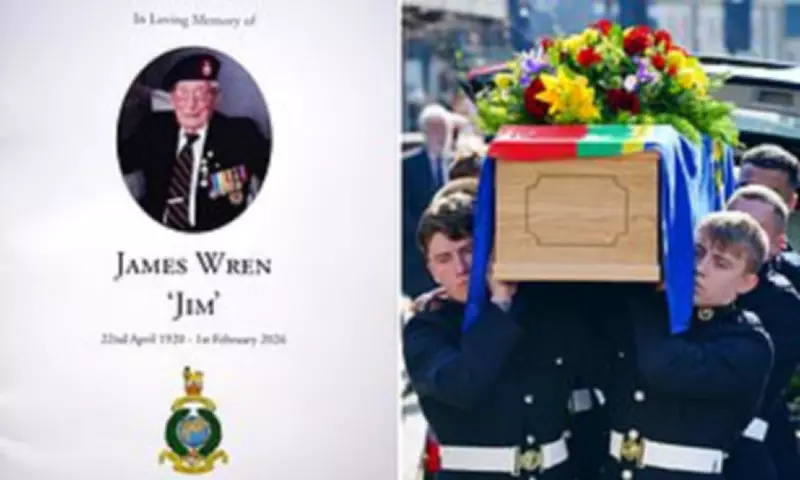
Hundreds of mourners lined the streets of Salisbury to pay their final respects to one of the last remaining Royal Marine veterans of the Second World War, Jim Wren, who passed away earlier this year at the remarkable age of 105. The funeral ceremony drew a massive and solemn turnout, with family, friends, and well-wishers gathering to honour a lifetime of extraordinary service and resilience.
A Hero's Final Journey
The coffin of Jim Wren was draped in the Royal Marine Corps Flag and carried into St Thomas's Church by serving personnel, moving in complete silence as a mark of profound respect. During the emotional service, his family described him as a 'passive man who would never get angry' and someone who rarely spoke about his wartime experiences, only beginning to open up about them in recent years.
From Rejection to Royal Marine
Mr. Wren's path to service was not straightforward. At the age of 19, he faced initial rejections from both the Royal Air Force and the British Army before joining the Royal Marines on his uncle's advice. After completing his training, he was assigned to the First World War-era battle-cruiser, HMS Repulse, which played a key role in the hunt for the German battleship Bismarck.

The Pacific Theatre and Capture
Deployed to the Far East in an effort to deter Japanese aggression in the Pacific, Mr. Wren's ship was caught by enemy bombers in the South China Sea on December 10, 1941, just 80 minutes into battle. Recalling the moment to comrades in the Royal Marines Association, he said, 'I dropped my tea and headed to my action station. The noise was terrific, it was one big noisy battle. There was no panic though, we'd been through the routines so regularly that we just got on it. Everyone knew their role and we had such a good crew. We all had faith in each other.'
Two months later, as he attempted to escape from Singapore, he was captured by the Japanese forces. He spent the remainder of the conflict in prisoner-of-war camps, enduring three and a half gruelling years of harsh treatment, forced labour clearing jungles and constructing airstrips and railways, starvation, and disease.
Survival Through Brotherhood
Despite soaring mortality rates in the camps, Wren and his unit maintained a strict code of brotherhood, sharing food and guarding the dignity of the dying. He returned home weighing just six stone (38kg) and always attributed his survival to the unbreakable bond between his comrades. He had met his wife, Margaret, just before deployment, and she waited for him throughout the war, not knowing if he was alive or dead. A year after his return, they married and shared 74 years together, a journey that only ended with her death in 2020.
A Legacy of Quiet Courage
The service concluded to the sound of bugles as members of the Royal Marines and his family paid their final farewells. Mourners, many lining the streets in quiet tribute, reflected on the life of a man who exemplified quiet courage and dedication. Originally from Sussex, Jim Wren's story is a poignant reminder of the sacrifices made by his generation, and his funeral served as a powerful testament to a national hero whose legacy will endure.






