Ukrainian President Volodymyr Zelenskyy has declared a state of emergency in the country's energy sector, as critical infrastructure struggles to cope with relentless Russian bombardment during a brutal winter freeze. The move comes as night-time temperatures plummet towards a bone-chilling -20C (-4F), leaving millions vulnerable without reliable power and heating.
Winter Crisis and Political Tensions
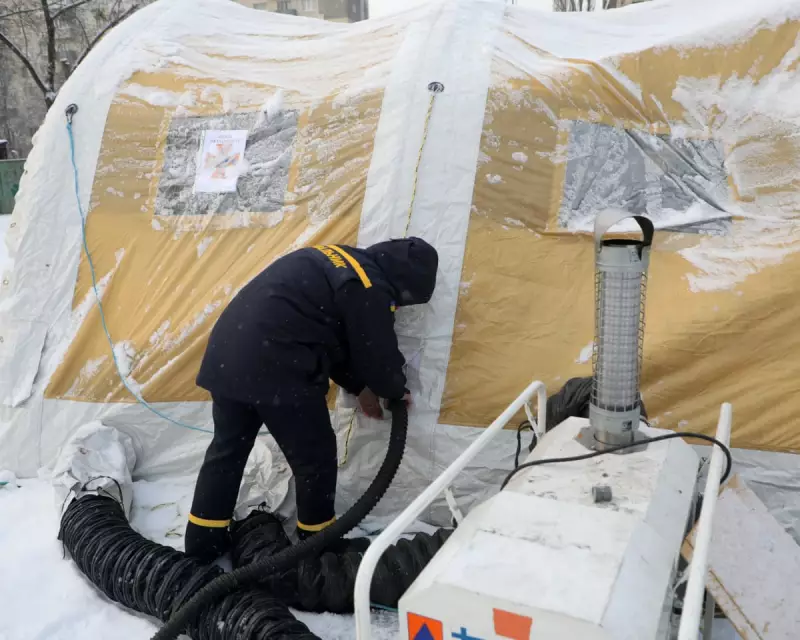
Emergency crews are now working around the clock to restore vital services. President Zelenskyy stated the emergency declaration would grant authorities "more options and flexibility" to manage the crisis. He called for the rapid establishment of more public warming centres where residents can find heat and charge essential electronic devices. In a significant concession to the harsh conditions, he indicated nightly curfews could be lifted in areas where the security situation allows.
The announcement, however, was accompanied by pointed criticism of the capital's preparedness. Zelenskyy claimed Kyiv had done "considerably less" than other major cities like Kharkiv to prepare for the winter onslaught. "Even in recent days, I do not see sufficient intensity," he said, demanding urgent corrections.

Kyiv's mayor, Vitali Klitschko, swiftly countered, defending the city's efforts. He reported that heating had been restored to all but approximately 400 of 6,000 affected apartment buildings and that support centres were operating 24/7. Klitschko argued the president's statements "undermine the dedicated work of thousands of people" who are fighting for their country through their tireless restoration efforts.
Military Challenges and International Diplomacy
As Ukraine battles the elements, its military faces profound internal challenges. The new defence minister, Mykhailo Fedorov, delivered a stark assessment to parliament on Wednesday. He revealed the armed forces are grappling with desertion by an estimated 200,000 troops and a further two million people evading conscription.
Fedorov outlined a series of systemic issues plaguing the defence ministry, including:
- Excessive bureaucracy and a Soviet-style management approach.
- Critical disruptions in equipment supply chains to frontline troops.
- A funding shortfall of 300 billion hryvnia (approximately $6.9 billion).
"We cannot fight a war with new technologies but an old organisational structure," Fedorov warned. On a positive note, he highlighted the rapid growth of Ukraine's domestic defence industry, including about 20 private missile producers and over 100 companies manufacturing ground-based robotic systems.
On the diplomatic front, Zelenskyy urged his military to hold the 1,200km frontline and diplomats to intensify efforts to secure peace. His call comes amid contrasting international rhetoric. Former US President Donald Trump claimed Ukraine – not Russia – is the obstacle to a peace deal, stating he believed Vladimir Putin was ready to negotiate. This stance starkly contrasts with European allies, who maintain Moscow shows little genuine interest in ending its invasion.
Financial Support and Sanctions
In a significant development for Ukraine's war effort, the European Union has proposed a major new financial mechanism. The EU executive, led by President Ursula von der Leyen, outlined a plan for a €90 billion (£78 billion) loan that would allow Kyiv to purchase military equipment from non-European suppliers. This represents a softening of a previously strict "buy European" policy favoured by France.
"European preference first, but if not possible then purchase abroad," von der Leyen stated, while emphasising Europe should still see a return in jobs and research benefits from the massive investment. The European Commission confirmed an alternative plan to utilise frozen Russian assets remains under consideration.

Separately, the US Treasury Department has extended a licence until 28 February for companies to negotiate with the sanctioned Russian energy giant Lukoil about purchasing its foreign assets. The US imposed sanctions on Lukoil and Rosneft in October, pressuring Moscow over its war. Lukoil, which put its $22 billion in global assets up for sale, has seen its overseas operations severely disrupted from Iraq to Finland.