Henri Murison, chief executive of the Northern Powerhouse Partnership, writes that Andy Burnham's latest devolution proposals amount to a political revolution that could spread Greater Manchester's economic success across Britain.
Burnham's 'revolution' outlined in Manchester speech
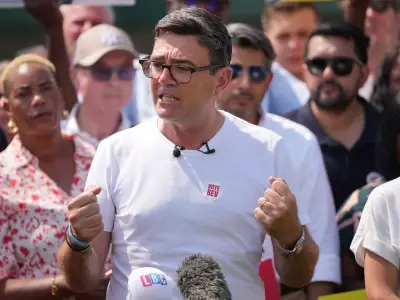
This week, Andy Burnham set out his stall in Manchester at the People's History Museum. The Manchester Evening News described it on its front page as nothing short of Burnham's Revolution, and Murison said he agrees. For the last decade, he has been trying to do a more modest version of what Burnham is now seeking: learning the lessons of Greater Manchester and identifying opportunities in other parts of the North to achieve similarly dramatic improvements.
What Burnham set out on Monday was more than just another speech about devolution. It was an attempt to take the lessons Greater Manchester has learned over the past two decades and apply them across the country.

The 'Manchester miracle' and its replication
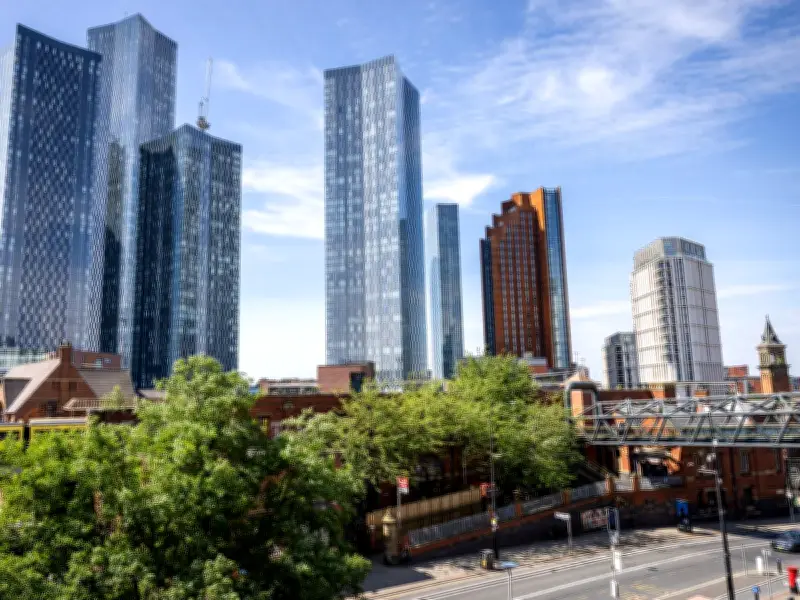
When George Osborne, then chair of the Northern Powerhouse Partnership, appointed Murison as the organisation's inaugural director, he felt privileged to work with the late Sir Howard Bernstein and then Manchester City Council leader Sir Richard Leese. What they achieved in economic terms, with the fastest productivity growth of any city region over the last twenty years, has been termed the Manchester miracle.
However, Murison argues that the real lesson is not that Greater Manchester is unique but that it can be replicated. The mayoral model, which Osborne as chancellor insisted upon in return for devolving powers such as bus franchising, has since been successfully applied in city regions near and far. In Liverpool, despite challenging circumstances, Mayor Steve Rotheram has overseen a genuine success story, establishing the city region authority with little institutional history beyond the former Merseyside transport authority.
Rotheram has been able to deliver a well-run organisation with strong leadership, despite not benefiting from Greater Manchester's long history of collaboration and strong institutions. The book Rotheram and Burnham wrote together has become required reading for journalists trying to understand where this agenda might be heading. Chris Mason, the BBC's political editor, re-read it on his journey north from London ahead of Monday's speech.
Drawing on Lord O'Neill's vision
Burnham's speech draws heavily on the thinking of Lord Jim O'Neill of Gatley, who Murison also worked for during his time as chair of the partnership. The Cities Growth Commission O'Neill led over a decade ago argued that the North could be greater than the sum of its parts. His vision for not only Greater Manchester but the wider 'ManSheffLeedsPool' will be significantly advanced by what Burnham has proposed.
Employment support and skills devolution
Take employment support. Over a decade ago, Greater Manchester pioneered the Working Well programme, under which the city region was paid by results for helping people into work. It was an example of central government rewarding regional leadership for joining up funding streams rather than operating through fragmented Whitehall departments. Mechanisms like this will now be strengthened and developed further.
The same applies to skills. By devolving more powers, Burnham can remove many of the barriers that stood in the way of delivering his Greater Manchester Baccalaureate because he did not control all the necessary levers. That principle also runs through his proposals on re-industrialisation and his case for building more council homes. It is a vision of state intervention which is bottom up rather than top down.
Economic benefits for the whole country
The cumulative effect of these changes will be to make Greater Manchester less of an ongoing financial cost to government and able to stand on its own two feet. Today, higher levels of poverty and worklessness mean higher levels of welfare spending, while poorer health outcomes that come with greater deprivation place greater pressure on the NHS. Investing locally to reduce those costs ultimately benefits taxpayers across the whole country.

That is why Burnham's speech represents nothing short of a revolution. Ideas which were once regarded as heresy, accepted by governments only as pilot schemes, are becoming orthodoxy. The British state is being re-wired and Burnham is the sparky.
Fiscal devolution remains absent
Yet one important facet of that revolution was absent from the speech: fiscal devolution - who gets to spend the taxes we pay and who benefits when those tax receipts increase. Take the proposed underground station at Piccadilly for Northern Powerhouse Rail services towards Liverpool via Manchester Airport and east towards Yorkshire. It has the potential to attract businesses, create better-paid jobs and unlock housing development, which will all generate significant additional tax revenues. Yet under the current system, almost all those additional revenues will flow straight back into the Treasury.
If Greater Manchester is expected to help part-fund the station, it can only do so from its existing grants and the limited business rate revenues it currently retains, rather than sharing in the much larger tax receipts the investment will generate. Instead, the current chancellor has proposed allowing places to retain a share of the additional tax revenue generated through growth, including income tax. That would allow city regions including Greater Manchester to contribute significantly to major projects like an underground station at Piccadilly, confident that they will share in the long-term rewards. Prime Minister-in-waiting Burnham hasn't yet confirmed he will support that proposal, but given he has argued for it himself, Murison suspects a re-commitment will come once he takes office.
No 10 North and the path ahead
No 10 North must be up and running in the early days of Andy Burnham's new government. Unlocking growth right across the country will require drawing on the talent and experience of those who negotiated Greater Manchester's devolution settlement and delivered the most ambitious model of English devolution yet seen. The revolution will be Burnham's contribution to Makerfield. It will also be his enduring legacy to Greater Manchester, having taken the region from strength to strength while renewing his promise to the North: to create a genuine counterweight to London across both sides of the Pennines.
But he must remain restless. The transformation of Manchester and Salford city centre will continue with increasing ambition, but it cannot be enough. As next prime minister, he must give Greater Manchester the backing it needs to make another great leap in productivity, underpinning more job creation and higher wages wherever people live across the city region.