

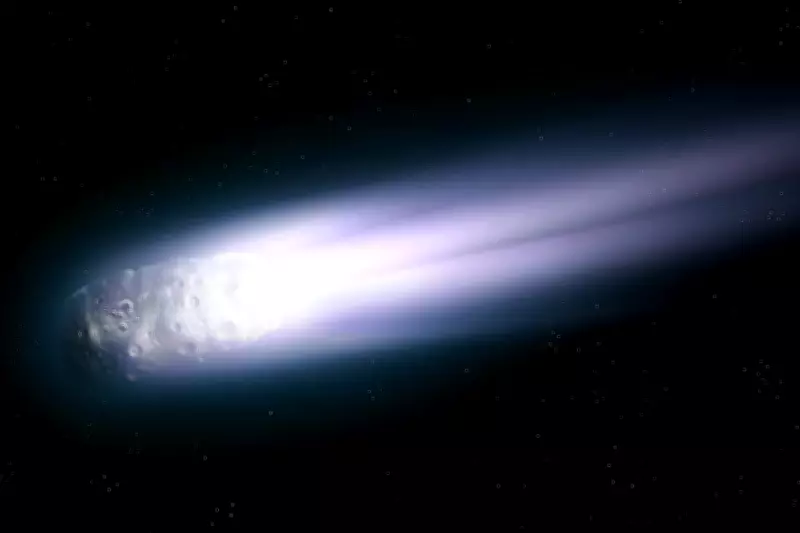
A newly discovered asteroid, comparable in size to a blue whale, will make an exceptionally close approach to Earth on Monday evening. Astronomers are closely monitoring the object, and the public can watch the flyby via a live stream.
Asteroid 2026 JH2: Close Approach Details
Designated 2026 JH2, the asteroid was first detected just last week by astronomers at the Mount Lemmon Observatory in Arizona. It is expected to reach its closest point to Earth at just after 10pm BST (5pm EDT) on 18 May. At that time, it will come within approximately 91,000 kilometres (57,000 miles) of our planet—less than a quarter of the distance to the Moon.
To put that in perspective, the asteroid will be closer to Earth than some satellites, including NASA's Transiting Exoplanet Survey Satellite (TESS). Measuring up to 35 metres (115 feet) across, 2026 JH2 is larger than a blue whale and would cause significant damage if it were to impact Earth. Its size is comparable to the Chelyabinsk meteor, which exploded over Russia in 2013, shattering windows and injuring around 1,500 people.

No Risk, But Visible with Binoculars
Despite its close proximity, astronomers from NASA's Jet Propulsion Laboratory and the European Space Agency confirm that the asteroid poses no threat to Earth or the Moon. However, it will be bright enough to observe with a good pair of binoculars, provided skywatchers know exactly where to look.
The Virtual Telescope Project will broadcast a live stream of the flyby from its observatory in Manciano, Italy. The stream is scheduled to begin at 8:45pm BST on Monday. Current weather forecasts indicate a chance of intermittent clouds over the region, but the organisers remain hopeful for clear views.
Orbit and Future Passes
Asteroid 2026 JH2 follows an elliptical orbit that takes it around the Sun every 3.7 years. According to the European Space Agency, its current trajectory means it will not pass close to Earth again until 2060, and even then at a much greater distance.






