

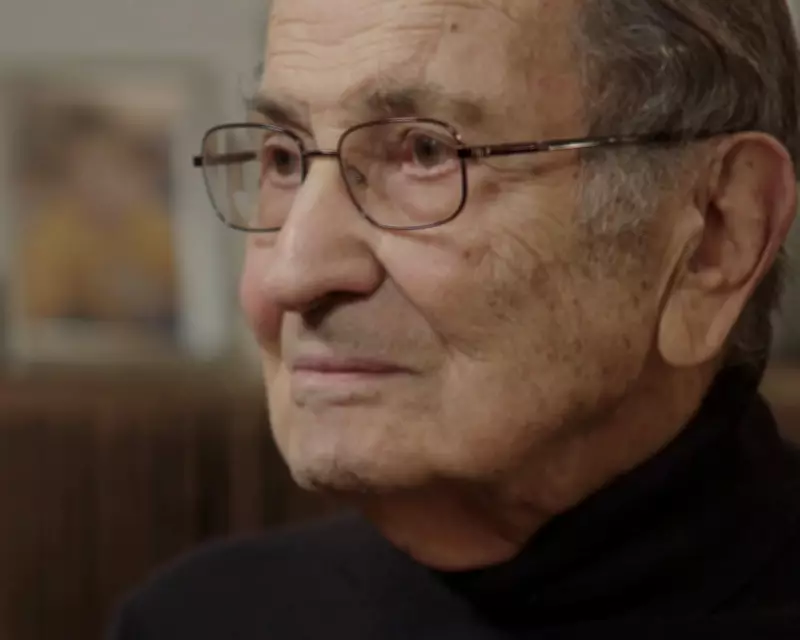
CIA Spymaster's Grave Warning: US Iran Intervention 'Wasted Lives'
A documentary released in UK cinemas has brought striking posthumous criticism from a former CIA station chief, Peter Sichel, who died in 2025 aged 102. The film, The Last Spy by American-German filmmaker Katharina Otto-Bernstein, captures Sichel's disillusionment with US foreign policy, particularly regarding Iran.
The 'Jewish James Bond' Turns Critic
Known in New York social circles as the "Jewish James Bond", Sichel was a refugee from Nazi Germany who joined the US army and became the CIA's first station chief in Berlin in his twenties. His early warnings about Soviet activity are credited with helping ring in the cold war. After leaving intelligence work, he achieved commercial success by turning Blue Nun wine into a global brand.
However, the documentary reveals Sichel as increasingly critical of CIA meddling, especially in Iran. He openly criticises US governments for acting against intelligence advice to depose democratically elected leaders in Guatemala, Indonesia, Congo, and particularly Iran.

The 1953 Iran Coup and Its Consequences
In 1953, Iran's socialist prime minister, Mohammad Mossadegh, was overthrown in a coup d'etat instigated by Britain's MI6 and the CIA to protect British oil interests from nationalisation. This coup strengthened the rule of the Shah of Iran, Mohammad Reza Pahlavi, until the 1979 revolution.
"If we had not got rid of Mossadegh, Iran today would be a good member of the family of nations, a socialist democratic country," Sichel says in the documentary. He argues that boosting the Shah's authoritarian rule "caused a revolution" and "indirectly caused the arrival of the mullahs", referring to the Islamic theocracy that has governed Iran since 1979.
Rare Insight from Within the CIA
US historian Stephen Kinzer, author of Overthrow: America's Century of Regime Change from Hawaii to Iraq, notes that while other CIA agents have criticised their former employer, Sichel's analysis is unusually clear-sighted in tracing consequences. "He's arguing that actually we wasted a lot of lives and we intensified conflicts in the world rather than trying to resolve them," Kinzer said.
Sichel himself states in the film: "We don't think it through until the end, that an action we take today might in the long run be against our interest."
From Intelligence Wunderkind to Wine Merchant
Born in 1922 in Mainz to a family of wine merchants, Sichel escaped Nazi Germany and volunteered for the US army after Pearl Harbor. His language skills led to recruitment by the OSS, the CIA's precursor. After World War II, Allen Dulles asked the 23-year-old "wunderkind" to run intelligence activities in US-occupied Berlin.
Sichel established spy networks, infiltrated the KGB headquarters with a honey trap, and recruited agents within East German institutions. He later oversaw operations like Radio Free Europe and "Operation Gold", the Berlin tunnel tapping Soviet communications.
Growing Disillusionment and Retirement
Despite loyalty to Allen Dulles, Sichel grew suspicious of the fervent anti-communism of John Foster Dulles, Eisenhower's secretary of state. He witnessed the CIA's transformation from an intelligence-gathering agency to one taking direct action, with reckless operations costing many lives.
"People in high places have an idea of what the picture should be, and if the intelligence doesn't fit, they don't believe the intelligence," Sichel says in the documentary. This mindset, he argues, led the US to view nationalist leaders like Mossadegh as Soviet puppets, justifying covert actions.
His vocal criticism led to FBI investigation for suspected communist sympathies in the late 1950s. Disillusioned, he retired in 1960 and took over the family wine business, achieving phenomenal success with Blue Nun.
Enduring Relevance of Sichel's Warnings
Kinzer notes that Sichel's critique remains relevant today: "Sichel explains the mentality that divided the world between good and evil, and laments our inability to understand any bit of nuance. The reaction to challenges to American primacy is a violent lashing out rather than a thoughtful policy trying to ease differences."

The documentary, showing in select UK cinemas and on streaming platforms from 24 April, offers a rare glimpse into the conscience of a Cold War spy whose warnings from beyond the grave challenge decades of US foreign policy assumptions.





