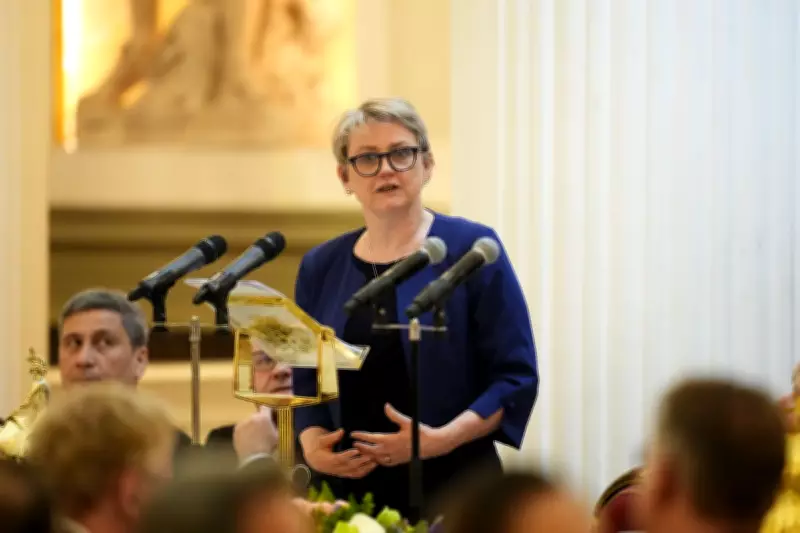
Foreign Secretary Yvette Cooper has declared that any discussions between the United States and Iran must culminate in a toll-free passage for vessels navigating the Strait of Hormuz. This crucial waterway, through which approximately one-fifth of the world's oil typically flows, has become a focal point of international tension.
Proposals for Tolls Circulate from Tehran
The Foreign Secretary revealed that proposals have been circulating from Tehran to introduce tolls on the Strait of Hormuz once the current conflict concludes. Ms Cooper emphasised that this is not merely a regional issue but one with profound global implications. She stated, "This argument is not just about the Strait of Hormuz, it is about the precedent this will set for freedom of navigation all over the world."
A Critical Diplomatic Moment
Ms Cooper was travelling to Japan on Sunday, marking the final leg of a six-day diplomatic tour ahead of the US-Iran ceasefire expiring on Tuesday. She described this period as a "critical diplomatic moment." The Strait of Hormuz has been closed by Iran in response to American and Israeli strikes, leading to a retaliatory blockade of Iran's oil ports by US President Donald Trump, aimed at curtailing Tehran's fossil fuel revenue.

In a recent development, the US announced it had seized an Iranian-flagged cargo ship in the Gulf of Oman, alleging it was attempting to circumvent the blockade. President Trump, via social media, claimed the ship was warned by a US Navy guided missile destroyer but failed to stop. Iranian officials have maintained they are open to negotiation but insist ships will not pass through the Strait of Hormuz while the US blockade persists.
Trump's Accusations and Threats
Announcing talks set for Monday in Pakistan, President Trump accused Iran of violating the ceasefire by targeting ships near the strait. He threatened to destroy Iranian civilian infrastructure if Tehran rejects a US deal. Despite this, the talks have lifted hopes of extending the ceasefire.
Ms Cooper reiterated the urgency of the situation, saying, "This is a critical diplomatic moment with the end of the ceasefire looming. Further talks on a lasting settlement are welcome – they must lead to a toll-free Strait of Hormuz." She warned that setting the wrong precedent would be "deeply damaging not just for the global economy, but for global security, and that is why it is an argument we must win."
UK-Japan Strategic Dialogue
In Tokyo, Ms Cooper is expected to focus on UK-Japan cooperation amid ongoing geopolitical uncertainty, particularly regarding energy security and supply chain resilience. She is scheduled to meet Japan's Foreign Minister Toshimitsu Motegi at the 10th UK-Japan Strategic Dialogue. During her diplomatic tour, she has also engaged with foreign ministers from 11 countries, including Pakistan, Turkey, Egypt, the UAE, and Ukraine, and spoken with US Secretary of State Marco Rubio.
International Efforts for Freedom of Navigation
On Friday, Prime Minister Sir Keir Starmer announced that the UK and France will lead a peaceful mission to protect freedom of navigation in the Strait of Hormuz. He stated the mission would be implemented as soon as conditions allow, once hostilities in the Iran war conclude. Sir Keir and French President Emmanuel Macron hosted a meeting of world leaders in Paris to discuss efforts to safeguard shipping flows.
However, President Trump has dismissed the efforts of NATO nations, criticising transatlantic allies as "useless when needed" and accusing them of only getting involved now that the situation is over. This underscores the complex diplomatic landscape surrounding the Strait of Hormuz and the high stakes involved in ensuring its toll-free status for global trade and security.