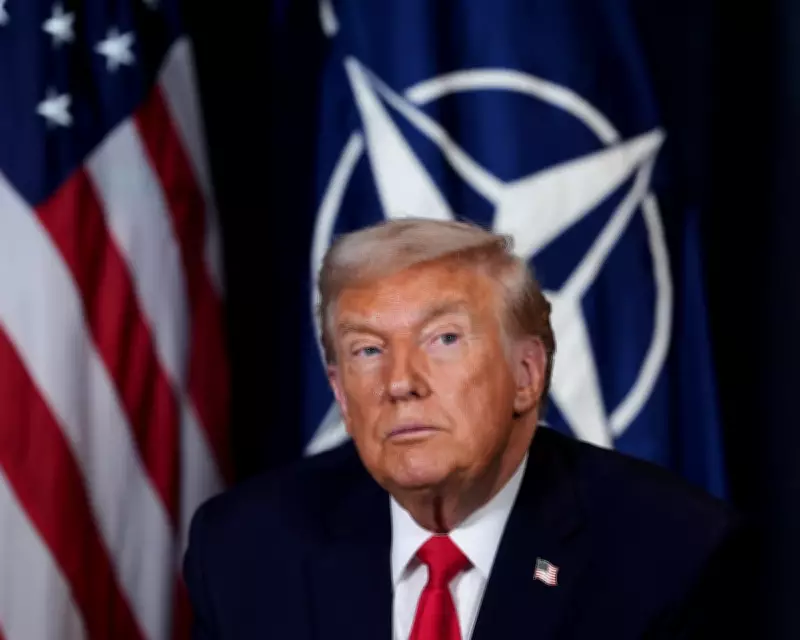
European Union leaders have agreed to draw up a blueprint for activating the bloc's little-known mutual assistance pact in response to escalating threats from Donald Trump against the North Atlantic Treaty Organization. The move comes as the transatlantic alliance faces what many describe as its worst crisis since its founding.
EU Mutual Assistance Clause
The decision, announced by Cyprus President Nikos Christodoulides, who is hosting the EU talks, mandates the European Commission to prepare an operational plan for implementing Article 42.7 of the EU treaty. This clause obliges all member states to provide aid and assistance by all means in their power if a fellow country is attacked by a foreign government or non-state actor.
Antonio Costa, President of the European Council, confirmed on Friday that leaders are designing a handbook on how to use the mutual assistance clause. He noted that a recent test case occurred in Cyprus, where a drone strike on a British base prompted Greece, France, Italy, Spain, and the Netherlands to mobilise military equipment and forces to help defend the island.

Trump's Intensified Criticism
Trump, a long-term critic of the transatlantic alliance, has stepped up his invective against what he calls 'very disappointing Nato' after European countries refused to participate in the US-Israeli war on Iran. This month he stated he was 'absolutely without question' considering withdrawing the US from Nato, pushing the 77-year-old alliance into uncharted territory.
Pedro Sanchez, Spain's prime minister and a vocal critic of the Iran conflict, reaffirmed Spain's loyalty to Nato while denouncing 'the failure of brute force in the Middle East'. Sanchez downplayed reports that the Pentagon was considering punishing Nato allies by suspending them from the alliance, stating that his government works with official documents, not emails.
Article 42.7 and Nato's Role
France is the only country to have previously triggered Article 42.7, following the 2015 Paris attacks. Paris called on other member states to reinforce its overseas military commitments so it could redeploy troops for domestic security. The lack of detail in the treaty was once seen as a strength, enabling flexible response, but member states now seek clarity.
Christodoulides outlined key questions: 'Let's say France triggers Article 42.7. Which countries are going to be the first to respond? What are the needs of the government?' These issues will be addressed in the blueprint to have an operational plan ready.
Cyprus, which is not a Nato member, wants the EU to take the clause more seriously after a drone hit Britain's RAF Akrotiri airbase in March. However, some EU members are cautious about steps that could undermine Nato's collective defence clause, Article 5. One EU official stressed that Nato remains the bedrock of collective defence, but the EU has complementary tools such as sanctions, financial assistance, and humanitarian aid.
European Concerns Over US Commitment
Polish Prime Minister Donald Tusk expressed doubts about Washington's commitment to Nato, telling the Financial Times that Europe's biggest question is whether the US will be 'ready to be as loyal as it is described in our treaties'. EU senior diplomats are expected to hold tabletop exercises in May exploring different scenarios for activating Article 42.7.
Sanchez renewed his criticism of the US war in Iran, stating that the crisis shows the failure of brute force and demands respect for international law. The Spanish prime minister had previously rejected Nato's proposal to increase defence spending to 5% of GDP, calling it 'not only unreasonable but also counterproductive'.