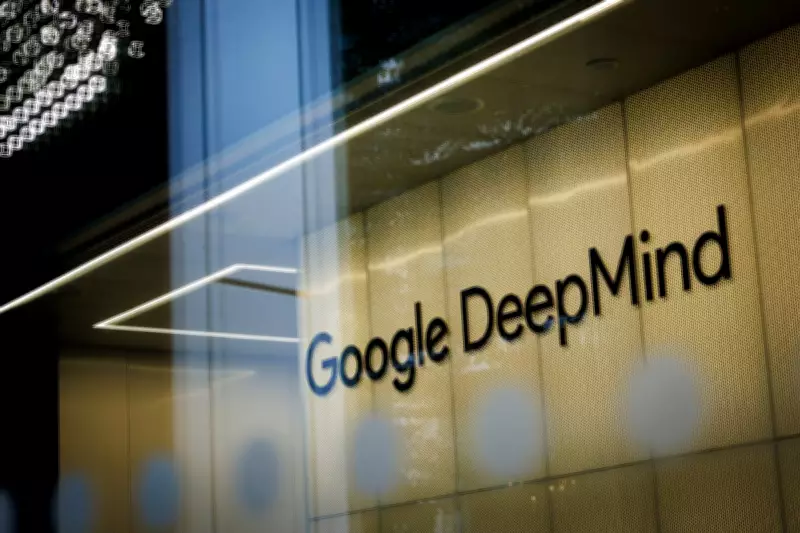
Workers at Google DeepMind, the company's artificial intelligence research laboratory in the UK, have voted to unionize, partly due to concerns over a recently announced deal between Google and the US military. In a letter sent to management on Tuesday and shared exclusively with the Guardian, staff requested recognition of the Communication Workers Union (CWU) and Unite the Union as joint representatives for the lab's UK-based employees.
Reasons for Unionization
The vote to unionize took place in April. One worker, speaking anonymously due to fear of retaliation, cited reports that Google was nearing a deal with the US Department of Defense, pointing to the US's "capricious Iran war" and the Trump administration's feud with Anthropic as signs that the department is "not a responsible partner." The deal was announced on Friday.
"I have joined the union due to concerns about AI being used to empower authoritarianism, whether through military or surveillance applications, both foreign and domestic," the worker said. "By unionizing, we are taking the traditional route for workers to organize and have a say."

Concerns Over Israel-Gaza Conflict
Another anonymous worker highlighted struggles with complicity in Israel's war in Gaza. Google provided the Israeli military with increased access to its AI tools early in the conflict, as reported by the Washington Post, and in 2021 signed a $1.2bn cloud-computing contract with the Israeli government alongside Amazon. "Our technology helped the IDF," the worker said. "I want AI to benefit humanity, not to facilitate a genocide."
Google did not respond to a request for comment.
Growing Concerns Over Militarized AI
Concerns among Google workers and investors have escalated since the company last year dropped a pledge not to develop militarized AI, a key motivator for the union drive. While small groups of Google employees have unionized in the US before, the UK workers are the first in a "frontier" AI lab to seek union recognition. Google DeepMind is headquartered in London with offices across North America and Europe. At least 1,000 workers would be represented if the company recognizes the union, according to union officials.
Pentagon Agreements
On Friday, the Pentagon confirmed agreements with seven leading AI companies, including Google, SpaceX, OpenAI, Nvidia, Reflection, Microsoft, and Amazon Web Services. Anthropic, whose technology is used by the US military but has clashed with the Pentagon over contracts, was notably absent. The defense department stated that these agreements "accelerate the transformation toward establishing the United States military as an AI-first fighting force."
The Trump administration has pushed AI companies to make tools available on classified networks without standard restrictions. Google's contract reportedly includes non-binding language stating the AI system should not be used for domestic mass surveillance or autonomous weapons without human oversight, but it also says Google cannot veto "lawful" government operational decisions.
Worker Demands and Potential Actions
Workers who voted to unionize aim to pressure Google to meet demands from other employees, including a commitment not to develop technology whose primary purpose is to cause harm, establishing an independent ethics oversight body, and granting workers the right to refuse projects on moral grounds. If the company refuses, they are considering protests and "research strikes," where staff avoid work that significantly improves core products like Gemini while continuing less significant updates to avoid detection.
Broader Opposition
Last week, over 600 Google employees signed an open letter to CEO Sundar Pichai opposing the Pentagon deal. "We want to see AI benefit humanity; not to see it being used in inhumane or extremely harmful ways," they wrote. Tech workers have increasingly challenged management over technology use. In 2024, Google fired 50 workers protesting Project Nimbus, a 2021 contract with Israel. At Microsoft, workers occupied a campus with signs reading "No Labor for Genocide" after the Guardian revealed the company supplied Israel with cloud storage for mass surveillance.

Investors have also raised concerns. A coalition of shareholders owning about $2.2bn of Alphabet shares demanded greater transparency on Google Cloud and AI deployments in high-risk contexts, citing services to US immigration authorities and Project Nimbus. They questioned "the effectiveness of policy guardrails, internal escalation processes, and Board oversight of AI deployments in conflict-affected or security-sensitive environments."
Historical Context
In 2018, Google faced employee protests over Project Maven, a military contract for AI analysis of drone footage. Google did not renew the contract in 2019 and published AI principles that included a now-dropped pledge not to design AI for weapons. Palantir took over Project Maven, which continues today.