

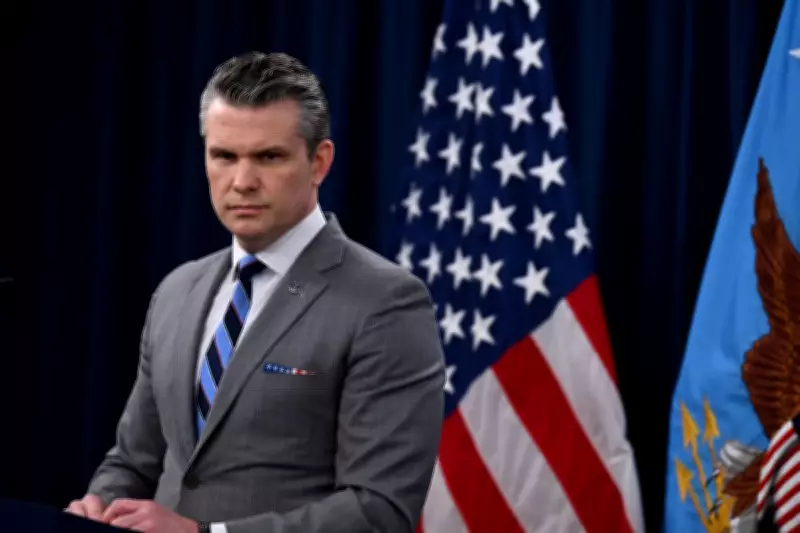
United States Defence Secretary Pete Hegseth has told European allies to “stop talking and get in a boat” to help reopen the Strait of Hormuz, in a pointed rebuke that underscores deepening transatlantic tensions over the conflict with Iran.
Speaking at the Pentagon on Friday, Hegseth lauded the strength of the US Navy in maintaining a blockade of Iranian ports and vessels, a measure that Tehran says has stalled negotiations. He argued that Europe and Asia have historically been the main beneficiaries of American “protection” and declared that “the time for free riding is over”.
“We are not counting on Europe, but they need the Strait of Hormuz much more than we do, and might want to start doing less talking and having less fancy conferences in Europe and get in a boat,” Hegseth said, asserting that the United States is less reliant on Gulf energy. “This is much more their fight than ours.”

Hegseth’s remarks came as a report emerged that the US is weighing punitive measures against Nato allies it believes failed to support operations in the war with Iran. A US official told Reuters that an internal email had outlined options including suspending Spain from the alliance and reviewing the US position on Britain’s claim to the Falkland Islands.
The policy options were detailed in a note prepared by Elbridge Colby, the Pentagon’s top policy adviser, who expressed frustration at some allies’ perceived reluctance to grant the United States access, basing and overflight rights for the conflict, the official said. A Nato official later told the BBC that there is no provision for suspending or expelling member states. The United States has not taken a formal stance on the Falklands’ sovereignty.
Transatlantic relations have been strained by US threats to annex Greenland, repeated criticism of European leaders, slashed military support, and the imposition of trade tariffs since President Donald Trump returned to office. On Friday, it emerged that EU leaders have asked officials to prepare a blueprint for the bloc’s mutual assistance clause amid doubts over US commitment to Nato.
Polish Prime Minister Donald Tusk separately told the Financial Times that Europe’s “biggest, most important question” is whether the US would remain a loyal Nato partner in the event of a Russian attack. Meanwhile, as Europe and Asia weather the strain of the US-Iran conflict, Hegseth insisted that Washington is in no hurry to make peace with Tehran.
The war, which began on 28 February, has been at an impasse since Trump said on Tuesday he would indefinitely extend the ceasefire with Iran at Pakistan’s request until peace terms are agreed or reach a dead end. Both sides maintain blockades on maritime traffic. On Friday, the US bolstered its fleet with the arrival of the USS George H.W. Bush in Central Command’s area of responsibility. Tehran has said it will not negotiate until Washington lifts restrictions on Iranian shipping.
There was a hint of diplomatic progress as Iranian Foreign Minister Abbas Araghchi arrived in Pakistan to discuss proposals for restarting talks with the United States, according to Pakistani government sources. The sources told Reuters that Araghchi was expected to discuss his side’s proposal for talks, which would then be conveyed to Washington. Washington did not address the reports, but Hegseth said in his press briefing that Iran still has a chance to make a “good deal”.
“Iran knows that they still have an open window to choose wisely at the negotiating table. All they have to do is abandon a nuclear weapon in meaningful and verifiable ways,” he said.
In a parallel theatre, a ceasefire in Lebanon, extended by another three weeks only yesterday, appeared fragile on Friday as Lebanese authorities reported two people killed by an Israeli strike and Hezbollah downed an Israeli drone. Trump announced the three-week extension on Thursday after hosting Israeli and Lebanese ambassadors at the White House. The ceasefire between the governments of Lebanon and Israel had been due to expire on Sunday.
Responding to the extension, Hezbollah lawmaker Ali Fayyad said “it is essential to point out that the ceasefire is meaningless in light of Israel’s insistence on hostile acts, including assassinations, shelling, and gunfire” and its demolition of villages and towns in the south.






