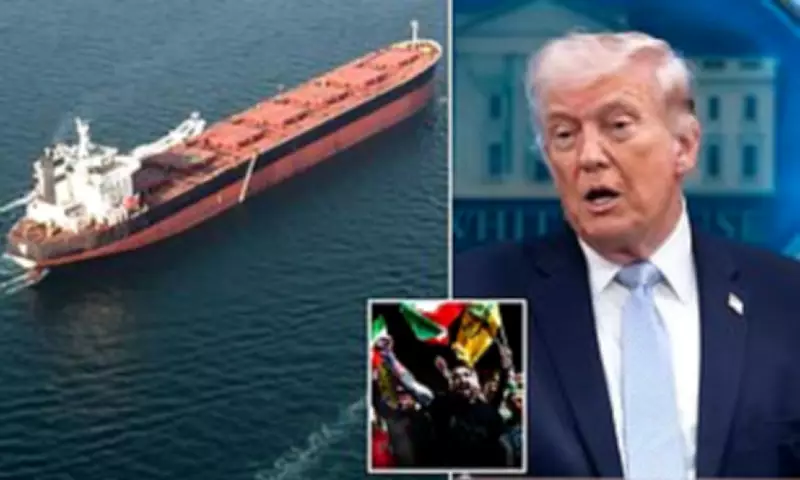
Iran to Impose $1 Million Transit Fee During Strait of Hormuz Ceasefire
Regional officials have revealed that the Iranian regime intends to collect $1 million for each commercial vessel that passes through the recently reopened Strait of Hormuz. This financial arrangement forms part of a delicate two-week ceasefire agreement while the United States and Iran engage in critical peace negotiations.
Trump Announces Breakthrough Ceasefire Agreement
President Donald Trump confirmed late last night that Iran has agreed to a temporary two-week cessation of hostilities and will reopen the strategically vital waterway. This development comes as both nations consider a comprehensive ten-point peace proposal submitted by Tehran.
The Iranian peace plan contains several significant demands, including American recognition of Tehran's continued control over the Strait of Hormuz, acknowledgment of Iran's right to uranium enrichment, complete lifting of all economic sanctions, substantial financial compensation, and withdrawal of all US military forces from the region.

Financial Mechanism for Reconstruction
According to multiple reports, Iran will implement a $1 million transit fee per vessel navigating through the Strait of Hormuz during the ceasefire period. The substantial revenue generated from this maritime toll would be specifically allocated toward reconstruction efforts following weeks of intense regional conflict.
It remains uncertain whether this financial arrangement represents a permanent policy shift for Iran or merely a temporary measure limited to the two-week truce duration. The ambiguity surrounding this condition has raised questions about the long-term implications for global shipping through one of the world's most critical oil transit routes.
Mixed Reactions and Market Impact
President Trump characterized the agreement as a "total and complete victory" while declining to specify whether he would follow through on previous threats to target Iranian civilian infrastructure should Tehran violate the ceasefire terms. In subsequent social media posts, Trump indicated the US would assist with managing maritime traffic congestion in the Strait, suggesting "big money will be made."
The announcement triggered immediate market reactions, with US crude oil prices experiencing a dramatic plunge. West Texas Intermediate contracts fell by over 15 percent to $95 per barrel after reaching $116 earlier in the week. US stock futures surged in after-hours trading as investors responded to the reduced geopolitical tensions.
International Diplomatic Engagement
Iranian Foreign Minister Abbas Araghchi confirmed that Iranian military forces would coordinate safe passage through the Strait of Hormuz during the ceasefire, provided attacks against Iran cease completely. The agreement reportedly followed last-minute diplomatic intervention from China urging Tehran to demonstrate flexibility regarding the conflict's economic consequences.
UK Prime Minister Keir Starmer welcomed the ceasefire agreement, describing it as bringing "a moment of relief to the region and the world." Starmer emphasized the importance of supporting the ceasefire to transform it into a lasting agreement and ensure the Strait of Hormuz remains open to international navigation.
Criticism and Concerns
The agreement has faced substantial criticism from various quarters. US Representative Maxwell Frost condemned what he characterized as President Trump's "reckless decisions" that precipitated the crisis, stating that "a last-minute ceasefire doesn't erase" the administration's actions.
National security expert Victor LaGroon expressed concerns about unclear details within Iran's ten-point plan and questioned what tangible achievements the United States secured through the agreement. LaGroon warned that despite the temporary peace, the conflict might continue to exact significant financial and human costs.
As negotiations proceed over the coming fortnight, international observers remain cautiously optimistic yet acutely aware of the complex challenges involved in transforming this fragile ceasefire into a sustainable regional peace agreement.