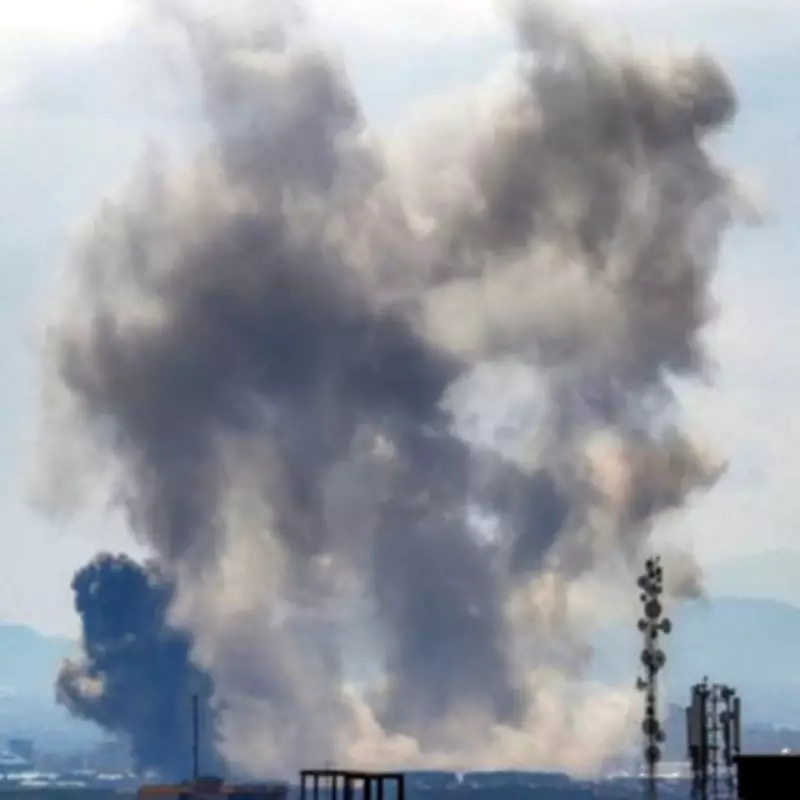
Iran has defiantly continued its missile assaults on Israel, launching strikes mere minutes after former US President Donald Trump announced a negotiated two-week ceasefire in the escalating Middle East conflict. This aggressive action immediately triggered urgent safety alerts for citizens across the United Arab Emirates, Saudi Arabia, Bahrain, Kuwait, and several other nations, who were instructed to take immediate cover.
Ceasefire Announced Amid Ongoing Strikes
Donald Trump, using his Truth Social platform, declared that an agreement had been reached to step back from what he described as the "apocalyptic brink." The arrangement, which he labelled a "double sided CEASEFIRE," followed a 10-point proposal submitted by Iran. A senior White House official subsequently confirmed to CNN that Israel is included in this temporary truce, with Israeli forces agreeing to suspend their bombing campaigns while negotiations proceed.
Immediate Violation and Regional Fallout
Despite this diplomatic announcement, missile fire resumed rapidly across the region. Officials reported that a gas processing facility in Abu Dhabi was set ablaze this morning following incoming Iranian fire. The attacks underscore the fragile nature of the ceasefire, which Trump initially praised as "a big day for World Peace!" and claimed Iran "wants it to happen, they’ve had enough!"

The former President's statement elaborated that the United States would assist with "the traffic buildup in the Strait of Hormuz," hinting at logistical support. However, Iran has simultaneously insisted it will maintain control over the strategic Strait of Hormuz, including enforcing a controversial £1 million-per-ship passage fee, and continue its uranium enrichment program.
International Diplomacy and Domestic Reactions
The ceasefire agreement came after direct personal appeals from Pakistani Prime Minister Shehbaz Sharif and Field Marshal Asim Munir, who urged Trump to cancel planned strikes for Tuesday night. The 79-year-old former leader agreed to a two-week suspension of bombing, conditional on Iran agreeing to what he termed the "COMPLETE, IMMEDIATE, and SAFE OPENING" of the Strait of Hormuz.
Trump's stance on Iran's proposal has appeared contradictory. He first described the 10-point plan as a "workable" basis for negotiation to end the war he launched with Israel on February 28, but later dismissed it as fraudulent without providing further details. He has repeatedly stated that the complete termination of Iran’s nuclear program remains a fundamental war objective.
Limitations and Continued Tensions
Israeli Prime Minister Benjamin Netanyahu clarified that the newly announced deal does not encompass hostilities against Hezbollah in Lebanon, indicating a limited scope. Meanwhile, in Tehran, pro-government demonstrators flooded the streets following the ceasefire announcement, chanting slogans such as "Death to America, death to Israel, death to compromisers!"
The White House official's disclosure to CNN significantly broadens the understanding of Trump's initial announcement, which had focused primarily on a US suspension of strikes against Iranian infrastructure. The confirmation makes explicitly clear that the military pause extends to Israeli operations as well, at least in principle. However, the immediate Iranian missile launches pose a severe challenge to the ceasefire's viability and the entire negotiation process.