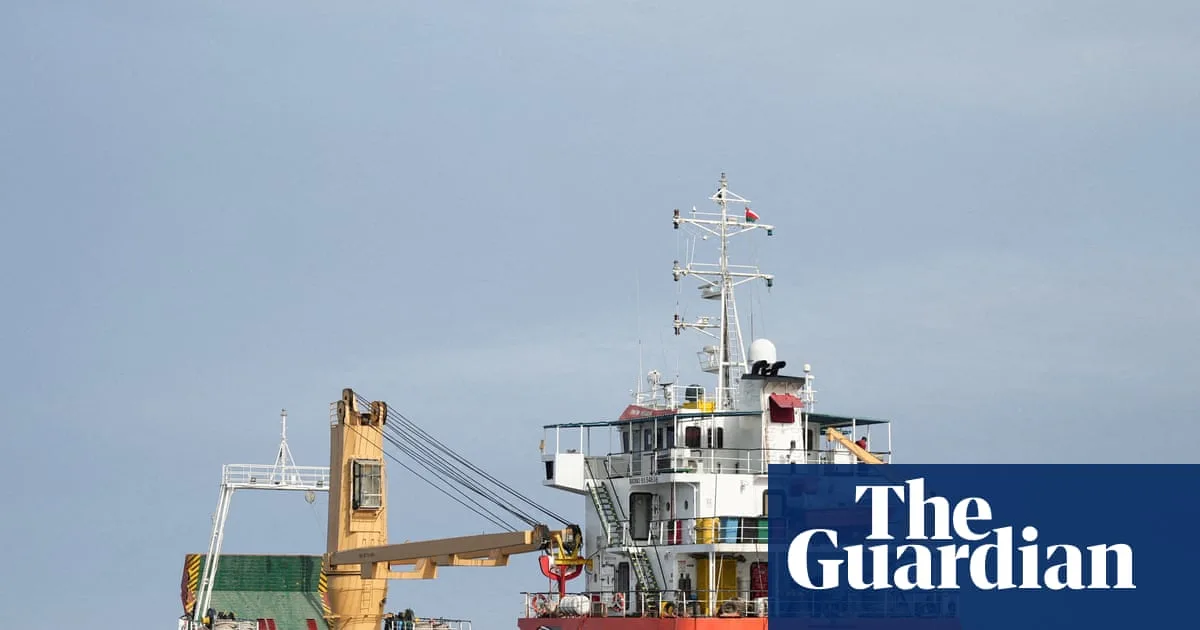
Iran's foreign minister, Abbas Araghchi, has declared the Strait of Hormuz 'completely open' to commercial vessels, raising hopes for a de-escalation in the Middle East conflict and contributing to a drop in global oil prices. However, the announcement came with significant caveats from Iranian officials, who warned that the waterway could be closed again if the US naval blockade continues.
US President Donald Trump claimed on social media that Iran had agreed never to close the strait again, calling it 'A GREAT AND BRILLIANT DAY FOR THE WORLD!' But Iran's parliamentary speaker, Mohammad Bagher Ghalibaf, countered that the strait's status 'will be determined by the field, not by social media', and warned that if the US blockade persisted, 'the strait of Hormuz will not remain open'.
The Islamic Revolutionary Guard Corps (IRGC) has reinforced its authority in Tehran, and a senior military official stated that commercial vessels would only be allowed passage along a determined route and with IRGC navy permission. The US blockade remains in place, with Trump insisting it will continue 'until such time as our transaction with Iran is 100% complete'.

Trump also claimed that Iran had agreed to suspend its nuclear programme indefinitely, but Iranian authorities made no immediate comment. The US president denied reports of a $20bn cash-for-uranium deal, stating: 'No money is changing hands.' Meanwhile, a fragile 10-day truce in Lebanon between Israel and Hezbollah began, though Israeli Prime Minister Benjamin Netanyahu said Israel had 'not yet finished the job' and an Israeli drone strike reportedly killed one person in southern Lebanon.
In Paris, representatives from about 40 countries, co-chaired by France and the UK, met to discuss an international plan to secure the strait, which carried around a fifth of the world's oil and gas supplies before the conflict. The US Treasury also extended a waiver allowing purchases of sanctioned Russian oil until 16 May, aiming to control global energy prices.