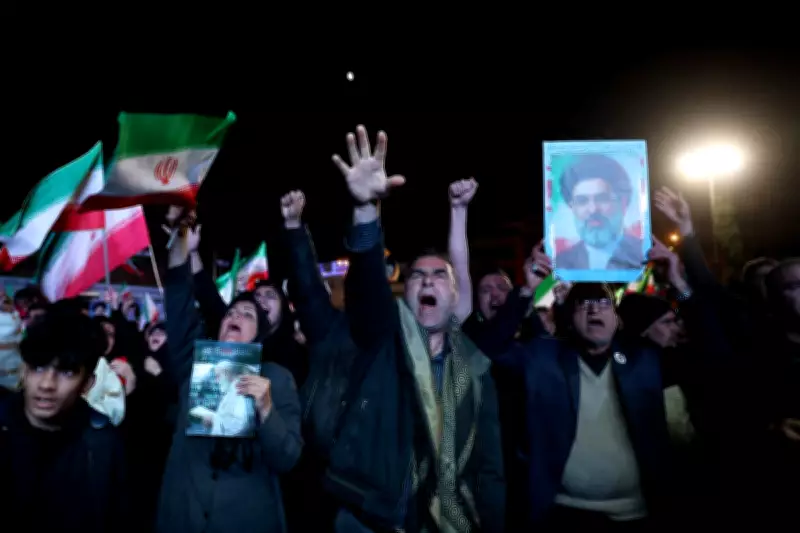
Eleventh-Hour Ceasefire Agreed Between Iran and United States
In a dramatic eleventh-hour development, Iran and the United States have agreed to a two-week ceasefire, announced just hours before President Donald Trump's deadline for Tehran to reopen the Strait of Hormuz or face catastrophic consequences. The agreement, reached overnight, has temporarily halted a conflict that has claimed over 5,000 lives across nearly a dozen countries, including more than 1,600 civilians in Iran according to local reports.
Trump's Last-Minute Reversal and Ceasefire Terms
President Trump's acceptance of the ceasefire marked a stark reversal from his earlier threats, where he warned that "a whole civilisation will die tonight, never to be brought back again" if Iran failed to meet his demands. Under the agreement, Iran will reopen the vital Strait of Hormuz, which typically handles approximately one-fifth of global oil and gas shipments, in exchange for the United States halting attacks during the ceasefire period.
Both nations have framed the deal as a victory. Iran's Supreme National Security Council claimed Trump accepted Tehran's conditions, while the US president stated America had "already met and exceeded all Military objectives" and was progressing toward "Longterm PEACE with Iran."

The 10-Point Peace Proposal from Iran
Central to the ceasefire agreement is Iran's 10-point peace proposal, which Trump initially described as "a workable basis on which to negotiate" before later calling it fraudulent without elaboration. According to Iranian state media and the BBC, the comprehensive plan includes:
- Complete cessation of the war on Iraq, Lebanon, and Yemen
- Complete and permanent cessation of the war on Iran with no time limit
- Ending all conflicts in the region in their entirety
- Reopening the Strait of Hormuz
- Establishing a protocol and conditions to ensure freedom and security of navigation in the Strait of Hormuz
- Full payment of compensation for reconstruction costs to Iran
- Full commitment to lifting sanctions on Iran
- Release of Iranian funds and frozen assets held by the United States
- Iran fully commits to not seeking possession of any nuclear weapons
- Immediate ceasefire takes effect on all fronts immediately upon approval of the above conditions
Notably, the Persian-language version reportedly includes additional conditions omitted from English translations, specifically requiring "continued Iranian control over the Strait of Hormuz, acceptance of enrichment, lifting of all primary and secondary sanctions."
Key Disputes and Contradictions
Despite the ceasefire agreement, significant disputes persist. Pakistan's Prime Minister Shehbaz Sharif, who is mediating the talks, stated the ceasefire includes Lebanon, while Israeli Prime Minister Benjamin Netanyahu explicitly denied this coverage. Israel has continued strikes in Lebanon despite announcing support for the broader ceasefire.
Further confusion surrounds the exact nature of Iran's proposal. Trump referenced both a "10 point" and "15 point" plan in different statements, telling Sky News: "You don't know what the points are. I know what the points are. And many of them are very good points." The United States has not published the version it claims to have received.
International Reactions and Next Steps
International responses have been cautiously optimistic. British Prime Minister Keir Starmer stated the UK would "do all we can to support and sustain this ceasefire," calling the news "a moment of relief to the region and the world." Downing Street confirmed Starmer would travel to the Gulf to meet regional leaders about diplomatic efforts to uphold the agreement.
Pakistan's prime minister praised both parties for displaying "remarkable wisdom and understanding," while Hezbollah spokesperson Ibrahim Moussawi warned that if Israel doesn't adhere to the ceasefire in Lebanon, "nobody will commit to it."
Delegations from the United States and Iran are scheduled to meet in Islamabad, Pakistan on Friday to negotiate the final details of a more enduring peace agreement. Iranian state media has indicated talks may be extended if necessary, while cautioning that ceasefire negotiations do not equate to an end to the war.

The Israeli Air Force conducted a final wave of strikes on Iran on Wednesday morning before announcing it would respect the ceasefire. Meanwhile, strikes were reported at Iran's Sirri Island and the Lavan refinery from unknown sources, highlighting the fragile nature of the temporary truce.