

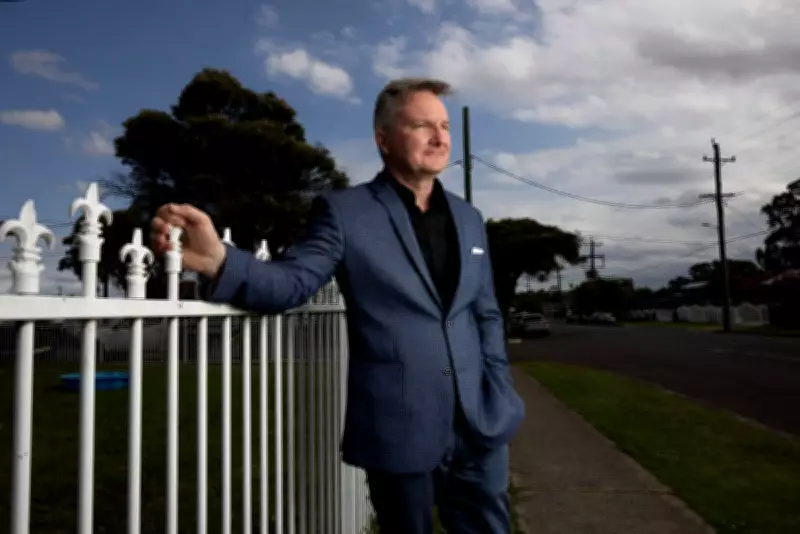
Chris Bowen, Australia's climate change minister and the newly appointed president of negotiations for the Cop31 climate conference in Turkey, has stated that the ongoing Iran war and its impact on global oil markets present an opportunity to advance clean energy discussions. In his first interview since taking the role, Bowen argued that the energy market disruption should be viewed as a global fossil fuel crisis—the second in four years, following Russia's invasion of Ukraine in 2022—and is particularly acute in Asia.
Asian Leaders Emphasize Energy Sovereignty
Bowen revealed that Asian leaders and ministers have stressed in private meetings that the upheaval in liquid fuel supply underscores the need to address short-term energy needs while accelerating the transition to renewable energy and electrification to reduce reliance on imported oil. "No one has said this crisis is a reminder that we need to be more reliant on fossil fuels," he told the Guardian. "There's a real appetite to emphasise reliability and energy sovereignty this year, and I think that does open up more opportunities for Cop31."
Parallel Climate Meetings Underway
Bowen's comments align with those of Fatih Birol, head of the International Energy Agency, who has argued that the war is turning countries away from oil to secure energy supplies, permanently altering the fossil fuel industry. They come as nations gather for two separate meetings: the annual Petersberg climate dialogue hosted by Germany, and the first international conference on transitioning away from fossil fuels, which began in Santa Marta, Colombia. Co-hosted by Colombia and the Netherlands, the Santa Marta event was announced as a response to frustration with petrostates, including Saudi Arabia and Russia, for opposing a clear statement on phasing out fossil fuels at the Cop30 summit in Brazil.

Australia's Role and Challenges
Australia—a leading coal and gas exporter that continues to approve new fossil fuel developments even as it installs household solar panels and batteries at record rates—backed a Colombian-led declaration in Brazil on the need to transition away from fossil fuels and is represented in Santa Marta by officials. Other fossil fuel producers at the conference include Canada, Nigeria, Mexico, Brazil, and Turkey. However, the biggest national emitters—China, the US, India, and Russia—are not attending. The US under Donald Trump has also pulled out of UN climate summits.
Incremental Progress Expected
Bowen, a former mayor and western Sydney Labor party MP for over 20 years, expressed belief that consensus remains possible at climate talks in an increasingly chaotic world. He noted that commitments since the 2015 Paris agreement have lowered projected global heating from 4C to about 2.5C above preindustrial levels if existing promises are fulfilled. "You can keep the process alive and hope for a big step forward," he said. "I think Cops are unlikely now to be Paris or Copenhagen—outstanding successes or heartbreaking failures. Cops are more likely to be incremental progress. The question is how big that progress is."
Cop31 Dual Presidency Challenge
Cop31 faces the additional challenge of being run by two countries with potentially differing views. After a long standoff between Turkey and Australia over the presidency, an unusual compromise was struck: Turkey will host the conference and accompanying green trade fair in Antalya, while Australia will lead formal negotiations between delegates from nearly 200 countries. The Turkish government is ultimately in charge under the UN framework, but both countries have said any disagreements will be resolved through consensus. Pacific countries, partners in Australia's bid, will host a pre-Cop meeting in Fiji and Tuvalu in October.

Turkey's Draft Agenda Criticized
A draft action agenda released by Turkey in February, covering areas outside formal negotiations, sparked criticism for not mentioning fossil fuels—the overwhelming cause of climate breakdown. Its 14 priorities included improving waste management, a campaign focus of Turkish president Recep Tayyip Erdoğan's wife, Emine Erdoğan. However, Turkish climate change minister and Cop31 president Murat Kurum did name fossil fuels in an address to the Petersberg dialogue on Tuesday, saying the current crisis shows "relying solely on fossil fuels means walking towards volatility, insecurity and climate collapse."
Bowen's Priorities
Bowen's early plans have been disrupted by his responsibility for Australia's liquid fuel supply. He cancelled a planned trip to Berlin and addressed the Petersberg dialogue by video. His focus includes implementing a 2023 commitment to triple renewable energy and double energy efficiency by 2030. He also nominated key areas for Pacific countries: access to finance for developing nations, keeping alive the goal of limiting heating to 1.5C, and protecting oceans. Bowen said he and Kurum speak regularly and have a "very good working relationship" that could become an "innovative" hosting model for middle powers to build broad agreement. "We had tense negotiations to get the outcome. We've moved on," he said. "I'm very upbeat about the relationship. I think it's in very good working order, and potentially can lead to the sort of breakthrough Cop that we need."





