Iranians Brace for Blackouts as Trump's Ultimatum Looms Over Tehran
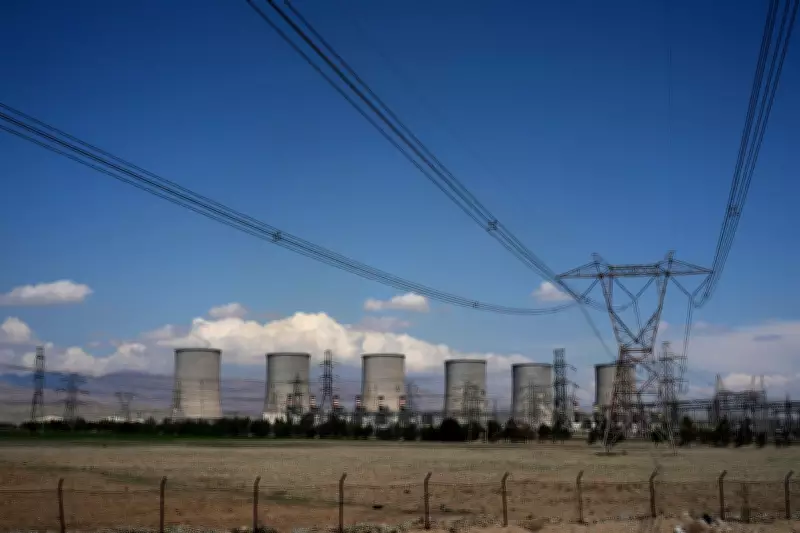
Residents of Tehran are rushing to stockpile bottled water and charge essential devices like cellphones, flashlights, and portable power banks as the countdown to former U.S. President Donald Trump's latest ultimatum intensifies. The deadline, set for 8 p.m. Washington time, threatens attacks on Iran's power plants and bridges unless a deal is reached, including reopening the Strait of Hormuz.
Critical Health Concerns Amid Escalating Threats
For many Iranians, the fear of power outages is not just an inconvenience but a life-threatening reality. Asghar Hashemi, a 56-year-old employee at Tehran's subway authority, undergoes dialysis treatment three times a week at Tajrish Martyrs Hospital in northern Tehran. He expressed deep concern that if power stations are targeted, as Trump has threatened, his survival could be at risk. "I am worried, but I am more worried about my fellow citizens," Hashemi said from his hospital bed. "Whatever happens, we will stand until the end."
Despite the health risks, Hashemi emphasized his readiness to defend his country, stating, "I will be ready to pick up a gun and start a fight against the enemy." This sentiment reflects a mix of terror, resignation, and defiance among Iranians as the deadline approaches.

Daily Life Disrupted by Airstrikes and Infrastructure Fears
Tehran and other parts of Iran have been shaken by almost daily airstrikes from the United States and Israel since February 28, with electricity emerging as the primary concern for residents. Mahan Qayoumi, a 23-year-old artisan shop worker, highlighted the cascading effects of a power outage: "When there is no electricity, there will be no water, no hygiene, nothing." He has prepared emergency lights for his apartment, noting that "all aspects of life" would be impacted.
A young designer in central Tehran, who spoke anonymously for safety reasons, shared that her parents left at the war's onset, but she stayed behind to care for her cat, Maya. Now, due to Trump's threats, she plans to drive north—an area largely spared heavy strikes—to join her family. "If there is no electricity, there is no water," she explained via Telegram, pointing to Tehran's reliance on electric water pumps and low water pressure. "You can't cook, either."
Mixed Responses in a City Under Strain
The streets of sprawling Tehran, overlooked by snow-capped mountains, have seen reduced traffic in recent weeks as many residents seek safer areas. Schools and state institutions remain closed, yet life in some parts of the city continues with a semblance of normalcy. In one of north Tehran's largest covered markets, business proceeded as usual on Tuesday, with bakeries producing fresh bread and shops preparing Iranian sweets like gaz and sohan.
Said Motazavi, a 58-year-old home appliances shop owner, remarked, "We are living our normal lives." He referenced Iran's history of conflict, including the 1980-88 Iraq-Iran war and last year's 12-day war with Israel, suggesting that Iranians have experience in preparing for and enduring such crises.
Hospital Preparedness and Security Measures
At Tajrish Martyrs Hospital, director Dr. Masoud Moslemifard assured that a generator could maintain much of the facility's operations if needed, with enough fuel, medicine, and supplies for six months. "I do not see any problem," he said, noting that the hospital has prioritized war-wounded operations and postponed nonurgent surgeries.
Security in Tehran has tightened, with checkpoints and jeeps mounted with heavy machine guns deployed at major intersections. Meanwhile, Iran's internet remains largely shut off, throttling news dissemination as panic spreads over Trump's warnings. A 26-year-old Pilates instructor, speaking anonymously via Telegram, described this week as the "worst atmosphere" since the war began, adding, "Honestly, we've kind of lost it at this point."

Voices of Despair and Resilience
A teacher in her 20s, who also requested anonymity, warned that attacks on infrastructure would harm ordinary Iranians, not the government. "By attacking infrastructure, the Islamic Republic will not be destroyed, only we will be destroyed," she said via Telegram. She fears chaos if basic utilities fail, echoing Trump's own words: "If we don't have the internet, and if we don't have electricity, water, and gas, we're really going back to the Stone Age."
As the deadline nears, Iranians grapple with uncertainty, balancing preparation with perseverance in the face of escalating threats.