Israeli Airstrikes Target Central Beirut Without Warning
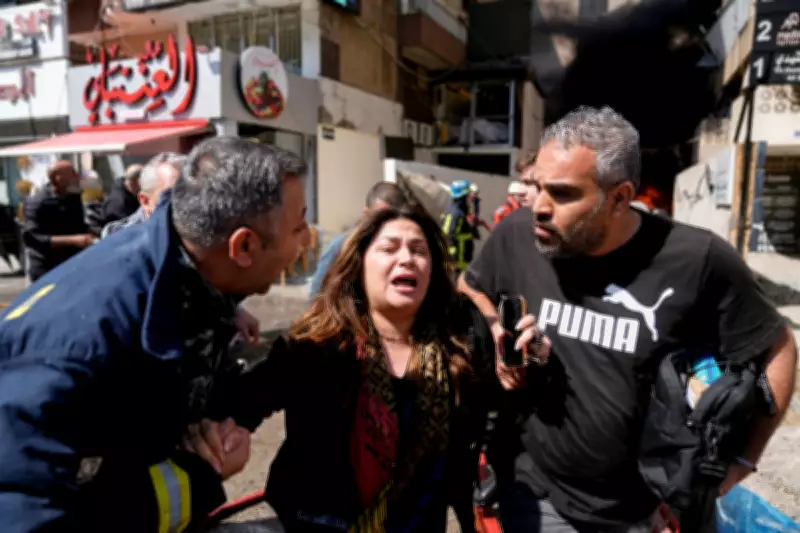
Israeli strikes hit several dense commercial and residential areas in central Beirut on Wednesday afternoon without any prior warning. This aggressive military action occurred just hours after a ceasefire was officially announced in the ongoing U.S.-Israeli war with Iran, sparking widespread confusion and panic across the Lebanese capital.
Ceasefire Does Not Extend to Lebanon, Says Israel
Israel has explicitly stated that the newly brokered ceasefire agreement does not extend to its separate conflict with the Iran-backed militant group Hezbollah in Lebanon. This position directly contradicts claims from mediator Pakistan, which asserted that the ceasefire should indeed apply to Lebanon as well. Israeli Prime Minister Benjamin Netanyahu reinforced this stance, vowing that military operations against Hezbollah would continue unabated.
The Israeli military described the assault as the largest coordinated strike in the current war, targeting more than 100 Hezbollah sites within a mere ten minutes. These targets spanned across Beirut, southern Lebanon, and the eastern Bekaa valley, focusing on missile launchers, command centers, and intelligence infrastructure.

Panic and Destruction in Beirut Streets
The sudden strikes caused immediate chaos and devastation throughout Beirut. Black smoke billowed over multiple parts of the seaside capital, while loud booms interrupted the usual honking of traffic on what had been a clear, blue-sky afternoon. Ambulances raced toward open flames as emergency responders desperately searched through charred vehicles for survivors.
At least one apartment building was directly struck in the attacks, though the exact number of casualties remains unclear. Several strikes targeted busy commercial locations, heightening the risk to civilians and leading to scenes of panic in the streets. The Israeli military accused Hezbollah of using civilians as human shields, urging the State of Lebanon and its citizens to reject the group's entrenchment in civilian areas.
Hezbollah's Response and Historical Context
A Hezbollah official, speaking anonymously due to lack of authorisation for public comments, revealed that the group had been giving mediators a chance to secure a ceasefire in Lebanon. However, he emphasised that Hezbollah had not formally adhered to any ceasefire because Israel was not complying with it. The official stressed that the group would not accept a return to the pre-March 2 status quo, when Israel conducted near-daily strikes in Lebanon despite a nominal ceasefire in place since the last major war ended in November 2024.
Hezbollah initiated missile fire across the border days after the U.S. and Israel attacked Iran, igniting a broader regional conflict. Israel responded with extensive bombardment of Lebanon and a ground invasion, marking a significant escalation in hostilities.
Humanitarian Crisis and Displacement
The conflict has resulted in a severe humanitarian crisis, with Israeli airstrikes killing more than 1,530 people in Lebanon, including over 100 women and 130 children. The Israeli military claims to have killed hundreds of Hezbollah fighters, but the toll on civilians remains devastating. More than one million people have been displaced within Lebanon, many forced to sleep in tents on the streets of Beirut and the coastal city of Sidon.
Early on Wednesday, following the announcement of the Iran ceasefire, many displaced individuals began packing their belongings in hopes of returning home. However, Netanyahu's subsequent comments dashed these hopes, leaving families like that of Fadi Zaydan, 35, in a state of confusion and despair. Zaydan expressed the unbearable conditions of tent life and uncertainty, noting that returning home to Nabatieh would risk being targeted, so his family decided to wait things out in Sidon instead.
This strike on central Beirut is particularly notable as Israel has rarely targeted this area since the latest Israel-Hezbollah war began on March 2, typically focusing on southern and eastern Lebanon and Beirut's southern suburbs. The unexpected attack underscores the volatile and unpredictable nature of the conflict, with no clear resolution in sight.