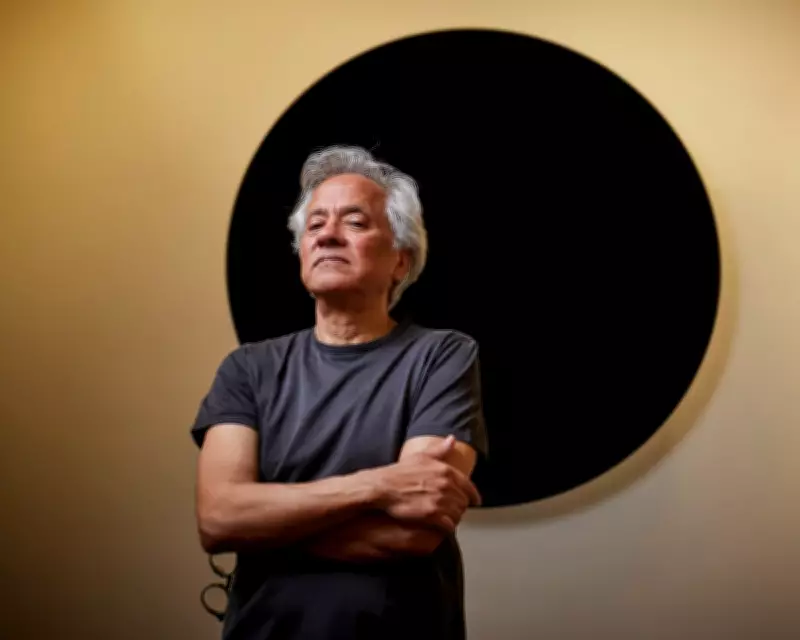
Anish Kapoor has stated that the United States should be excluded from the Venice Biennale due to what he describes as the country's 'abhorrent politics of hate' and 'incessant warmongering'. The artist, who represented Britain at the 1990 edition, commended the biennale jury's decision to resign in protest over the inclusion of Israel and Russia just days before the event, often referred to as the 'Olympics of art'. However, Kapoor argued that the five-member international jury should have also included the US in their reasoning for stepping down from judging the prizes, which will now be delayed until November.
Kapoor's Call for Broader Exclusion
Kapoor called the jury's resignation 'courageous' but expressed a desire for them to have excluded the United States as well. 'I would hope that they might have also excluded the United States for its abhorrent politics of hate and its incessant warmongering,' he said. The US entry to the biennale, featuring artist Alma Allen—relatively unknown in the art world before his selection—has faced intense scrutiny due to perceived interference from the Trump administration in his selection process. The announcement of the US artist was significantly delayed by the longest government shutdown in US history, and several other artists reportedly declined the opportunity. Entrants were instructed that their work must 'reflect and promote American values'.
Defense of the US Pavilion
The curator of the US pavilion, Jeffrey Uslip, defended Allen's entry, titled 'Call Me the Breeze', which includes about 30 sculptures or biomorphic forms, all called 'Not Yet Titled'. Uslip argued that abstract or political work can take various forms, comparing Allen's work to Isamu Noguchi's biomorphic abstract sculpture, which had political implications related to World War II. 'When they see [Allen's] Guatemalan green quartzite in the courtyard, it is human-sized, it is a bag form. It requires people to look and not just say: 'Oh, this is abstract, so it can't be political,'' Uslip said. Allen, who experienced homelessness and began making sculptures while working in construction in New York City, stated that his art represents the experiences of his life, including moments of luck and difficulty that often coincide.

Broader Political Controversies at the Biennale
The US pavilion is not the only source of controversy at the 61st biennale, where politics threaten to overshadow proceedings around the Israeli and Russian pavilions. Over 200 participants signed a letter organized by the Art Not Genocide Alliance (Anga) demanding the cancellation of the Israeli pavilion, accusing Israel of committing genocide. The letter stated, 'We, the undersigned, stand together as artists, curators and art workers in a collective refusal to allow you to platform the Israeli state as it commits genocide.' A strike organized by Anga for Friday could bring the event to a standstill during its preview week. Israel's foreign ministry condemned Anga, calling its actions 'anti-Israeli political indoctrination' and 'direct discrimination'.
Russian Pavilion and Government Clashes
On Monday, the Italian ministry of culture confirmed that the Russian pavilion will not be open to the public, though the art installation will be viewable through windows. Following Russia's 2022 invasion of Ukraine, the biennale condemned the invasion and banned anyone linked to the Kremlin, though it never formally barred Russia from participating. The country was absent from the 2022 and 2024 editions. The Italian government has clashed with organizers over the reintroduction of Russia, claiming the decision was made 'entirely independently by the Biennale Foundation, despite the Italian government's opposition'. Last week, the European Commission wrote to the Biennale Foundation, stating its intention to terminate or suspend its €2 million grant for the exhibition due to Russia's involvement.
Kapoor's Previous Legal Actions
Kapoor, who has a show in Venice, previously threatened legal action against the Trump administration after border patrol agents posed for a photograph in front of his 'Cloud Gate' sculpture in Chicago. He described the scene as representing 'fascist America'. The artist has also taken legal action against the National Rifle Association for using an image of 'Cloud Gate', with the parties settling out of court.