Kazakh Court Delivers Landmark Sentences Over Xinjiang Protest
A court in Kazakhstan has handed down convictions to 19 Kazakh activists following a protest against Beijing's severe crackdown in China's far-western Xinjiang region last year. This action represents what experts and advocacy groups are describing as the most significant move yet by the Kazakh government to suppress criticism under pressure from Beijing.
Details of the Protest and Sentences
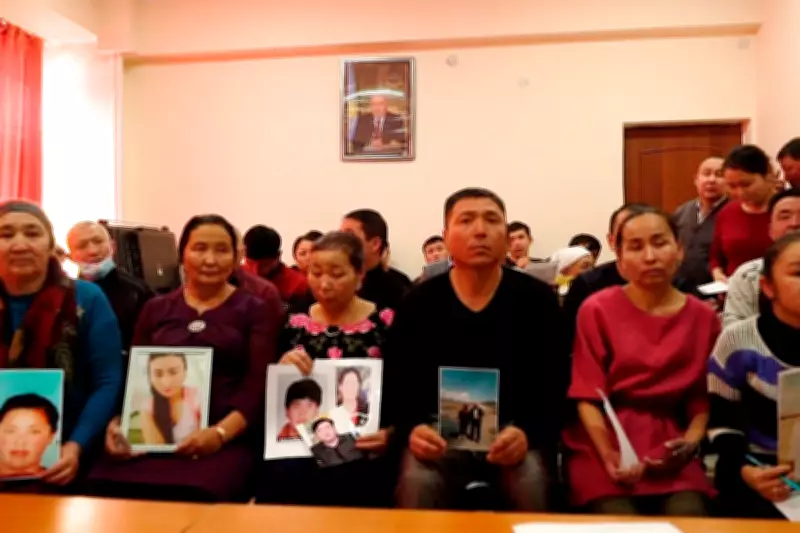
The activists, all Kazakh nationals, staged their demonstration near the border with China in November. During the protest, they burned Chinese flags and portraits of Chinese leader Xi Jinping while demanding the release of a Kazakh citizen detained in Xinjiang the previous year.
Eleven of the activists received five-year prison sentences for charges of "inciting discord," while the remaining eight were subjected to restrictions on their movement. Shinquat Baizhan, the lawyer representing the group, confirmed these sentences, which have also been widely reported in local media outlets.

Unprecedented Crackdown on Dissent
While Kazakhs who speak out against China's policies in Xinjiang have historically faced pressure, this case marks the first time such a large group of Xinjiang activists has been imprisoned in Kazakhstan. Yalkun Uluyol, a China researcher at Human Rights Watch, stated, "This is unprecedented. It signals that Kazakhstan is willing to sacrifice the freedom of its people to maintain good relations with Beijing."
The Chinese government initiated a brutal crackdown in Xinjiang starting in 2017, detaining over a million Uyghurs, Kazakhs, and other predominantly Muslim ethnicities in prisons and internment camps. Although many have since been released, the region remains under stringent control with strict limitations on religious and cultural practices.
Diplomatic Pressure and Government Responses
Xinjiang has long been a sensitive issue in neighboring Kazakhstan, a Central Asian nation of 20 million people that relies heavily on China as a major trading partner. According to Uluyol, the Kazakh government opened criminal investigations targeting the protesters after receiving a diplomatic note from the Chinese consulate in Almaty, Kazakhstan's largest city.
The note, obtained and reviewed by The Associated Press, labeled the protest "an open provocation against the national dignity of the People's Republic of China and an insult to the Chinese Communist Party and the Chinese people."
In a statement, the Chinese Ministry of Foreign Affairs referred to the sentencing as an "internal affair" and praised Kazakhstan as a "friendly neighbor" that is "familiar with China's policies on governing Xinjiang." The Kazakh Ministry of Foreign Affairs did not respond to requests for comment on the matter.
Background on Atajurt and Ongoing Repression
The protesters were members of Atajurt, an organization advocating for the rights of Chinese-born Kazakhs facing repression in China. Xinjiang is home to over a million ethnic Kazakhs, thousands of whom have been detained, with many more still facing movement restrictions today.
Atajurt has long encountered pressure from the Kazakh government, an authoritarian state with little tolerance for dissent. Authorities arrested Atajurt's founder, Serikzhan Bilash, in 2019, releasing him into exile after he promised to refrain from political activities.
Previously, the Kazakh government showed some tolerance toward the organization's activities, aware of widespread sympathy in Kazakhstan for the Chinese-born Kazakh population. However, Uluyol noted that this appears to have changed as Kazakhstan moves closer to China and authorities demonstrate less tolerance for groups protesting Beijing's policies.
Ramifications and Future Implications
Bilash, now living in exile in the United States, warned that the arrests would have widespread ramifications. Atajurt's work included providing financial support to relatives of those detained in Xinjiang, writing letters to embassies and the United Nations, and recording hundreds of testimonies from individuals searching for missing loved ones.

"The world will lose more than just a human rights organization; it will lose the biggest window into the humanitarian disaster in neighboring Xinjiang," Bilash stated, emphasizing the critical role Atajurt plays in documenting human rights abuses.
This case underscores the escalating geopolitical dynamics in Central Asia, where economic dependencies are increasingly influencing domestic policies and silencing dissent against powerful neighbors.