NATO Chief Mark Rutte Faces European Backlash Over Trump 'Daddy' Relationship
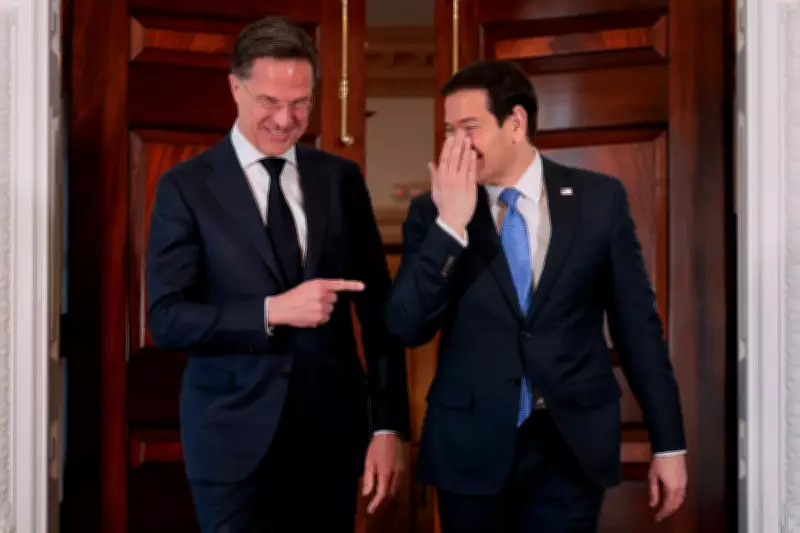
NATO Secretary General Mark Rutte is under intense scrutiny from European member states for his seemingly endless support of US President Donald Trump, whom he has affectionately referred to as "daddy." This cozy relationship is being questioned as Trump continues to bomb Iran and threaten to abandon the transatlantic alliance entirely.
Charm Offensive Fails to Yield Results
Over the past year, Rutte has mounted a significant charm offensive aimed at diplomatically stroking Trump's ego in an attempt to maintain the fragile NATO alliance. This has included sending swooning text messages that Trump publicly posted on his Truth Social platform. However, European allies are increasingly skeptical that this approach is working.
Despite Rutte's reputation as a "Trump whisperer," he has failed to achieve several critical objectives. These include rallying Trump to support Ukraine, negotiating a stable trade agenda that has shocked global markets, and halting a military campaign in Iran that has killed hundreds while choking off vital fuel supplies.

European Leaders Voice Their Concerns
European leaders have not been shy about expressing their dissatisfaction with both Trump's actions and Rutte's response. French President Emmanuel Macron recently unloaded on Trump's contradictory and violent rhetoric, stating, "When we're serious, we don't say every day the opposite of what we said the day before. And, maybe, one shouldn't speak every day."
German Chancellor Friedrich Merz has repeatedly urged for diplomacy, while Germany's President Frank-Walter Steinmeier was more blunt, calling the war a "disastrous mistake" that breaches international law. Spanish Prime Minister Pedro Sánchez added, "We will not applaud those who set the world on fire just because they show up with a bucket," following Trump's announcement of a two-week ceasefire.
Trump's Threats and NATO's Precarious Position
The White House has been explicit about its dissatisfaction with NATO. Press Secretary Karoline Leavitt stated on Trump's behalf, "They were tested, and they failed. It's quite sad that NATO turned their backs on the American people over the course of the last six weeks when it's the American people who have been funding their defense." She confirmed that the president "has discussed" US withdrawal from the alliance.
This potential withdrawal represents the worst crisis in NATO's history, according to Ivo Daalder, former US ambassador to NATO under Barack Obama. He noted that Europe's distance from the Iran war is a "reflection of the fact that NATO is deeply damaged" and that "Europe no longer trusts the United States, believes the United States is an unreliable ally."
Financial and Political Fallout
The consequences of a US withdrawal would be devastating. A study from the International Institute for Security Studies indicates that European leaders would be on the hook for more than $1 trillion in additional defense support, on top of their already-climbing defense budgets. Former NATO spokesperson Oana Lungescu warned that a divided Europe is "exactly" what NATO's enemies want to see.
While Congress passed a law in 2023 preventing any US president from unilaterally withdrawing from the 32-member alliance, the mutual trust that has been the cornerstone of NATO since its founding in 1949 appears to be eroding rapidly. The alliance's mutual defense agreement, invoked only once after the 9/11 attacks, is now under unprecedented strain as Rutte struggles to bridge the growing transatlantic divide.