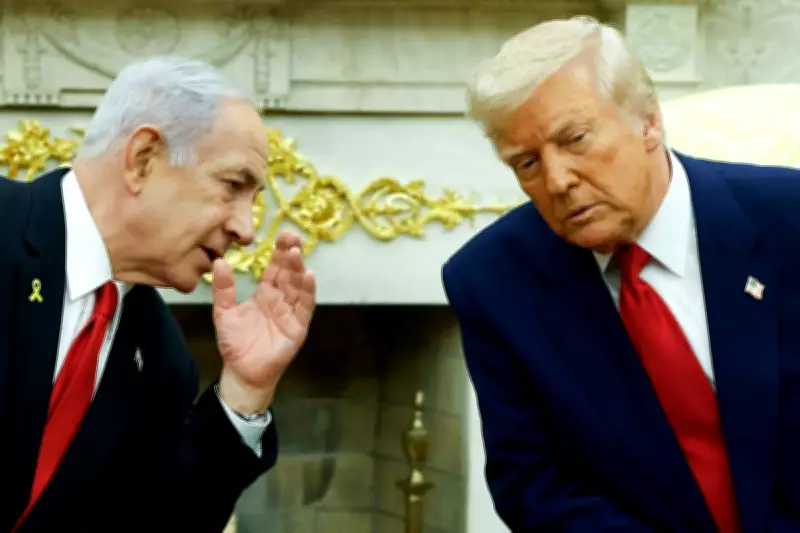
Netanyahu Convinced Trump to Wage War on Iran Despite Internal White House Opposition
A startling new report has revealed that Israeli Prime Minister Benjamin Netanyahu successfully persuaded President Donald Trump to initiate a military conflict with Iran, overriding significant concerns and skepticism from within the highest echelons of the White House. According to detailed accounts from The New York Times, based on the upcoming book Regime Change: Inside the Imperial Presidency of Donald Trump by Jonathan Swan and Maggie Haberman, Trump's decision came despite vocal opposition from key advisers who warned of severe consequences.
Secret Presentation and Presidential Approval
On February 11, Israeli officials delivered a secret presentation to Trump and his closest advisers in the Situation Room, outlining a plan for a joint U.S.-Israeli operation against Iran. The presentation reportedly focused on objectives such as eliminating Ayatollah Ali Khamenei, destroying Iran's power projection capabilities, fostering a popular uprising, and achieving regime change with a secular leader. Trump's response, "Sounds good to me," was interpreted by Netanyahu as a green light for the operation, which has since resulted in over 3,500 fatalities, including 1,600 civilians and 13 U.S. service members in the Middle East.
Internal White House Skepticism and Warnings
Despite Trump's enthusiasm, his inner circle expressed deep reservations. In a follow-up meeting on February 12, U.S. intelligence officials dissected Netanyahu's presentation, with CIA Director Jim Ratcliffe dismissing the regime change objective as "farcical." Secretary of State Marco Rubio echoed this sentiment, calling it "bull****," while General Dan Caine, Chairman of the Joint Chiefs of Staff, cautioned that Trump had been "oversold" by the Israelis. Caine noted that Israeli plans were often "not always well-developed" and that they relied on hard-selling tactics due to their dependence on U.S. support.

Vice President JD Vance emerged as the most vocal opponent, directly telling Trump that war with Iran was a "terrible idea" and warning of potential regional chaos, mass casualties, and a split within Trump's political base. Vance later played a crucial role in negotiating a ceasefire after Trump threatened to "wipe Iranian civilization off the map." Other advisers, including White House communications director Steven Cheung, highlighted the public relations fallout, given Trump's campaign promises to avoid overseas wars.
Military and Strategic Concerns Ignored
General Caine further warned Trump that engaging in war with Iran would "drastically deplete" American weapons stockpiles, particularly missile interceptors already strained by support for Ukraine and Israel. He also flagged the immense difficulty of securing the Strait of Hormuz, a critical oil chokepoint, but Trump dismissed these concerns, assuming Iran would surrender beforehand. However, Iran has maintained control over the strait, blocking vessels that transport a fifth of the world's oil, prompting Trump to post an expletive-laden message on Truth Social.
Decision-Making in an Echo Chamber
The report indicates that Trump often heard only "what he wanted to hear" from his team, which served as an echo chamber for his instincts. Two days before ordering the bombing on February 28, Trump gathered his senior team for a final round of opinions, but by then, he had "effectively made up his mind weeks earlier." While some advisers, like chief of staff Susie Wiles, privately worried about being dragged into another Middle East war, they opted not to voice concerns directly to the president in group settings.
White House counsel David Warrington, when pressed, supported the war due to personal experiences with Iran-related casualties, arguing that if Israel proceeded, the U.S. should join. The White House has declined to comment on the report, leaving unanswered questions about the decision-making process that led to a conflict with profound global implications.