Pope Leo XIV's Peace Initiative in Cameroon's War-Torn Northwest
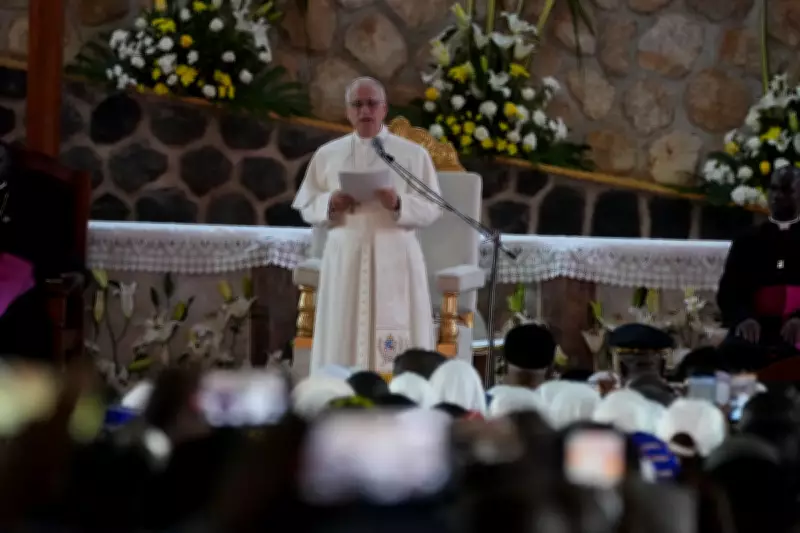
Pope Leo XIV has undertaken a significant peace mission in Cameroon's northwestern city of Bamenda, a region severely impacted by separatist violence that has resulted in thousands of fatalities over nearly a decade. The pontiff's arrival on Thursday marks a crucial effort to address one of Africa's most persistent conflicts through interfaith dialogue and victim support.
The Roots of Cameroon's Separatist Conflict
The conflict originated in Cameroon's western regions where English-speaking separatists initiated a rebellion in 2017, aiming to establish an independent state separate from the French-speaking majority. This violence has tragically claimed more than 6,000 lives and displaced over 600,000 individuals, creating a humanitarian crisis of substantial proportions.
Historical context reveals that Cameroon was divided under British and French colonial administration following World War I. Upon independence in 1960-1961, the territories reunified into a federal state, with French-speaking regions constituting approximately 80% of both territory and population. The English-speaking minority, representing about 20% of Cameroon's 30 million citizens, has consistently reported marginalization under President Paul Biya's administration, which has been in power for over four decades.

Tensions escalated dramatically in 2016 when the government attempted to impose French language usage in English-speaking regions' educational and judicial systems. This policy sparked widespread protests that were met with violent repression by security forces, ultimately fueling the separatist movement.
International Dimensions and Separatist Leadership
The conflict features multiple separatist groups whose leaders predominantly operate from abroad, many having been blacklisted by the Cameroonian government. Analysts suggest this international presence complicates peace efforts, as these leaders can more easily mobilize funds and direct operations against Cameroonian forces from foreign bases.
Recent international legal actions include Norway charging Lucas Ayaba Cho, commander of the Ambazonia Defense Forces, with incitement to commit crimes against humanity in September 2024. Additionally, a United States federal jury convicted two individuals last December for conspiring to provide financial and material support to separatist fighters. Belgium further arrested four people in March as part of investigations into residents suspected of separatist leadership and fundraising activities.
Government Response and Peace Process Challenges
Cameroon's government has implemented several measures to address the violence, though a lasting resolution remains elusive. A 2019 national dialogue resulted in special status being granted to the northwest and southwest regions, alongside proposals for governance, justice, and educational reforms. However, implementation of these proposals has been limited and inconsistent.
A disarmament, demobilization, and reintegration program has faced criticism for lacking transparency and having restricted reach. According to Colbert Gwain Fulai, a civil society leader in Bamenda, the government initially perceived the conflict as agitation by "a few misguided" groups and continues to frame it primarily as requiring military rather than political solutions, while not acknowledging marginalization claims.
The International Crisis Group noted last year that separatist leaders appear "determined to double down, wagering on the absence of sustained peace efforts." Some have even formed cross-border alliances with separatist groups in neighboring Nigeria who share similar independence aspirations.
Mixed Reactions to Papal Peace Efforts
The pope's visit and peace meeting have generated complex reactions among residents and local leaders, blending hope with skepticism. Such high-level meetings between government and separatist representatives are rare, with the last major dialogue occurring in 2022.
Lucas Asu, spokesperson for the Ambazonia Governing Council separatist group, expressed commitment to peaceful conflict resolution through dialogue while accusing the government of avoiding substantive talks. Cameroonian authorities have not provided immediate commentary on these allegations.

Morine Ngum, a mother of three whose husband was killed as a separatist fighter in 2022, voiced profound skepticism about government intentions. "I see them using this crisis as an advantage. It brings them more profit. They just want to use this pope coming to cover up things," she stated, emphasizing that genuine progress must originate from governmental willingness to address core issues.
The papal peace initiative represents a significant diplomatic effort amid a conflict characterized by deep historical grievances, international dimensions, and complex political dynamics. As Pope Leo XIV's African tour continues across four nations, his intervention in Cameroon highlights the urgent need for sustainable solutions to a conflict that has devastated communities for nearly ten years.