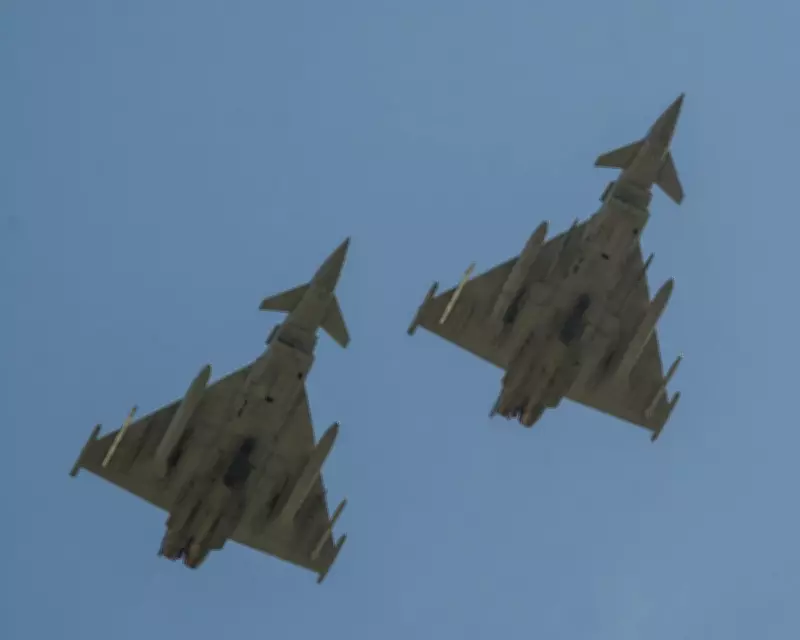
Two RAF Typhoons were scrambled from a Romanian air base in response to Russian drones approaching Nato airspace, though they did not open fire. British defence sources confirmed the jets did not enter Ukrainian airspace, countering reports that Russian drones had been shot down by the RAF there—an event that would have marked a major escalation between the western alliance and Moscow.
Response to Potential Threat
Romanian officials stated that the Typhoons took off at 2am on Saturday to address a possible Russian drone threat. The aircraft established radar contact with the targets and were authorised to engage if necessary. However, the potential targets remained within Ukrainian airspace, so no shots were fired.
Shooting down Russian drones inside Ukraine would be significant because Ukraine is not a Nato member, and the west has consistently avoided policing its skies to prevent direct confrontation with Russia.

Nato Mission in Romania
The Typhoons are based in Romania as part of a rotating multinational Nato air mission designed to protect eastern European countries from Russian drone incursions that might spill over from the war in Ukraine. The RAF Eurofighter Typhoon aircraft operated strictly within Romanian airspace, adhering to national and allied rules of engagement, and did not enter Ukrainian airspace at any point.
A Romanian defence ministry spokesperson said the pilots received authorisation to engage the drones if they breached Romanian airspace, which they did not. The mission remained one of surveillance, deterrence, and readiness.
The spokesperson added: “Ground-based radar systems tracked multiple aerial targets approaching the area near Reni, Ukraine, where explosions were subsequently reported. After that moment, contact with the drones was lost. Half an hour later, residents of Galați, Romania, reported the fall of an object on the outskirts of the town through the emergency service 112. Allied aircraft maintained a defensive posture, contributing to enhanced situational awareness and the protection of Nato airspace.”
The UK Ministry of Defence has been approached for comment.