A Russian drone struck a residential building in the southeastern Romanian city of Galati, marking the latest in a series of drone incursions that have drawn widespread condemnation across Europe. NATO Secretary-General Mark Rutte declared that the alliance stands ready to defend "every inch" of its territory amid increasing violations.
NATO's Response
"Russia's reckless behaviour is a danger to us all," Rutte said on X after the Romania strike injured two people. "Last night showed yet again that the implications of their illegal war of aggression don't stop at the border." He added, "We will continue to strengthen our deterrence and defence at home and continue our support for Ukraine as they defend against Russia's aggression."
Former US President Donald Trump had warned that Russian incursions into NATO airspace could spell "big trouble" for Moscow, but Russia has continued to probe NATO defences without facing repercussions. Moscow has accused NATO of providing "direct and indirect support to the Kyiv regime" and claimed that "NATO is fighting against Russia."

Drone Incursions in Romania
Romania has been among the countries most affected by drone incursions over the past year. The Romanian defence ministry scrambled two F-16 fighter jets and a military helicopter to monitor a drone attack on a building overnight into Friday 29 February, with pilots authorised to shoot down any drones. A Russian drone crashed onto the roof of a 10-storey block of flats in Galati during a Russian attack on neighbouring Ukraine, causing an explosion and fire that injured two people.
Romania's emergency response agency reported that a fire broke out in a 10th-floor apartment after the drone struck the building's roof and exploded. On 13 September 2025, Romania scrambled fighter jets after a Russian drone entered its airspace. Defence Minister Ionut Mosteanu said F-16 pilots came close to taking down the drone as it flew very low before leaving national airspace toward Ukraine. Further incursions and crashes occurred in November 2025, February, March, April, and May. In the most recent incident, two RAF Eurofighter Typhoons were scrambled on 25 April when a drone entered Romanian airspace and hit a house near Galati.
Denmark
Denmark's prime minister said Russian involvement in overnight drone incursions near four airports could not be ruled out, though Russia denied involvement. The defence minister warned the drone activity was the "work of a professional actor," just two days after the country's main hub was shut down due to sightings. Copenhagen is now considering invoking NATO Article 4, which would formally request talks over the incident, a move taken by Poland and Estonia following repeated Russian incursions.
The Netherlands
Several drones flew over the Netherlands' Volkel Air Base, and Eindhoven Airport was shut down for several hours, but the source of the drones remains unknown.
Finland
Russian fighter jets have repeatedly entered NATO airspace since last year. On 27 May, Finland's defence forces reported that a Russian aircraft violated the country's airspace while taking a safe route during a thunderstorm. The Finnish Air Force launched an "operational flight" to address the incursion.
Estonia
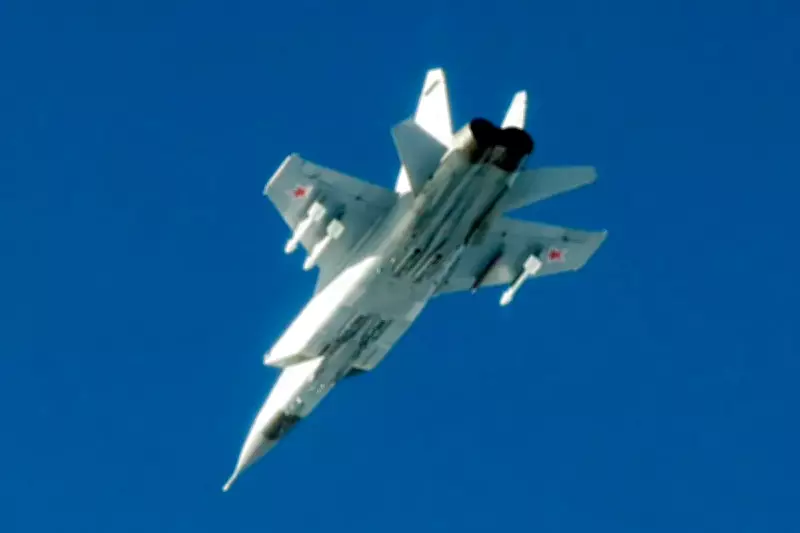
On 19 September, three Russian fighter jets staged an incursion into Estonian airspace, remaining for 12 minutes without permission. Foreign Minister Margus Tsakhna called it the fourth violation this year, describing it as "unprecedentedly brazen." The incursion involved three Russian MiG-31 fighters over the Gulf of Finland. The Russian charge d'affaires was summoned and given a protest note. On 18 March 2026, a Russian Su-30 jet again violated Estonian airspace without flight plans or radio contact. Estonia has also suffered drone incursions, including one on 19 May when Romanian F-16s shot down a drone—the first time a drone was shot down by NATO aircraft in Estonia.
Poland, Lithuania, and Latvia
Poland
Poland has been heavily affected by Russian drone incursions. On 9 September last year, there were 19 intrusions into Polish airspace, many from Belarus, Prime Minister Donald Tusk said. Three drones were confirmed shot down, with a fourth likely. Several reconnaissance drone incursions have been recorded since.

Lithuania
Lithuania has also faced incursions. In October, an SU-30 fighter and an Il-78 refueling tanker from Kaliningrad briefly entered Lithuanian airspace, prompting Spanish Eurofighter jets to respond. On 20 May, Lithuania's president and prime minister took shelter after a drone alert in Vilnius, though the source is unclear. In November, Lithuania accused Belarus of launching meteorological balloons in a "cynical hybrid attack." EU Commission chief Ursula von der Leyen visited Lithuania on Tuesday to discuss EU airspace violations and announced further defence funding for the Baltic countries.
Latvia
Latvia has suffered several drone incursions since September 2024, when a drone crashed in the Rezekne Municipality. On 23 May, a drone plunged into Lake Drydzis, though its origin is unknown.
Belarusian Military Drills
Russia and Belarus launched a large nuclear military exercise in mid-May in Belarus, which borders several NATO countries. Authoritarian President Alexander Lukashenko allowed Russia to deploy tactical nuclear weapons to his country, months after Russia announced its Oreshnik missile system entered service in Belarus. The drills involve missile units and warplanes. Last year, the two countries held the joint exercise Zapad 2025, showcasing close defence ties. Originally set for 13,000 troops along the western border, the number was later halved, with main manoeuvres deeper inside Belarus. Moscow and Minsk insist the exercises are defensive and not intended to attack any NATO member, but they have raised concerns in Kyiv and Western allies in Latvia, Lithuania, and Poland.
Russia's Hybrid Attacks
Russia has also employed hybrid warfare tactics, including cyberattacks, sabotage, and disinformation campaigns. "This happens all the time," says Natia Seskuria, an associate fellow at the Royal United Services Institute. "It has much deeper implications on European security, and there are various instances where Russia is directly intervening in elections. We saw this happening in Moldova last year, and this year ahead of their parliamentary elections." Russia has been accused of meddling in European elections for years. The UK's National Cyber Security Centre judged in 2022 that Russia was behind a cyberattack with Europe-wide impact just before its invasion of Ukraine. While Ukraine's military was the primary target of an attack on Viasat, wind farms in central Europe and internet users were also affected. Disinformation campaigns in Western countries have been linked to Russia, with Seskuria noting, "There are consistent efforts to push narratives that are pro-Russian, portraying the West as an aggressor rather than a Kremlin that wants to violate Ukraine's sovereignty."