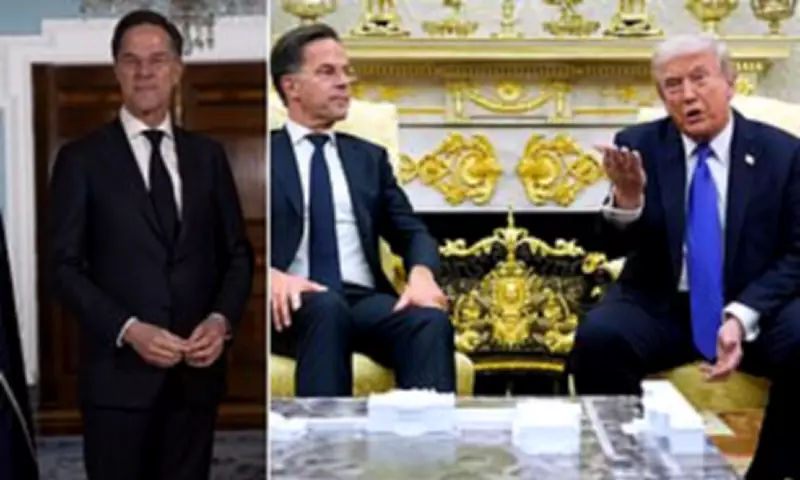
NATO Leader Applauds Trump's Role in Iran Truce Despite Alliance Tensions
NATO Secretary General Mark Rutte offered significant praise to President Donald Trump on Wednesday for his instrumental role in establishing a temporary ceasefire involving the United States, Iran, and Israel. Rutte's commendation came during a CNN interview where anchor Jake Tapper questioned whether global security had improved since the conflict's escalation in late February.
"Absolutely," declared the NATO chief without hesitation. "This is thanks to President Trump's leadership." Rutte elaborated that diminishing Iran's nuclear capabilities represented a critical security priority for populations across the United States, Europe, and the Middle East.
White House Threatens NATO Withdrawal Over Strait Dispute
Remarkably, Rutte's supportive comments emerged mere hours after White House Press Secretary Karoline Leavitt informed journalists that President Trump intended to discuss potentially leaving NATO during his upcoming meeting with the secretary general. This dramatic development followed NATO member nations' refusal to deploy warships to help reopen the strategically vital Strait of Hormuz.

Leavitt delivered a pointed message to reporters, quoting President Trump directly: "They were tested and they failed." She added her own critique, stating, "It's quite sad that NATO turned their backs on the American people over the course of the last six weeks, when it's the American people who have been funding their defense."
The press secretary confirmed that withdrawing from NATO would be a primary discussion topic between Trump and Rutte, with potential presidential comments to follow their meeting. The Strait of Hormuz controversy remains particularly sensitive as approximately one-fifth of global oil supplies traverse this narrow maritime passage.
Ceasefire Implementation and Regional Attacks
As the two-week ceasefire commenced, White House officials challenged Iranian claims about Strait closures, noting increased traffic despite public statements from Tehran. Iran's semi-official Fars news agency initially reported two tankers passing through the strait before announcing suspended passage coinciding with Israeli attacks on Lebanon.
Leavitt emphasized that Lebanon remained excluded from ceasefire arrangements, while Iran threatened to destroy unauthorized tankers attempting passage, imposing tolls reaching $2 million per vessel. Regional tensions escalated further with drone attacks targeting critical infrastructure:
- Saudi Arabia's East-West oil pipeline suffered drone strikes at 1pm local time
- Kuwait's air defenses intercepted 28 drones targeting oil facilities, power plants, and desalination infrastructure
- Explosions were reported in Tehran, though the White House declined comment pending security briefings
Peace Plan Controversy and Political Backlash
American and Iranian authorities scheduled Saturday meetings in Islamabad to negotiate a more permanent resolution. Iran publicly presented a ten-point peace plan demanding:
- US acceptance of Tehran's Strait of Hormuz control
- Recognition of Iran's uranium enrichment rights
- Complete sanctions removal
- Financial compensation payments
- Total US troop withdrawal from the region
President Trump now confronts substantial backlash from his core supporters who fear the ceasefire concedes excessive ground to Iran. The administration faced internal contradictions when a White House official disputed that Iran's published plan reflected Trump's vision, only for the president to claim most points had "been fully negotiated" while reserving the right to resume strikes if negotiations collapsed.
Republican Senator Lindsey Graham demanded Vice President JD Vance appear before Congress to explain the agreement's terms, describing the proposal as having "troubling aspects" that required congressional scrutiny regarding national security objectives.