

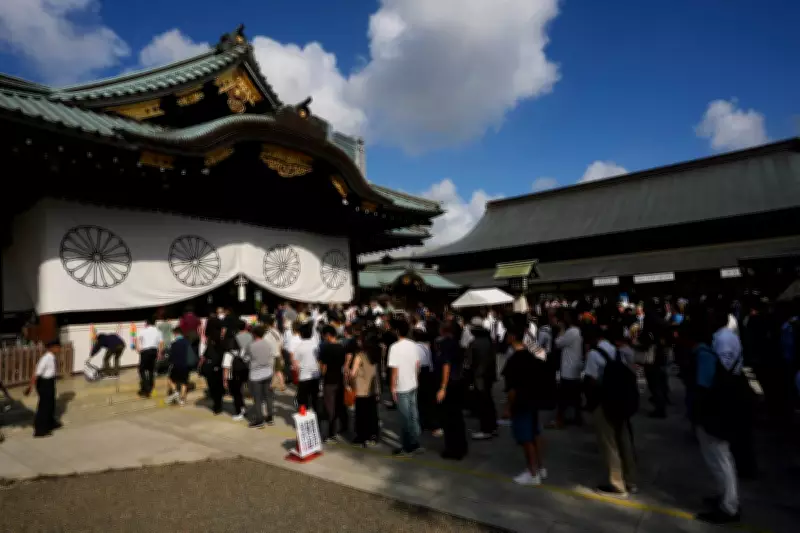
South Korean National Detained for Alleged Festival Disruption at Yasukuni Shrine
Japanese authorities have arrested a South Korean citizen in Tokyo for allegedly obstructing the annual spring festival at the controversial Yasukuni Shrine. The incident occurred on Wednesday, with police stating the individual was holding a banner carrying political messages that disrupted the event.
Details of the Arrest and Political Context
The 64-year-old suspect reportedly displayed a banner featuring multiple messages, including one urging "war criminals" to cease prayers at Yasukuni and another making territorial claims regarding an island disputed between Japan and South Korea. According to Kyodo News agency, the man positioned himself at the main shrine gate and in front of vehicles transporting messengers from the emperor, who were scheduled to deliver imperial offerings as part of the festival ceremonies.
Yasukuni Shrine honors Japan's 2.5 million war dead, but its inclusion of convicted war criminals has made it a focal point of international controversy. Nations that suffered under Japanese aggression before and during World War II, particularly China and the Koreas, view visits to the shrine as indicative of Japan's insufficient remorse for its wartime actions. This perception continues to strain diplomatic relations in the region.

Broader Political Reactions and Festival Developments
The arrest coincides with heightened political activity surrounding the shrine. On Tuesday, Prime Minister Sanae Takaichi, who previously prayed regularly at Yasukuni, sent a religious ornament instead of visiting in person for the second time as Japan's leader. This decision sparked criticism from both China and South Korea, who interpreted it as a symbolic gesture that still acknowledges the shrine's significance.
Furthermore, on Wednesday, a group of over 100 right-wing lawmakers, including a Cabinet minister, prayed at Yasukuni Shrine, underscoring the domestic political support it retains. These events collectively highlight the ongoing tensions between Japan and its neighbors regarding historical memory and national identity.
The spring festival at Yasukuni Shrine remains a sensitive occasion, often drawing international scrutiny. The arrest of the South Korean national underscores how the shrine continues to serve as a flashpoint for regional disputes over history and territory, reflecting deeper unresolved issues from Japan's imperial past.






