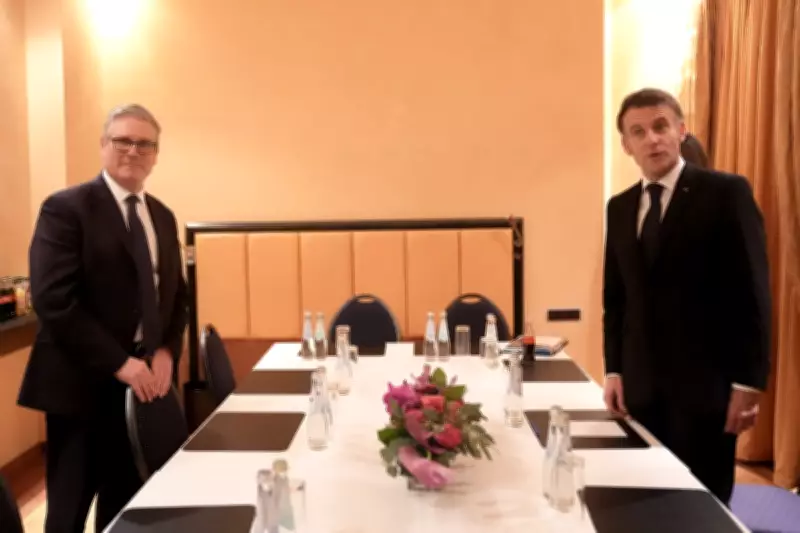
Starmer and Macron to Chair Critical Paris Summit on Strait of Hormuz
Prime Minister Sir Keir Starmer and French President Emmanuel Macron are set to co-host a pivotal virtual meeting in Paris on Friday, bringing together approximately 40 countries and the International Maritime Organisation. The talks aim to address the urgent reopening of the Strait of Hormuz, a crucial global shipping channel that has been closed by Iran in response to American and Israeli military strikes.
Global Responsibility and Energy Security at Stake
Sir Keir Starmer is expected to emphasise that the unconditional and immediate reopening of the strait is a global responsibility, stressing the need for collective action to restore the free flow of global energy and trade. The Strait of Hormuz normally facilitates about one-fifth of the world's oil shipments, making its closure a significant threat to international economic stability.
In his address, the Prime Minister will outline a commitment to establishing a multinational initiative focused on protecting freedom of navigation. We must reassure commercial shipping and support mine clearance operations to ensure a return to global stability and security, he will state, highlighting the collaborative efforts with President Macron.

Ceasefire Context and Diplomatic Moves
The summit coincides with a 10-day ceasefire between Lebanon and Israel that took effect late on Thursday, potentially bolstering efforts to extend the truce involving Iran, the US, and Israel. This diplomatic window comes as US President Donald Trump has initiated a blockade of Iran's oil ports to counter Tehran's fossil fuel revenues, escalating tensions in the region.
Foreign Secretary Yvette Cooper and Chief of the Defence Staff Sir Richard Knighton will accompany Prime Minister Starmer in Paris. The discussions will concentrate on supporting the US-Iranian ceasefire and devising a strategic plan to ensure the Strait of Hormuz remains accessible to shipping post-conflict.
Military Planning and International Coordination
Downing Street has confirmed that planning for a joint defensive mission is underway, with the goal of deploying a combined military effort from participating nations as soon as conditions permit. Following Friday's conference, a multinational military planning summit is scheduled for next week at the Permanent Joint Headquarters in Northwood, north-west London.
On the diplomatic front, Chancellor Rachel Reeves has expressed frustration over the financial impact of America's offensive on UK families, advocating for a swift and lasting resolution to the conflict during her recent visit to Washington. Meanwhile, Foreign Secretary Cooper is engaged in a diplomatic offensive ahead of the US-Iran ceasefire expiration on Tuesday, with planned visits to Turkey, the Gulf, and Japan.
Regional Engagements and Trump's Comments
Deputy Prime Minister David Lammy has visited Oman and Kuwait this week, while Minister for the Middle East Hamish Falconer has been in Lebanon, underscoring the UK's active regional involvement. In related developments, President Trump announced that Iran has agreed to return enriched uranium buried under nuclear sites damaged by US strikes last year, suggesting progress could occur rapidly.
Trump also commented on social media, expressing hope that Hezbollah will act nicely during the Lebanon-Israel ceasefire, reflecting the complex geopolitical dynamics at play. The Paris talks represent a critical step in addressing the Strait of Hormuz closure, with global leaders seeking to mitigate its widespread economic and security repercussions.